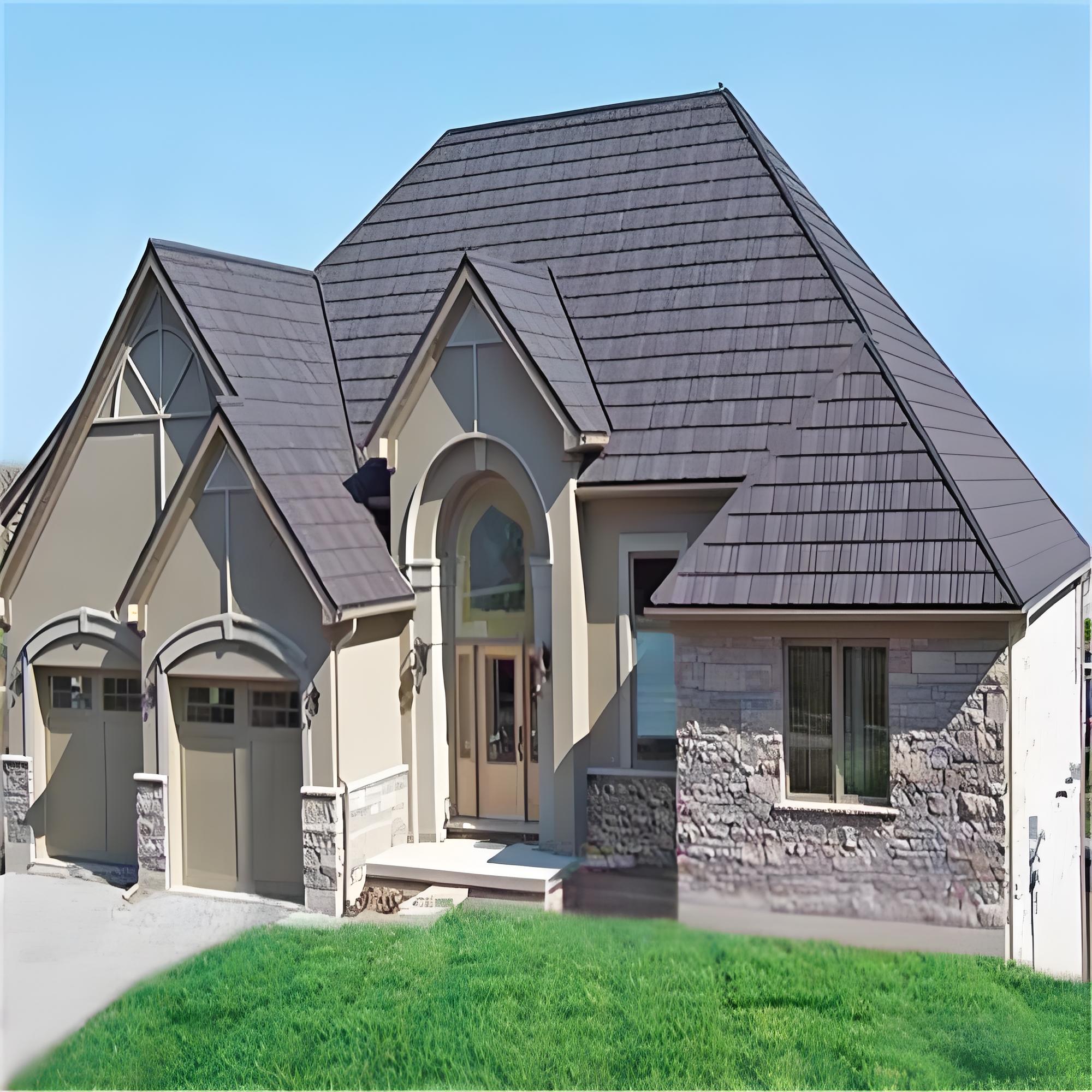
Compare stone coated metal roofing steel thickness and AZ coating as separate specifications. The steel substrate and metallic coating perform different roles. A clear quotation should identify both, along with their measurement basis. Do not accept a thickness value as proof of coating mass, or a coating designation as proof of steel thickness.
This distinction matters when importers compare bulk offers. Two panels may look similar while their underlying material definitions differ. A reading taken over the finished textured surface may also describe more than the steel itself. Ask the supplier to define exactly what each quoted number represents before choosing a product.
Understand the components behind the numbers

Base metal thickness refers to the steel substrate thickness before additional layers. Buyers should distinguish it from coated sheet thickness and the finished panel build. Ask the supplier which term appears in the quotation. If the measurement includes other layers, request the substrate figure separately.
AZ coating describes an aluminum-zinc metallic coating system under the relevant designation rules. It is not a measurement of stone granules or an acrylic finish. The number, units, standard, and testing basis need to travel together. A coating label without that context leaves room for misunderstanding.
The ASTM A792/A792M specification covers steel sheet with a hot-dip aluminum-zinc alloy coating. Referencing that material specification does not certify a complete roofing assembly. Ask which requirements and edition the supplier has used for the actual substrate.
Distinguish material functions
Steel thickness contributes to the panel’s material and forming characteristics. The metallic coating relates to protection of the substrate. Panel geometry, steel properties, joints, fasteners, and support conditions also affect the finished roofing system. Increasing one figure does not remove the need to verify the others.
A purchasing specification should therefore describe the system rather than one isolated number. Ask the manufacturer to explain the proposed substrate and coating for the intended use. Where structural or exposure requirements apply, request relevant evidence and project review. Avoid treating a supplier’s general recommendation as a substitute for that review.
| Item | What the quotation should state | What it does not establish alone |
|---|---|---|
| Steel thickness | Substrate basis, value, units, tolerance | Complete system load performance |
| Metallic coating | Alloy, designation, mass basis, standard | Guaranteed service life |
| Finished surface | Coating system and approved appearance | Substrate thickness |
| Panel geometry | Drawing, dimensions, coverage | Suitability for every roof |
| System evidence | Tested assembly and conditions | Approval of unrelated assemblies |
Separate appearance from material identity
Stone texture and color are important purchasing attributes. However, they can conceal differences in the underlying sheet. Inspect the finish, then review the substrate documents separately. Both checks belong in the purchasing process because they answer different questions.
For a Bond Tile quotation, identify the specific profile drawing and material option. Do not assume a product name fixes every material parameter. Request the exact configuration that will appear in the order confirmation and inspection instructions.
Compare thickness on the same basis
Ask suppliers to report thickness in a consistent unit and on a stated basis. A gauge label can be convenient, but it may not communicate a complete purchasing tolerance. Use a numeric thickness definition and the applicable measurement procedure. Have the supplier confirm whether the value is nominal, minimum, or another stated requirement.
Write the measurement location into the inspection plan. Textured surfaces, formed areas, and edges can complicate a reading. Let a qualified inspector determine a suitable approach for the product. Do not average incompatible readings simply because they produce a familiar-looking number.
Ask for tolerances and traceability
A quoted target without an allowed variation is incomplete. Request the applicable thickness tolerance and how the supplier demonstrates conformity. Record whether the measurement concerns incoming sheet or finished production samples. Link the result to the coil or batch that produced your order.
Keep the coil identification, material certificate, and production reference together. If the supplier cuts several coils into one order, ask how the batch record distinguishes them. That information helps investigate inconsistent measurements. It also prevents an unrelated certificate from becoming the only evidence attached to the shipment.
A finished panel weight check can help identify questions about consistency. It does not replace a properly defined substrate measurement. Weight also reflects panel dimensions and other components. Use it as a screening observation only when the order documents explain its purpose and limitations.
- Confirm whether the quoted figure means base metal or coated sheet thickness.
- Request the numeric value and applicable tolerance in the same unit.
- Identify measurement locations and the agreed verification procedure.
- Match each material record to the supplied production batch.
Resolve differences before ordering
If two suppliers report different thickness terms, ask them to restate their offers on a common basis. Do not calculate a comparison from assumed coating allowances. Record the clarified figures in the quotation table. An unresolved definition is a purchasing risk even when the prices look competitive.
Avoid destructive substrate preparation at the buyer’s office without a suitable method and trained personnel. Removing coatings can create safety and measurement problems. Where confirmation requires laboratory preparation, use an appropriate laboratory. Ask for a report describing specimen preparation and measurement rather than only a final number.
Verify coating designation and coating mass
A metallic coating specification should identify its designation system and units. Ask whether the reported requirement describes a total across both sides or another defined basis. Also ask how the test requirement applies to the supplied material. Do not compare labels from different systems by matching the printed numbers.
GalvInfo explains that coated sheet products use defined coating designation systems with specific testing requirements. Its discussion distinguishes coating mass from direct thickness measurement. It also explains that the coating basis matters when interpreting results. See GalvInfo guidance on coating designations.
Ask for the evidence behind the label
Request the material certificate and the declared coating requirement for the actual coil. If independent verification is necessary, ask the laboratory to identify a suitable method. The report should state the sample identity, procedure, units, and result. A photograph of a coating label cannot replace that record.
Check whether a supplier’s electronic gauge is suitable for the measurement claimed. Some instruments measure a coating layer under particular substrate conditions. They do not automatically establish alloy composition or every underlying layer. Ask about calibration and the laboratory method used to resolve disputed results.
Keep substrate and finished panel evidence distinct. A coil document supports material identity. A finished panel test may address another property. Neither document should silently replace the other when your contract requires both.
Avoid service-life shortcuts
A coating designation does not provide a universal number of years for every environment. Exposure, design, fabrication, installation, and maintenance can influence service conditions. Ask the supplier about the intended application and limitations. Review the warranty separately from material test documentation.
The GalvInfo note on salt spray testing explains limitations in interpreting accelerated corrosion testing. Do not turn test hours into a direct service-life promise. Use a report for its stated purpose and ask a qualified reviewer about relevance to the project.
When evaluating JCROOF, distinguish the public company introduction from the documents for your selected material configuration. Request written confirmation of the ordered substrate and coating. Keep that confirmation with the quotation, approved sample, and inspection plan.
Make the final comparison purchasing-ready
Create a comparison table with separate columns for substrate thickness and metallic coating. Add the relevant units, tolerances, source documents, and unresolved questions. Keep finished surface appearance in another column. This prevents a visually attractive panel from masking a missing material definition.
Compare price only after the material scope is clear. Add accessory quantities, packing method, and the evidence required before release. A supplier may quote a different configuration that fits the project. That proposal can be considered, but it should appear as an explicit alternative.
Write an acceptance sequence
Start with document review. Confirm that the order and supplier records describe the same material. Next, verify representative production samples using the agreed inspection procedure. Resolve discrepancies before approving shipment. If the results do not match, ask for correction or suitable independent verification.
Record who can approve a changed thickness or coating specification. A commercial discount should not automatically authorize a technical substitution. Update the contract, drawing references, and inspection instructions together when an alternative is approved. Otherwise, different people may inspect against different versions.
- Match the quotation to the current approved specification.
- Review steel thickness and coating requirements separately.
- Investigate inconsistent measurements before agreeing to shipment.
- Preserve the material evidence with the final acceptance record.
Common buyer questions
Q: Should buyers always choose the thicker option?
A: Choose the configuration that satisfies the specified project and purchasing requirements. Thickness alone cannot confirm that match. Review material properties, profile geometry, and system evidence with the appropriate project professional.
Q: Does a higher coating number always mean a better roof?
A: First confirm that the designation systems and units are comparable. Then review whether the coating suits the intended use. A coating number alone does not establish the complete roof’s performance.
Q: Can buyers verify everything with one handheld instrument?
A: No single routine reading describes every component of a finished stone-coated panel. Identify the property being measured. Use suitable methods and records for the steel, metallic coating, and finished surface.
A reliable bulk comparison keeps steel thickness, coating designation, finish, and system evidence separate. Define each item clearly before ordering. You can then evaluate quotations without substituting one material number for the entire roofing specification.