
For many buyers, distributors, and project contractors, stone coated roofing (stone coated steel roofing) is evaluated mainly through samples, catalogs, and technical specifications. However, what truly defines product quality happens inside the factory—across multiple tightly controlled production stages that are rarely visible to the end customer.
This behind-the-scenes look walks through a typical production day in a stone coated metal roofing factory, highlighting the processes, quality checkpoints, and operational details that ultimately determine performance in the field. For procurement teams, understanding this workflow provides valuable insight into how to assess suppliers beyond surface-level appearance.
Raw Material Preparation: Where Quality Begins
The production day starts long before any tile takes shape. Steel coils, typically coated with Aluzinc or similar corrosion-resistant layers, are delivered and inspected. This base material forms the structural backbone of stone coated roofing.
Any inconsistency at this stage—such as coating defects or thickness variation—can affect the entire production batch.
This is why reputable factories prioritize strict incoming material inspection.
Key Checks at This Stage
- Steel thickness verification
- Coating uniformity inspection
- Surface cleanliness and defect control
Roll Forming: Shaping the Tile Profile
Once the steel passes inspection, it moves to roll forming machines where flat sheets are shaped into specific tile profiles. This stage defines the structural geometry of the final product.
Precision is critical here—any deviation in forming can affect installation alignment and interlocking performance.
Different molds are used to produce various styles.
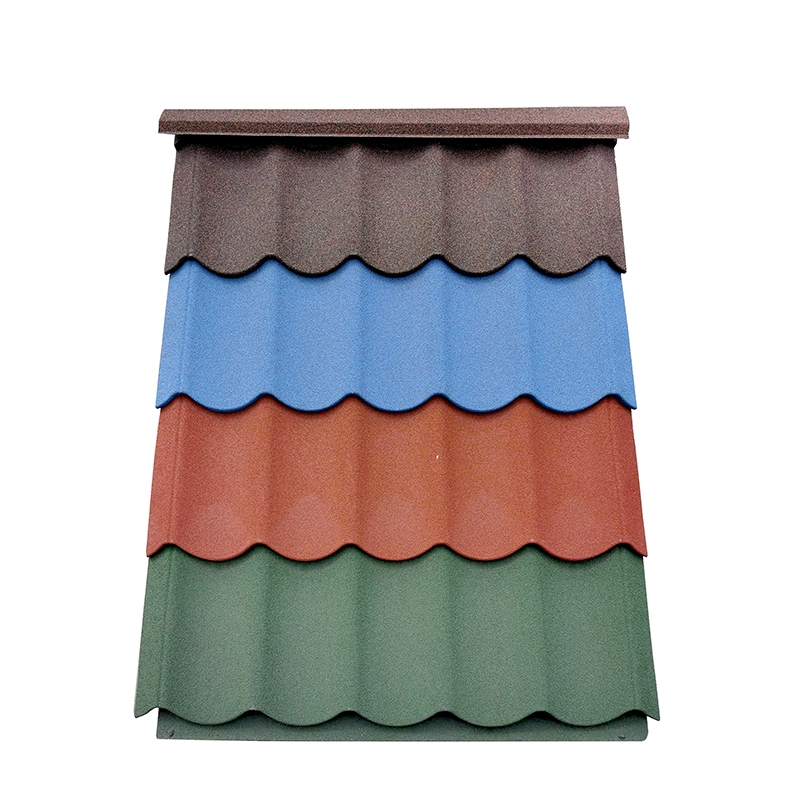
Common Profiles Produced
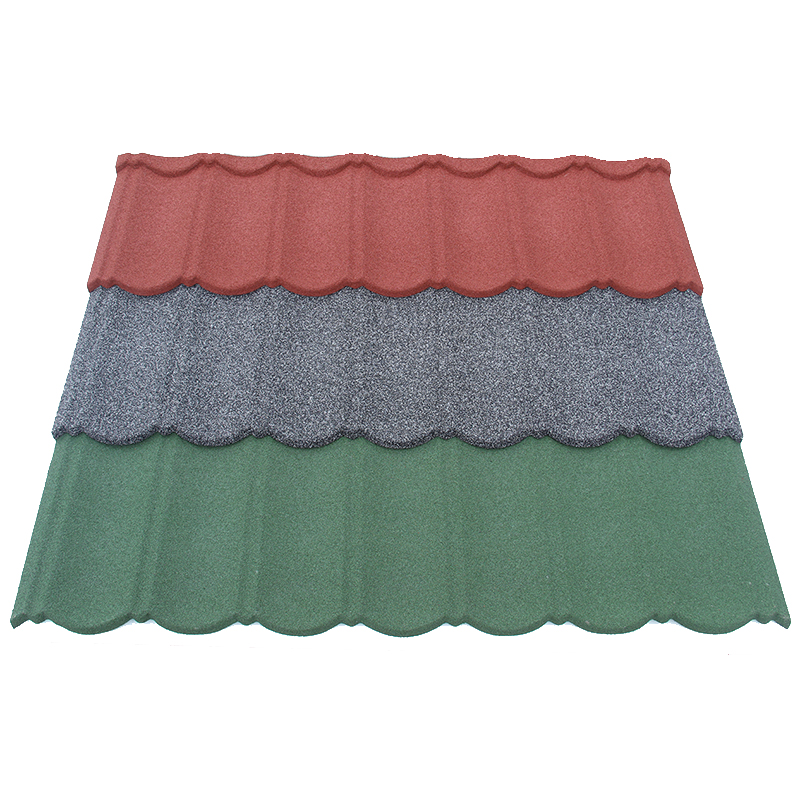
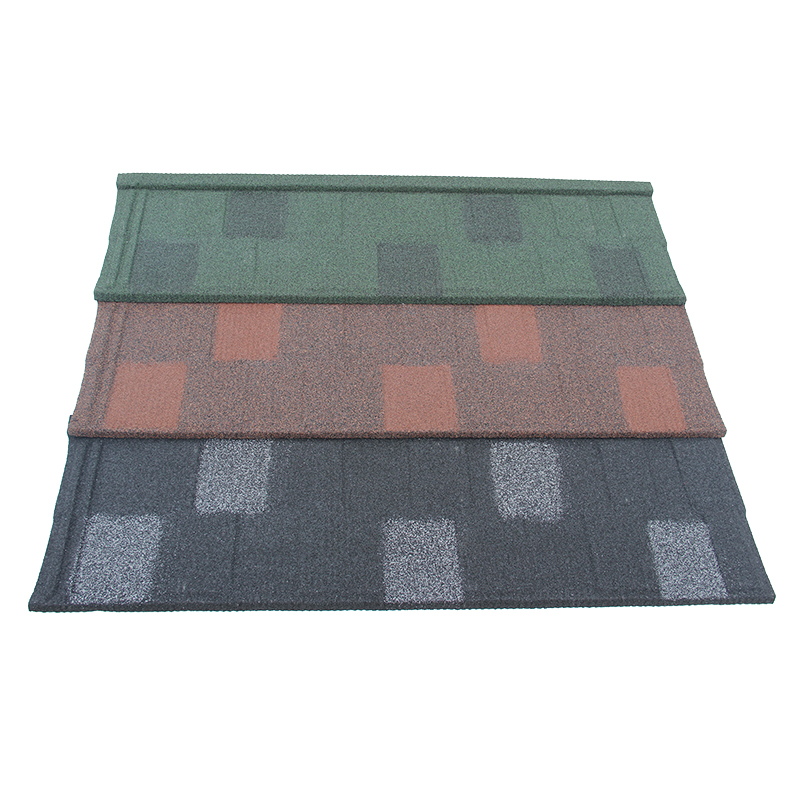
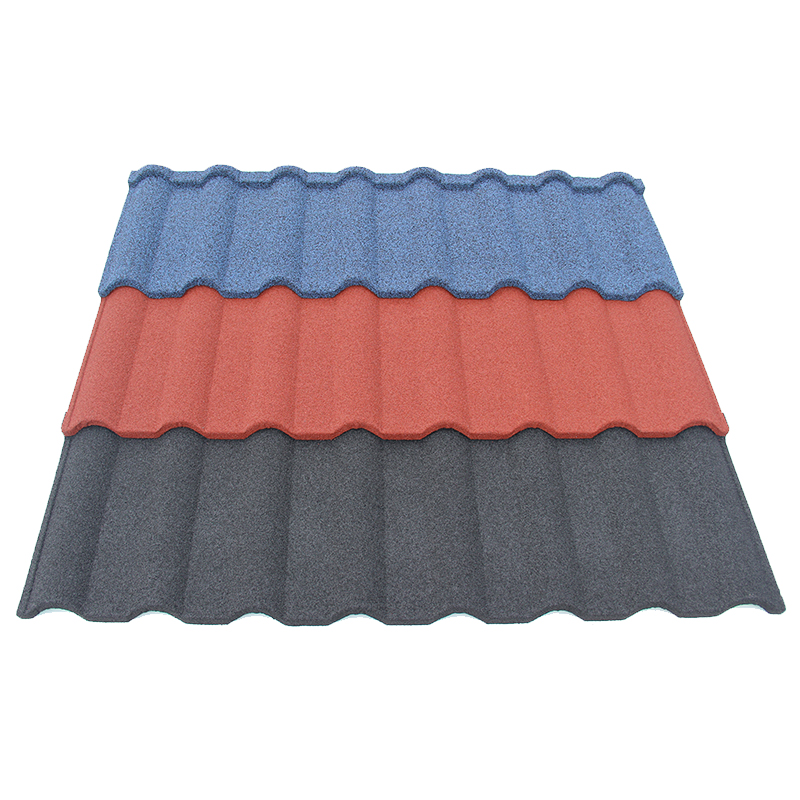
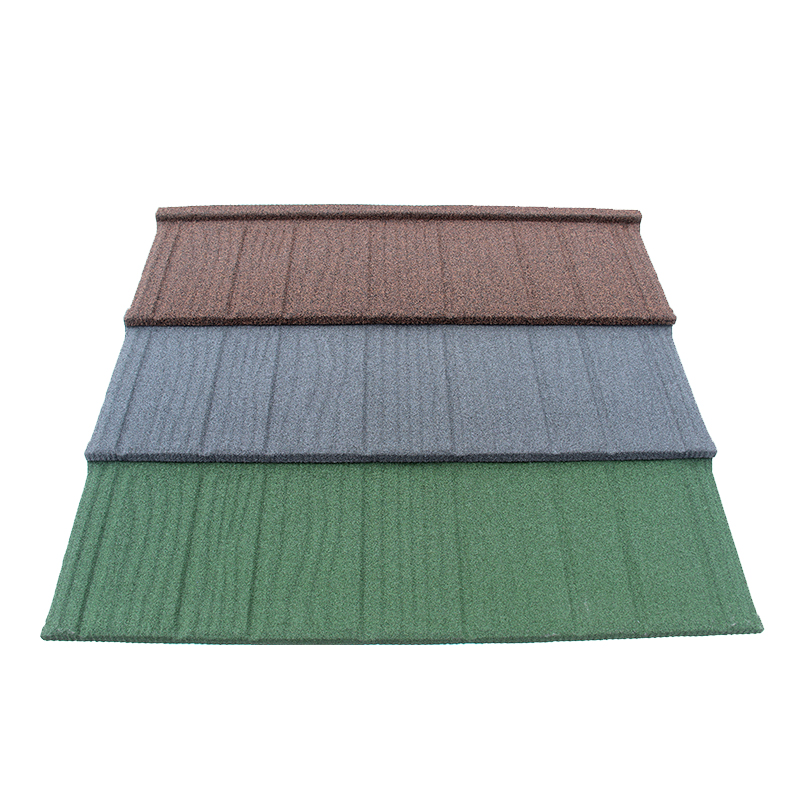
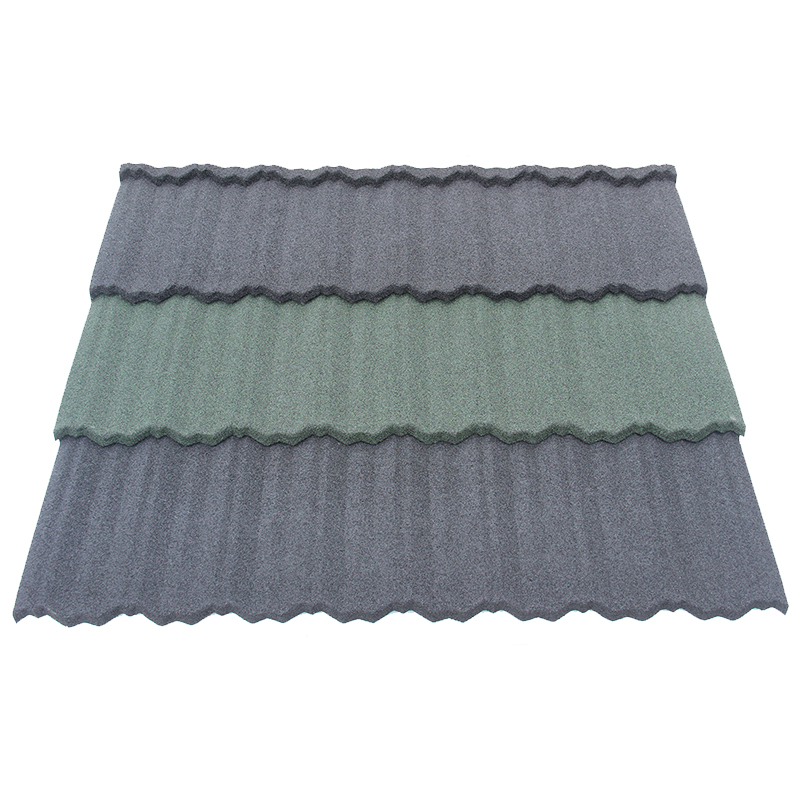
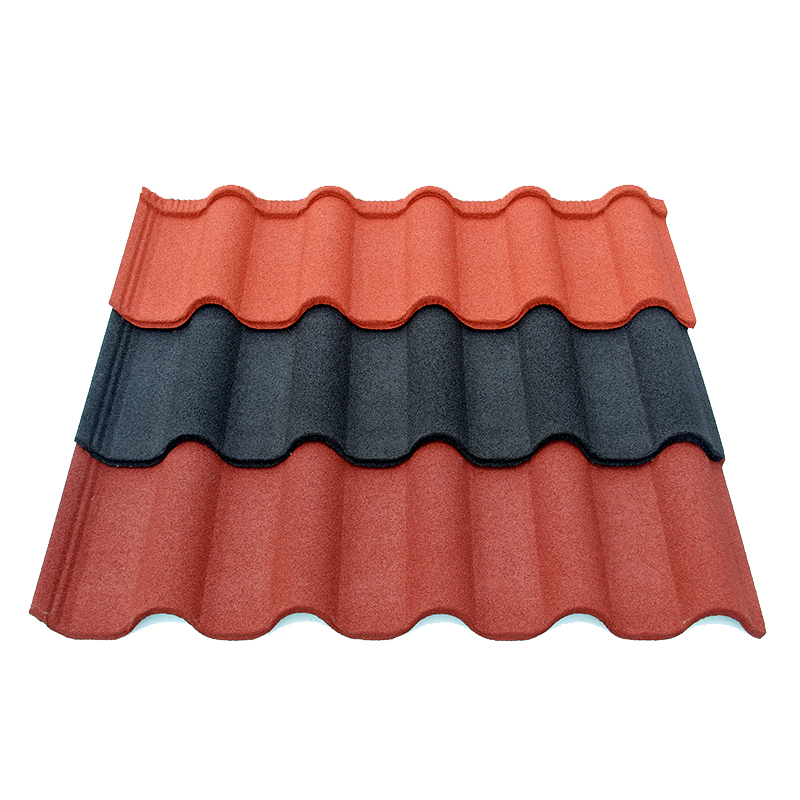
- Bond Tile – balanced, modular design for residential use
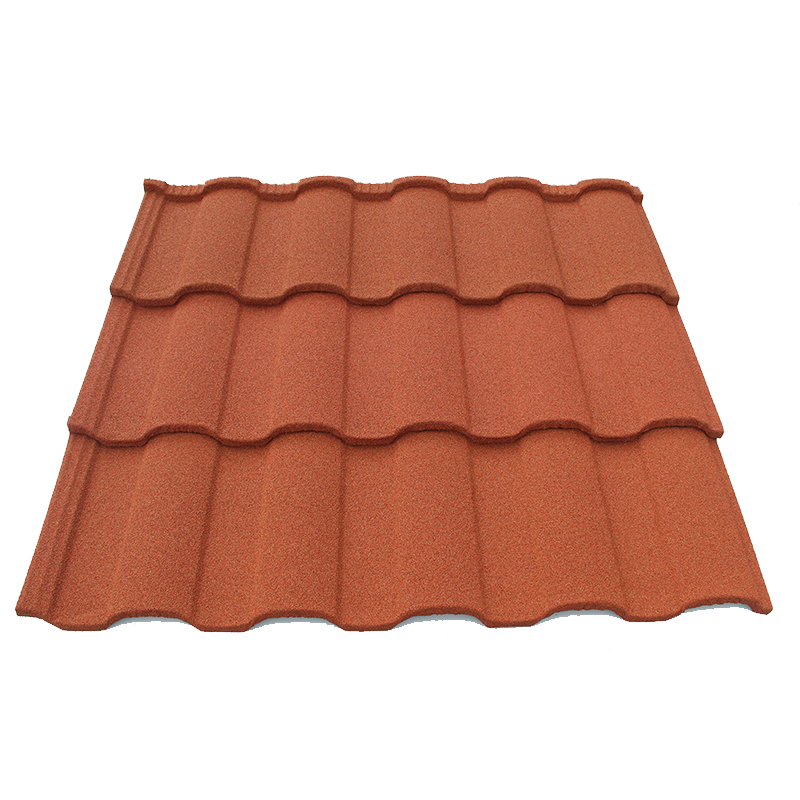
- Roman Tile – deeper curves for traditional aesthetics
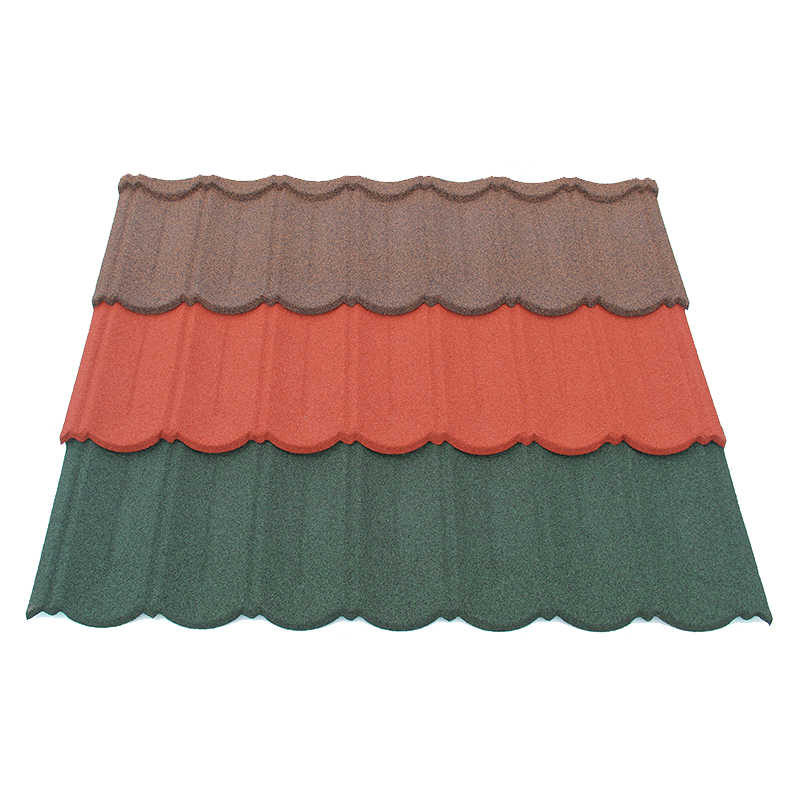
- Shingle Tile – flatter, uniform appearance
- Milano Tile – refined profile for premium projects
Each profile requires specific tooling and calibration to maintain consistency across batches.
Surface Cleaning and Pre-Treatment
Before any coating is applied, the formed tiles undergo cleaning and surface treatment. This step ensures proper adhesion of subsequent layers.
Even minor contamination can reduce bonding strength, leading to long-term performance issues.
Factories typically use chemical cleaning and drying processes to prepare the surface.
Purpose of Pre-Treatment
- Remove oils and residues from forming
- Improve primer adhesion
- Ensure consistent coating performance
Primer and Base Coating Application
After cleaning, a primer layer is applied to enhance adhesion between the metal surface and the adhesive layer. This is followed by base coatings that contribute to corrosion resistance and bonding strength.
The quality of these layers directly impacts durability.
Uniform application is essential to avoid weak نقاط in the coating system.
Key Considerations
- Even coating thickness
- Proper curing conditions
- Compatibility with adhesive layer
Acrylic Adhesive Application: The Bonding Stage
Next comes the application of acrylic resin adhesive, which plays a critical role in bonding stone granules to the tile surface. This stage requires precise control of viscosity, thickness, and coverage.
Too little adhesive results in poor granule retention, while excessive application can affect surface uniformity.
Achieving the right balance is a key indicator of manufacturing quality.
Process Control Factors
- Adhesive formulation consistency
- Application thickness control
- Uniform distribution across the tile
Stone Granule Application and Embedding
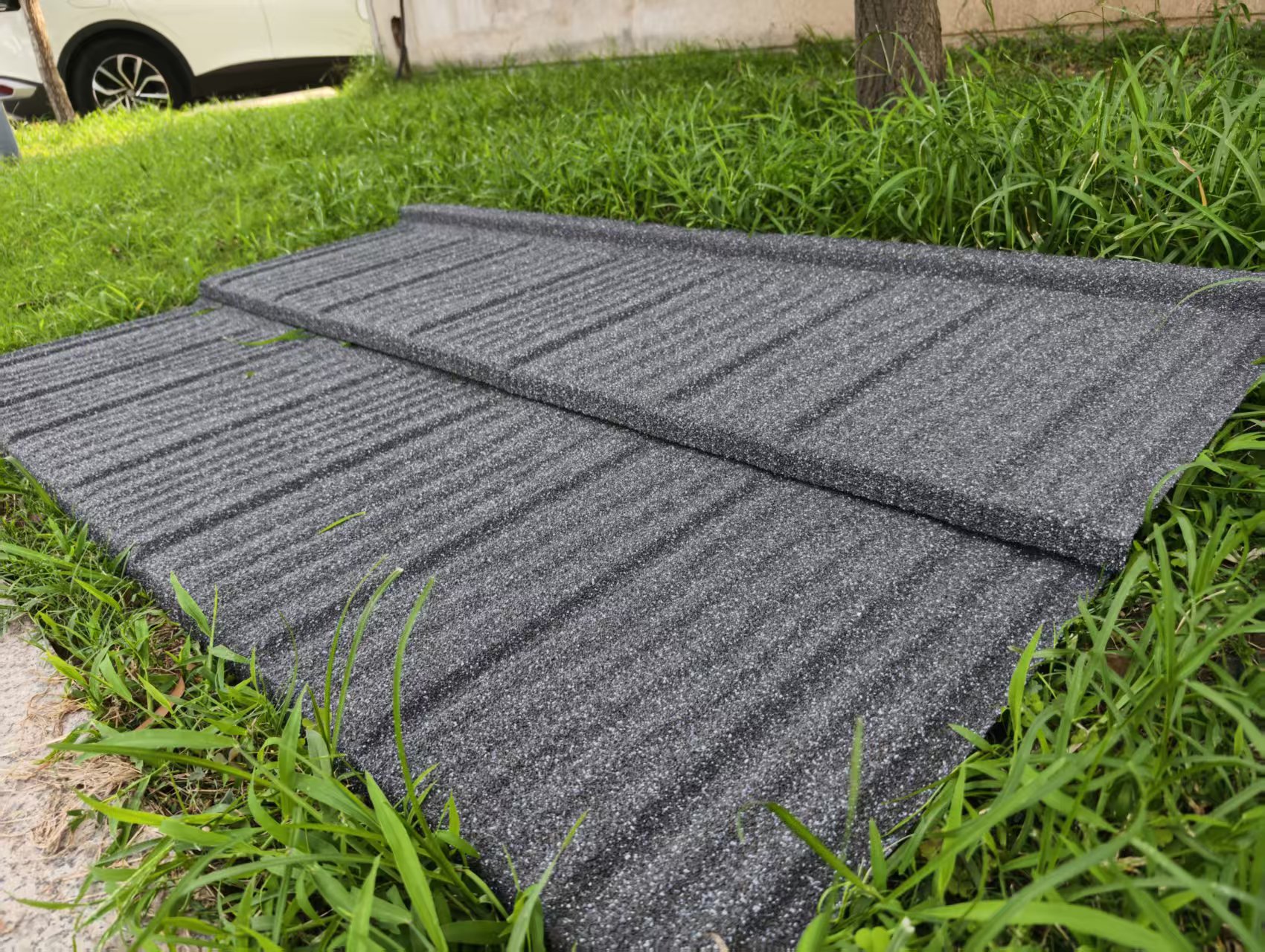
Once the adhesive is applied, ceramic-coated stone granules are distributed across the surface and embedded into the adhesive layer. This step defines both the appearance and protective characteristics of the roofing tile.
High-quality factories ensure even coverage and proper embedding depth.
Excess granules are removed and recycled for efficiency.
What Determines Quality Here
- Uniform granule distribution
- Strong initial bonding
- Consistent color across batches
Curing and Drying: Locking in Performance
After granule application, tiles pass through curing ovens where heat solidifies the adhesive and stabilizes the coating system. This stage ensures long-term bonding strength and durability.
Temperature and time control are critical—improper curing can weaken adhesion or affect coating performance.
This is one of the most technically sensitive مراحل in the production process.
Key Parameters
- Controlled temperature range
- Consistent curing duration
- Uniform heat distribution
Quality Inspection and Testing
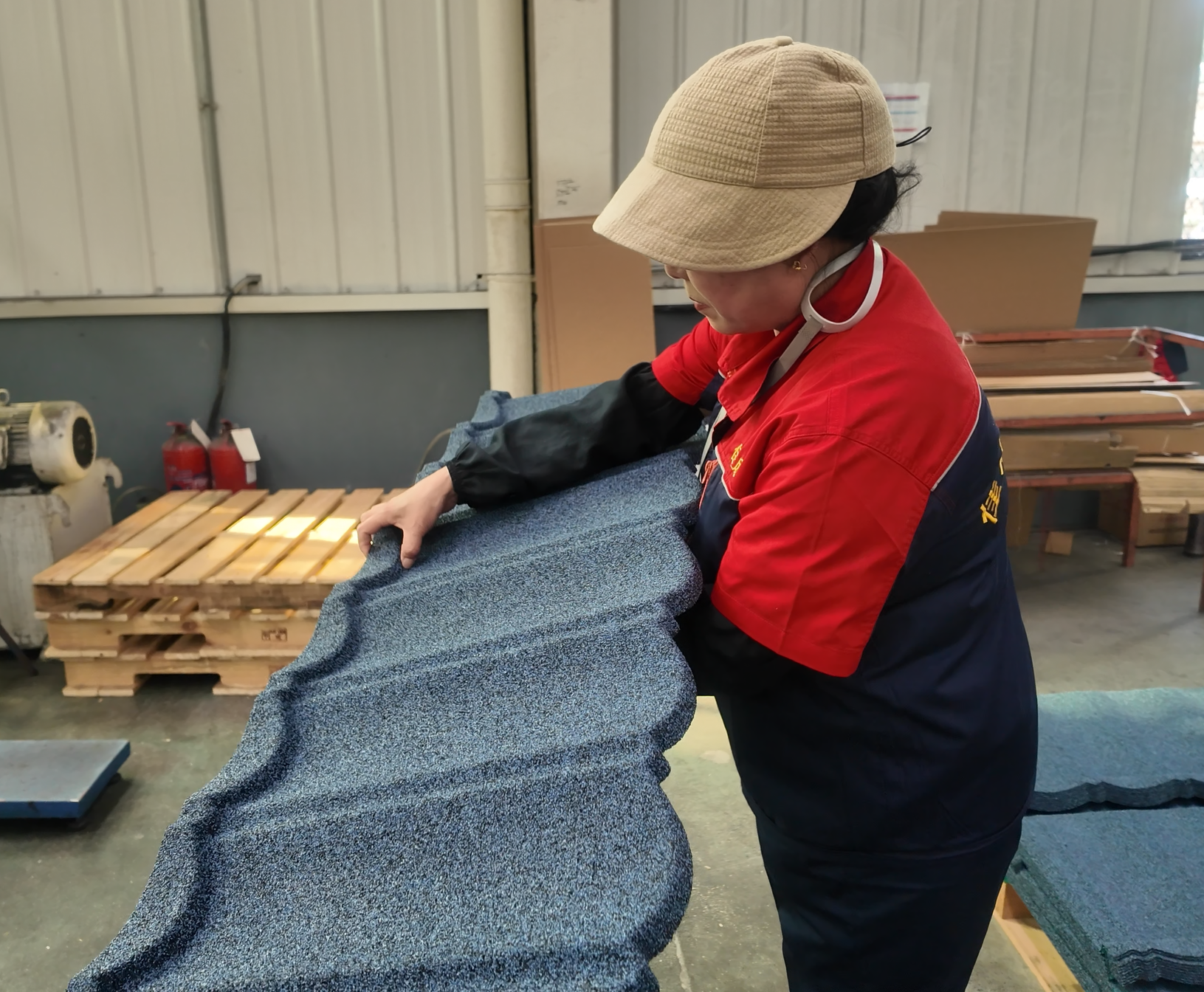
Before packaging, finished tiles undergo multiple quality checks. These inspections ensure that each batch meets both visual and technical standards.
Factories typically combine manual inspection with standardized testing methods.
This step is essential for maintaining consistency across shipments.
Inspection Items
- Granule adhesion (rub or drop tests)
- Color consistency
- Dimensional accuracy
- Surface defect inspection
Packaging and Logistics Preparation
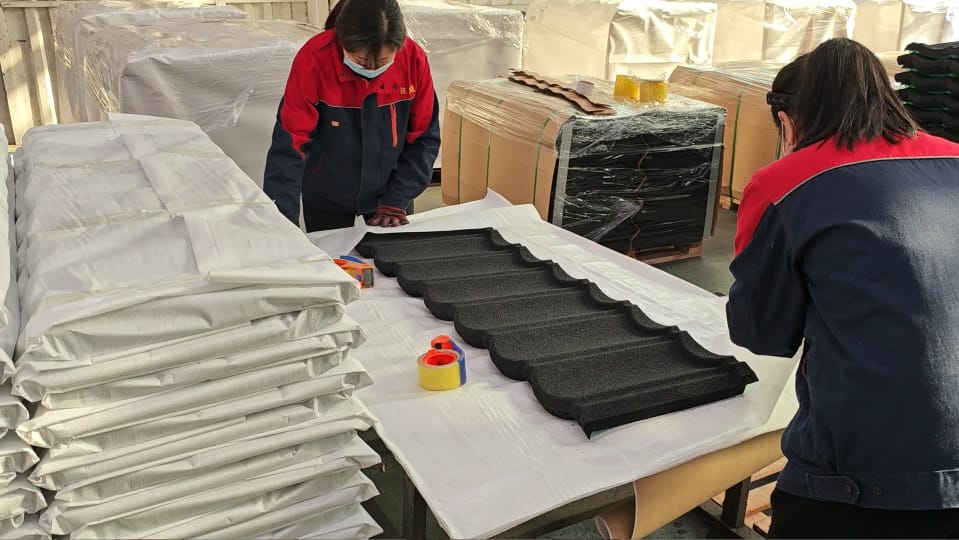
Once approved, tiles are carefully packaged to prevent damage during transportation. Packaging design plays a significant role in preserving product quality, especially for export shipments.
Loose granules, edge damage, and surface scratches are common risks if packaging is inadequate.
High-quality factories invest in protective packaging systems.
Packaging Priorities
- Secure stacking and wrapping
- Edge and corner protection
- Minimizing movement during transport
What Buyers Should Look for During Factory Visits
For B2B buyers, visiting a factory provides valuable insight beyond product samples. Observing production processes can reveal the level of quality control and operational discipline.
Not all factories maintain the same standards, even if products look similar initially.
Understanding what to observe can improve supplier selection.
Key Evaluation Points
- Cleanliness and organization of production lines
- Consistency across different production stages
- Quality control procedures and documentation
- Handling and storage of finished goods
Why Manufacturing Transparency Matters
From a procurement perspective, transparency in manufacturing processes builds trust and reduces risk. Suppliers who clearly demonstrate their production workflow are more likely to deliver consistent quality.
This is particularly important for large-scale or long-term projects.
Manufacturers such as JCROOF typically emphasize process control and quality assurance as part of their overall value proposition.
Conclusion: What Happens Behind the Product Matters
Understanding a day in the life of a stone coated tile factory reveals that product quality is the result of multiple controlled processes—from raw material selection to final inspection. Each stage plays a role in determining how the roofing performs in real-world conditions.
For buyers and contractors, looking beyond surface appearance and into manufacturing practices is key to selecting reliable stone coated roofing systems that deliver long-term value.