
Selecting the correct stone coated metal roofing tile thickness is one of the most important decisions during any roofing project. While many buyers focus on color, profile, or price, the steel thickness directly affects durability, structural strength, wind resistance, service life, and overall project value. Choosing the wrong specification can lead to unnecessary costs or reduced performance over time.
Whether you are a distributor, contractor, developer, or project owner, understanding roof tile thickness helps you purchase products that match local climate conditions, building requirements, and project budgets. A thicker roof tile is not always the best option, just as the lowest specification is not always the most economical. The right balance depends on how and where the roof will be used.
This guide explains the differences between common roof tile thickness options, how they influence performance, and what professional buyers should consider before placing an order.
Executive Summary
- Steel thickness directly affects roof strength, durability, and expected service life.
- The ideal specification depends on climate, building type, and project budget.
- Thicker steel generally improves impact and wind resistance but also increases material cost.
- Life cycle value is more important than selecting the lowest purchase price.
- Professional buyers compare the complete roofing specification instead of thickness alone.
Why Roof Tile Thickness Matters More Than Many Buyers Realize
Roof tile thickness influences much more than the physical strength of a roofing panel. It affects installation performance, resistance to severe weather, long term maintenance costs, and customer satisfaction after project completion. Because roofing systems are expected to protect buildings for several decades, selecting the proper steel thickness should always be part of the procurement process.
Many first time buyers assume that every stone coated metal roofing tile uses the same steel substrate. In reality, manufacturers may offer different thickness options to suit various markets and project requirements. Understanding these differences helps buyers compare quotations more accurately and avoid unexpected quality issues.
Structural Strength
A thicker steel base improves rigidity and allows the roof tile to better resist bending during transportation, handling, and installation. This becomes especially valuable for projects in regions that experience strong winds or heavy snow.
Long Term Durability
Steel thickness works together with the aluminum zinc coating and protective stone layer to determine overall durability. When combined with high quality coatings, the correct thickness helps extend the service life of the roofing system.
Installation Performance
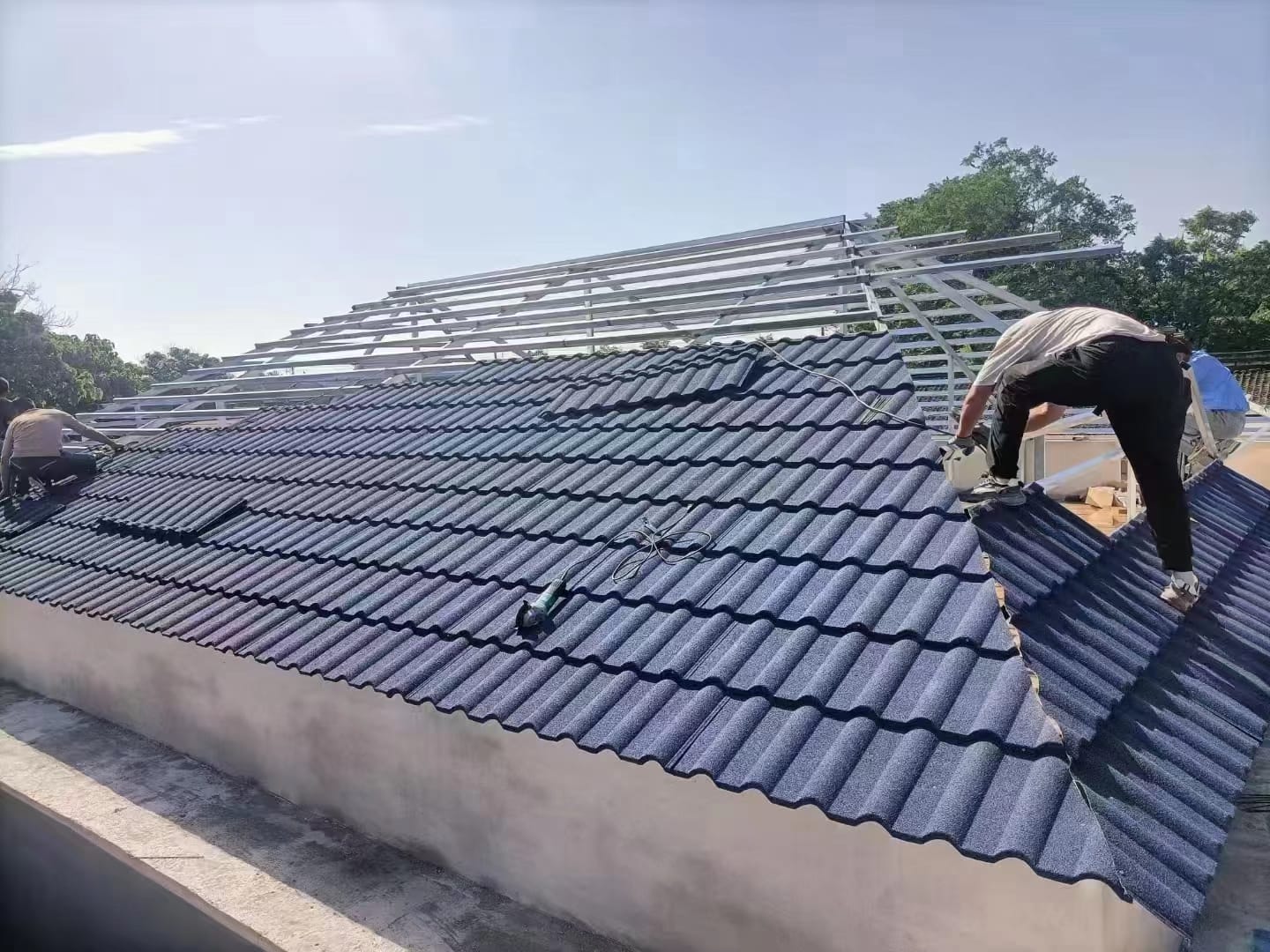
Roof tiles with consistent thickness maintain accurate dimensions during production. This improves alignment during installation and reduces the likelihood of gaps or uneven roof surfaces.
Better Return on Investment
Although thicker roofing materials may require a slightly higher initial investment, they often reduce maintenance expenses over the lifetime of the building. For commercial projects and premium residential developments, this usually delivers better long term value.
Understanding Common Roof Tile Thickness Options
Stone coated metal roofing tiles are available in several steel thickness specifications. Each option is designed for different applications, allowing buyers to balance structural performance and project budgets. Rather than selecting the thickest product available, experienced buyers choose the specification that best matches local environmental conditions and building requirements.
Roof Tile Thickness Comparison
| Steel Thickness | Typical Application | Performance Level | Recommended Use |
|---|---|---|---|
| 0.35 mm | Budget residential housing | Standard | Projects with moderate climate conditions |
| 0.40 mm | General residential projects | Good | Most common export specification |
| 0.45 mm | Premium homes and villas | Very Good | Higher wind resistance and durability |
| 0.50 mm | Commercial and coastal projects | Excellent | Regions with demanding weather conditions |
| 0.55 mm | Industrial buildings and special projects | Maximum | Heavy duty applications requiring superior strength |
Thickness Does Not Work Alone
Steel thickness should always be evaluated together with coating weight, stone chip quality, and manufacturing consistency. A thicker steel sheet cannot compensate for poor corrosion protection or low quality production processes.
Selecting the Right Balance
Most residential developments achieve an excellent balance between cost and performance with mid range specifications, while projects located in coastal regions or areas exposed to extreme weather often benefit from thicker steel substrates.
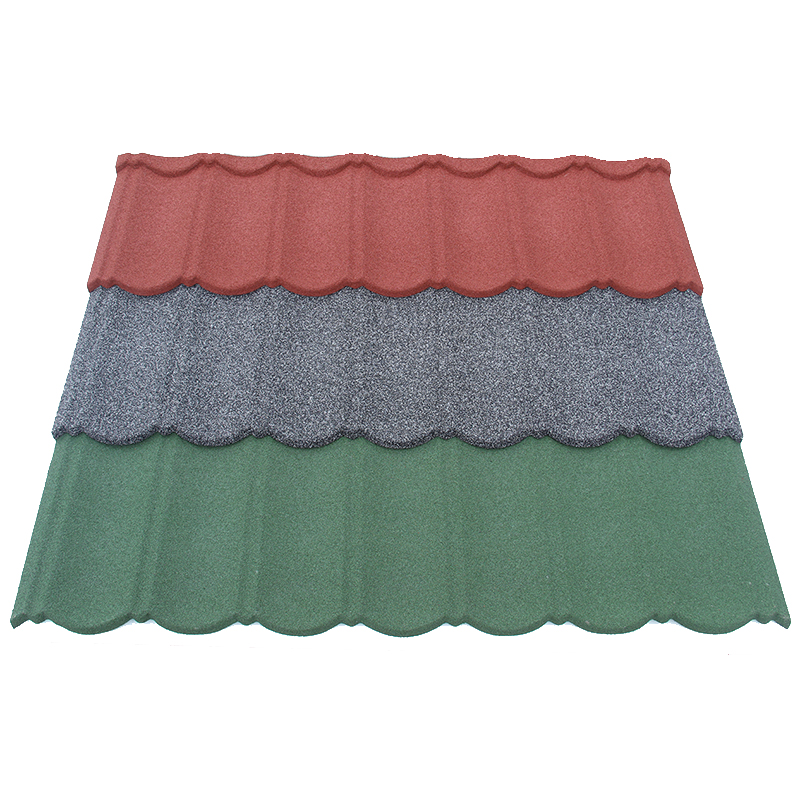
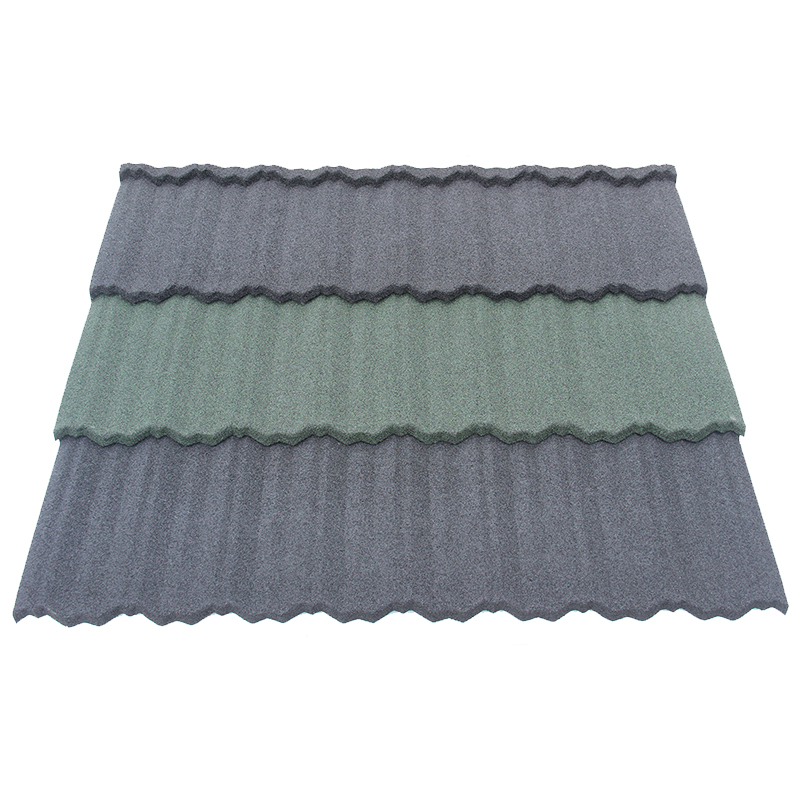
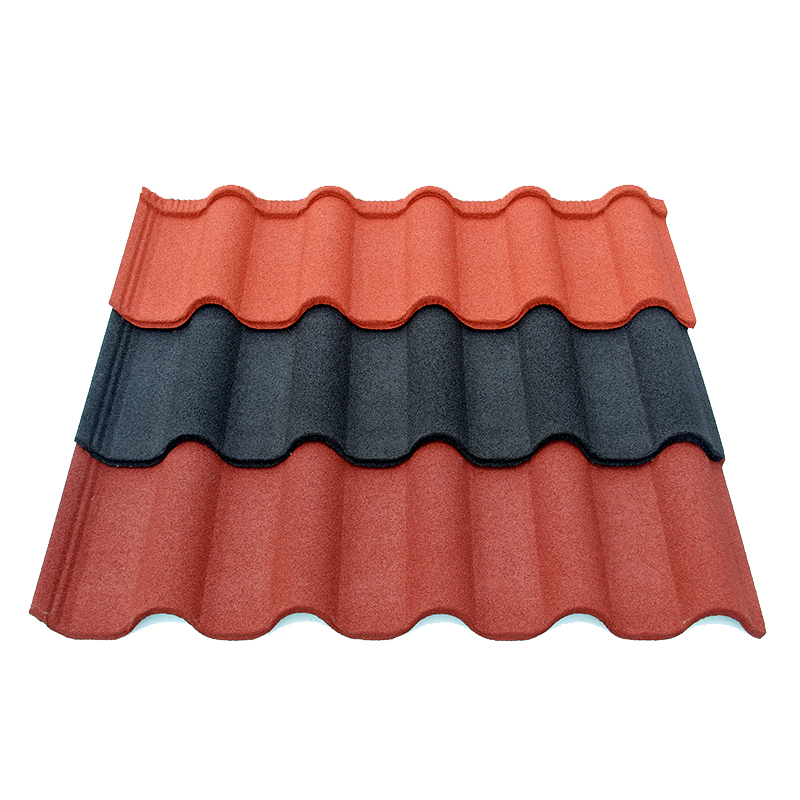
For many housing developments, Bond Tile is frequently specified because it combines structural reliability with a timeless architectural appearance.
How Climate Conditions Influence the Right Roof Tile Thickness
Climate is one of the most important factors when selecting the appropriate roof tile thickness. A roofing system that performs well in a mild environment may not provide the same level of protection in regions exposed to hurricanes, heavy snowfall, coastal salt air, or intense sunlight. Professional buyers always evaluate environmental conditions before deciding on a specification.
Rather than using a single thickness for every project, experienced developers and distributors recommend selecting the most suitable option based on local weather patterns, expected service life, and building type. This approach delivers better long term performance while avoiding unnecessary material costs.
Coastal Areas
Buildings located near the ocean face continuous exposure to salt laden air and high humidity. These conditions increase the risk of corrosion over time. While protective coatings play a critical role, a thicker steel substrate provides additional durability for demanding coastal environments.
Many commercial and residential developments in coastal regions choose 0.50 mm specifications together with high quality aluminum zinc coating to maximize long term performance.
High Wind Regions
Areas affected by hurricanes, typhoons, or strong seasonal winds require roofing systems with greater structural strength. Roof tile thickness works together with fastening methods and installation quality to improve resistance against wind uplift.
Developers should also verify local building regulations to ensure the selected roofing system meets regional performance standards.
Cold Climate Projects
Snow accumulation and repeated freeze thaw cycles place additional stress on roofing materials. A stronger steel substrate helps maintain structural stability while reducing the risk of deformation caused by changing temperatures.
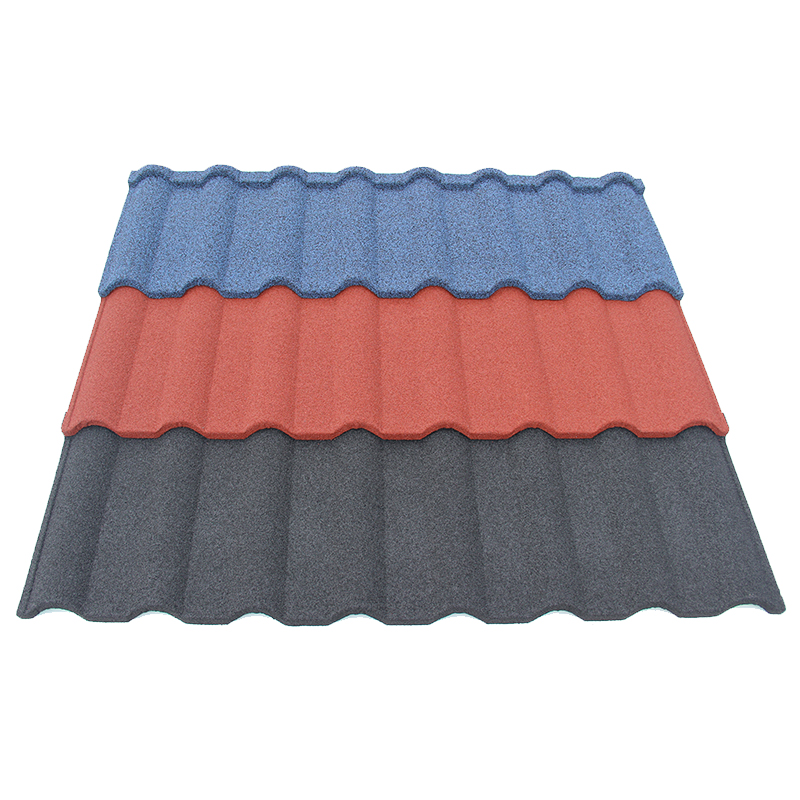
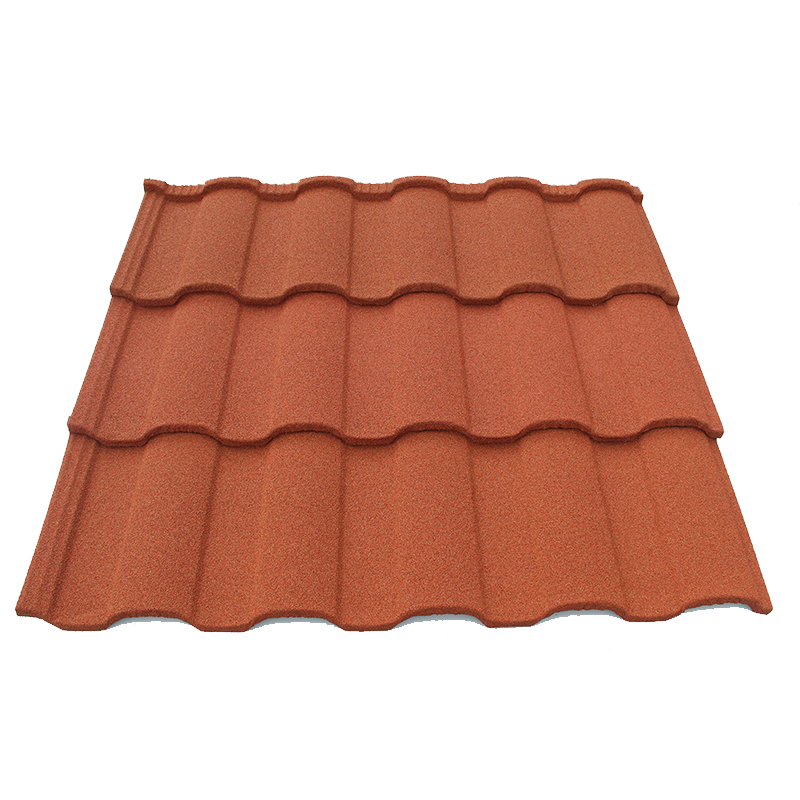
For premium residential developments in colder climates, Roman Tile is often selected because it combines classic architectural appeal with reliable structural performance.
Hot and Sunny Regions
In areas with intense sunlight and prolonged heat, ultraviolet resistance and coating quality become just as important as steel thickness. Buyers should evaluate the complete roofing specification instead of considering only one technical parameter.
Market Insights: Why Buyers Are Paying More Attention to Roofing Specifications
The global roofing industry has become increasingly quality driven. Instead of selecting products based only on price, developers and distributors now evaluate roofing systems using life cycle performance, installation efficiency, warranty coverage, and expected maintenance costs.
This shift is especially noticeable in export markets, where long distance transportation and local labor costs make durable products a better long term investment. As a result, buyers are requesting more detailed technical information, including steel thickness, coating weight, and corrosion resistance before approving suppliers.
Higher Performance Expectations
Property owners expect roofing systems to remain attractive and functional for several decades. Developers therefore prefer products that minimize future repairs while protecting the long term value of their projects.
Quality Is Replacing Price as the Main Decision Factor
Although competitive pricing remains important, professional buyers increasingly recognize that roofing materials should be evaluated based on total ownership cost. A slightly higher specification often delivers significant savings through reduced maintenance and fewer warranty claims.
Reliable Manufacturing Builds Buyer Confidence
Consistent production standards help distributors reduce customer complaints and simplify inventory management. Manufacturers with modern production facilities and experienced quality control teams are generally preferred for long term partnerships.
Many international distributors choose experienced suppliers such as JCROOF because consistent manufacturing quality, dependable delivery schedules, and export experience are often just as valuable as competitive pricing.
Architectural Flexibility Continues to Grow
Developers increasingly seek roofing profiles that satisfy different architectural styles while maintaining consistent technical performance. This allows builders to serve multiple market segments without changing roofing specifications for every project.
Modern housing developments frequently incorporate Milano Tile because its clean profile complements contemporary architecture while providing excellent weather resistance.
Expert Recommendation
From a procurement perspective, roof tile thickness should never be evaluated in isolation. Experienced roofing professionals recommend reviewing the complete roofing system, including steel substrate quality, aluminum zinc coating, stone chip adhesion, manufacturing consistency, and installation accessories.
For projects expected to remain in service for 30 years or more, selecting a slightly higher specification often provides better long term value than choosing the lowest initial price. Developers and distributors should compare life cycle costs instead of focusing only on material cost per square meter.
Quick Buyer Checklist
Before confirming a roof tile thickness specification, buyers should review the following factors:
- ✔ Confirm the local climate and environmental conditions.
- ✔ Verify steel substrate thickness and coating specifications.
- ✔ Compare corrosion resistance and weather performance.
- ✔ Review product certifications and quality inspection procedures.
- ✔ Request physical samples before placing bulk orders.
- ✔ Confirm compatibility between roof tiles and installation accessories.
- ✔ Evaluate the supplier’s production capacity and export experience.
- ✔ Compare total life cycle value instead of purchase price alone.
Common Mistakes When Choosing Roof Tile Thickness
Selecting the correct roof tile thickness is not simply a technical decision. It is also a purchasing decision that affects project quality, maintenance costs, and customer satisfaction for many years. Many buyers focus on one specification while overlooking other factors that are equally important.
Understanding these common mistakes helps developers, contractors, distributors, and project owners make better purchasing decisions and avoid unnecessary costs after installation.
Assuming Thicker Is Always Better
A common misconception is that the thickest steel automatically provides the best roofing solution. While thicker steel generally offers greater strength, it also increases material costs. If the project is located in a region with moderate weather conditions, selecting an unnecessarily high specification may not improve overall value.
The goal should always be to match the roof tile thickness with the building’s structural requirements, local climate, and expected service life.
Comparing Thickness Without Reviewing Material Quality
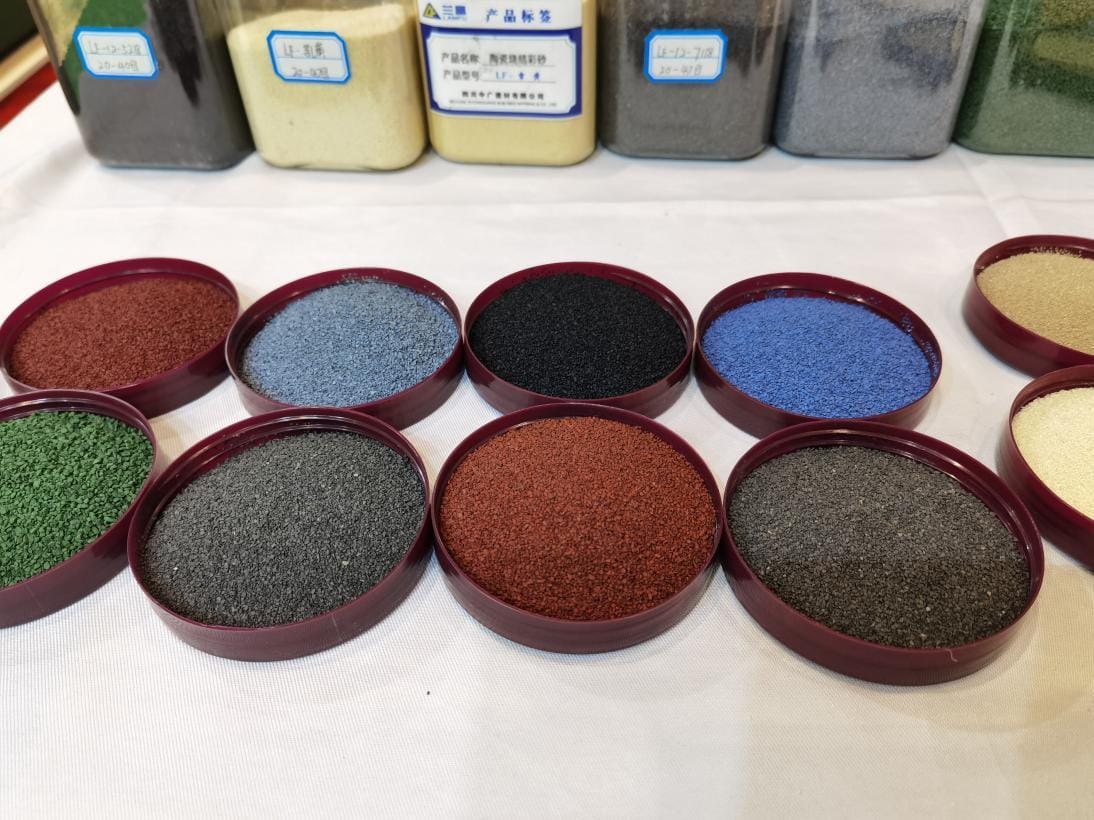
Steel thickness represents only one part of the roofing system. Buyers should also compare aluminum zinc coating weight, stone chip quality, acrylic bonding technology, and manufacturing consistency.
A well manufactured 0.40 mm roof tile with premium materials often performs better than a poorly manufactured product with a thicker steel substrate.
Ignoring Installation Quality
Even the highest quality roof tile cannot achieve its designed performance without proper installation. Fastening methods, roof structure preparation, ventilation design, and compatible accessories all contribute to long term roofing performance.
Professional installers should always follow the manufacturer’s installation recommendations to maximize weather resistance and service life.
Buying Only on Price
Choosing the lowest quotation can increase long term costs if the roofing system requires additional maintenance or early replacement. Professional buyers evaluate total ownership cost rather than initial purchase price.
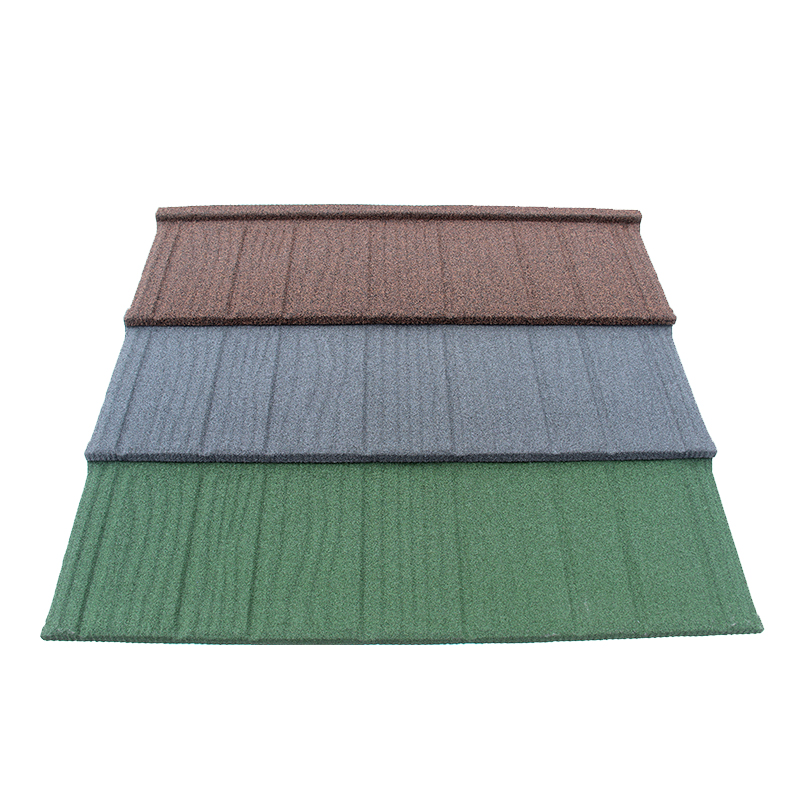
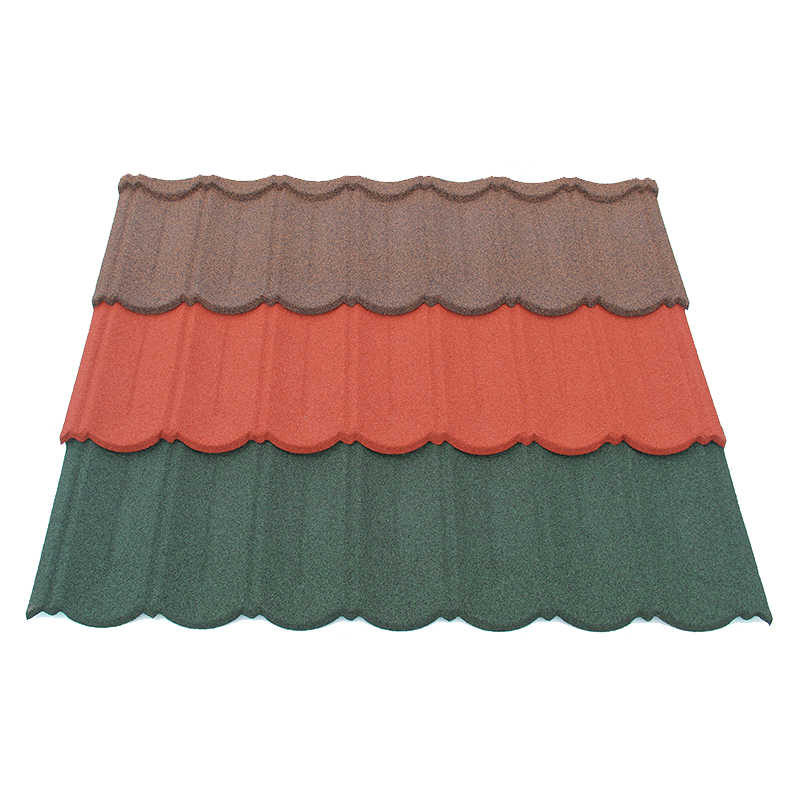
For projects that require the appearance of traditional timber roofing, many developers select Shake Tile. It combines a natural architectural style with the durability and low maintenance of modern steel roofing.
Choosing a Single Profile for Every Market
Different regions often prefer different architectural styles. Offering multiple roof tile profiles allows distributors to meet local market demand while maintaining consistent technical specifications.
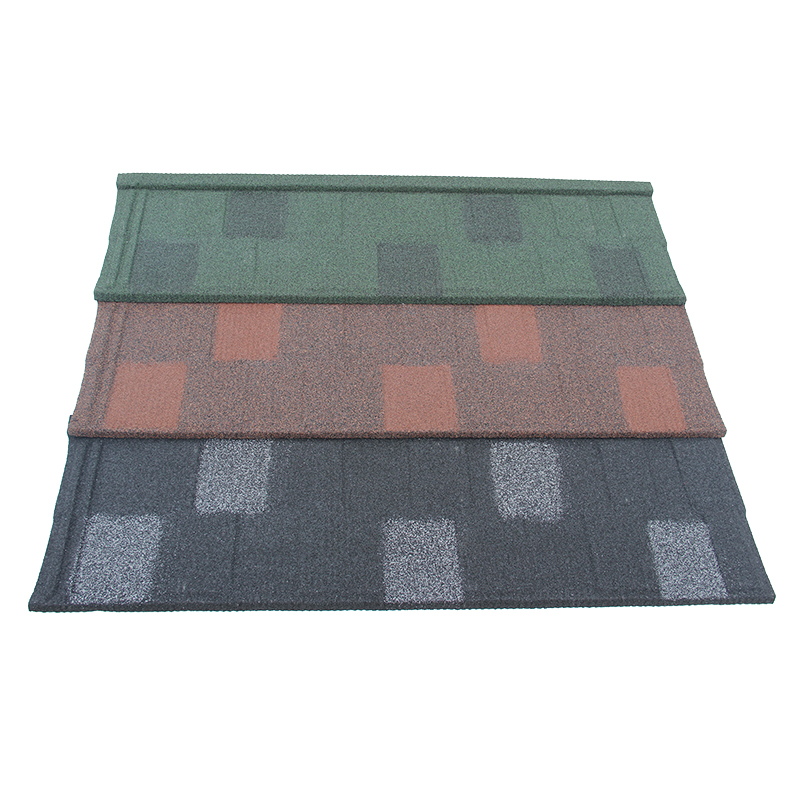
Many housing projects also include Shingle Tile because its familiar appearance appeals to homeowners looking for a traditional roof with modern performance.
Conclusion
Choosing the right roof tile thickness is about finding the best balance between structural performance, durability, environmental conditions, and project budget. Instead of assuming that every project requires the thickest available specification, professional buyers evaluate the complete roofing system and select the option that delivers the greatest long term value.
Stone coated metal roofing tiles remain one of the most reliable roofing solutions because they combine lightweight construction, excellent weather resistance, attractive architectural design, and an extended service life. When paired with the appropriate steel thickness and high quality manufacturing, they provide dependable protection for residential, commercial, and industrial buildings across a wide range of climates.
Whether you are sourcing roofing materials for a housing development, commercial project, or export distribution business, understanding roof tile thickness will help you make more informed purchasing decisions, reduce future maintenance costs, and maximize the return on your investment.
Frequently Asked Questions
What is the most common roof tile thickness for stone coated metal roofing tiles?
For most export markets and residential projects, 0.40 mm and 0.45 mm are the most commonly specified thicknesses because they provide an excellent balance between durability, performance, and cost.
Does a thicker roof tile always last longer?
Not necessarily. Service life depends on several factors, including steel quality, aluminum zinc coating, stone chip adhesion, manufacturing standards, installation quality, and environmental conditions.
Which roof tile thickness is recommended for coastal areas?
Many coastal projects use 0.50 mm steel together with high quality aluminum zinc coating to improve corrosion resistance and long term durability in salt rich environments.
Can thinner roof tiles reduce construction costs?
Yes, but only when the specification matches the project’s performance requirements. Selecting a thickness that is too low for demanding conditions may increase maintenance and replacement costs later.
What should buyers compare besides roof tile thickness?
Buyers should evaluate coating weight, stone chip quality, steel grade, manufacturing consistency, certifications, warranty coverage, installation accessories, and the supplier’s production capability before making a purchasing decision.