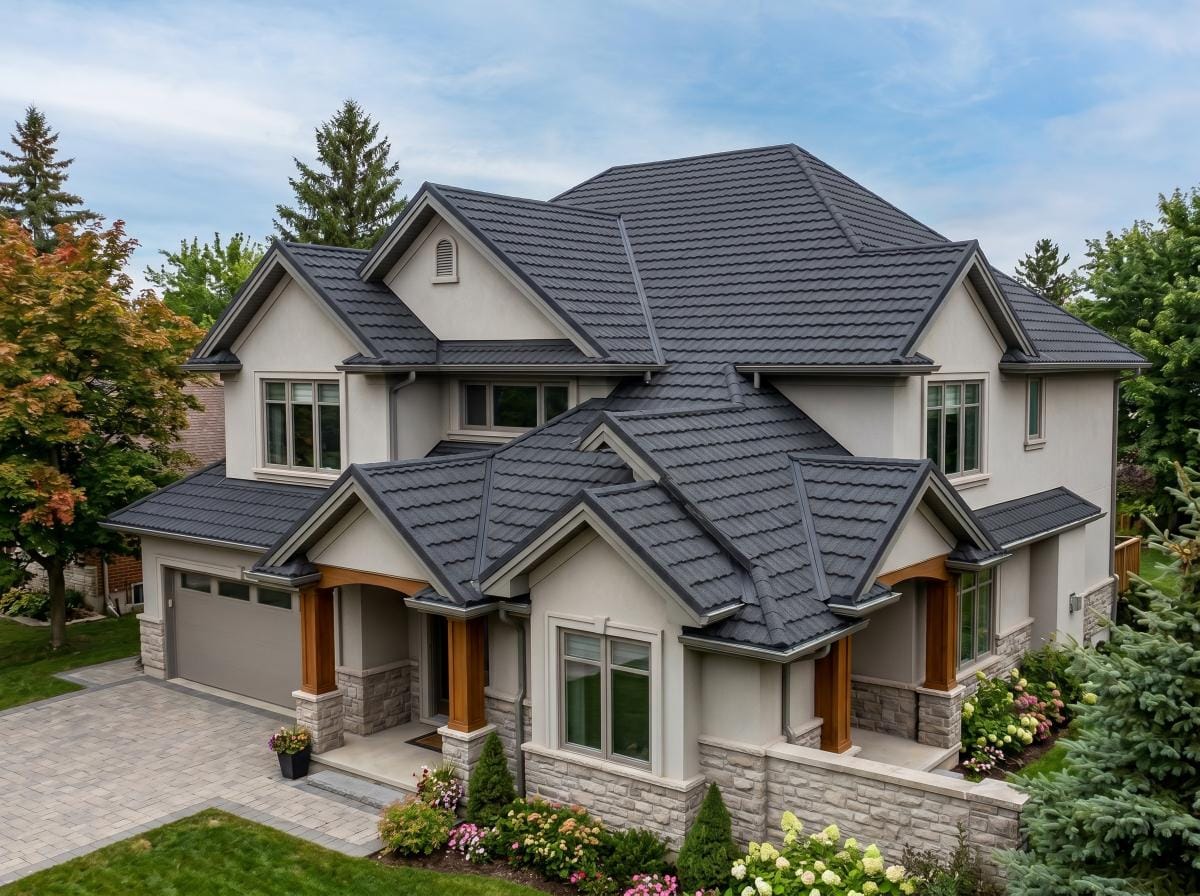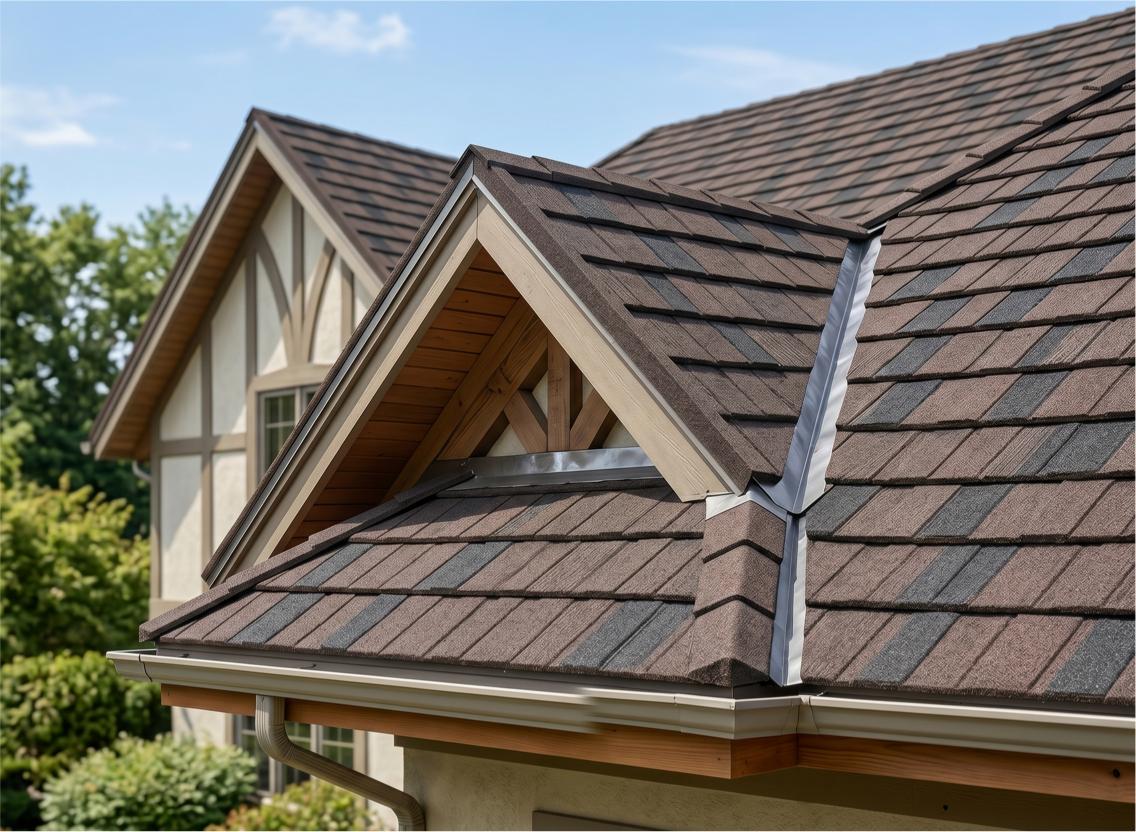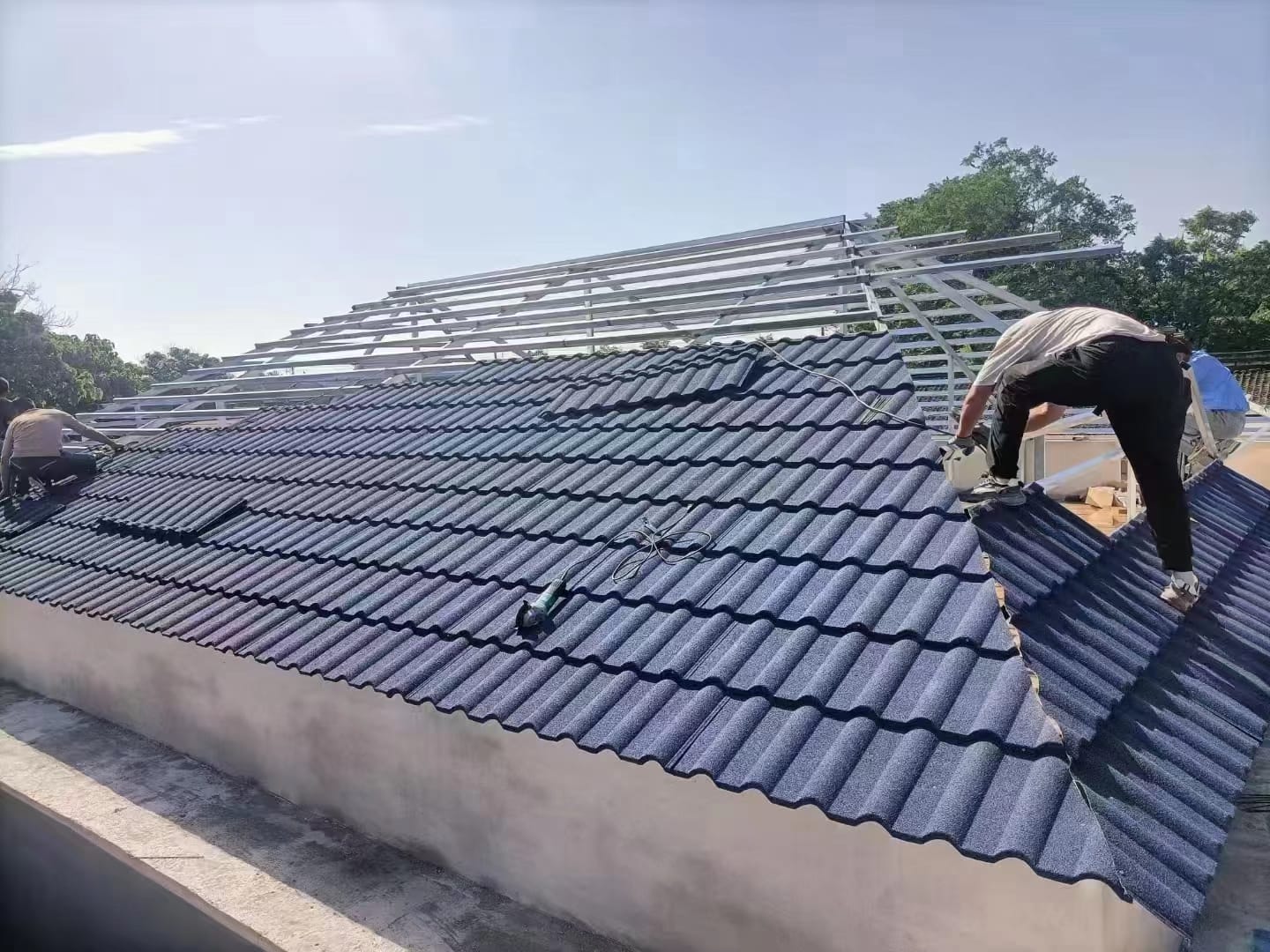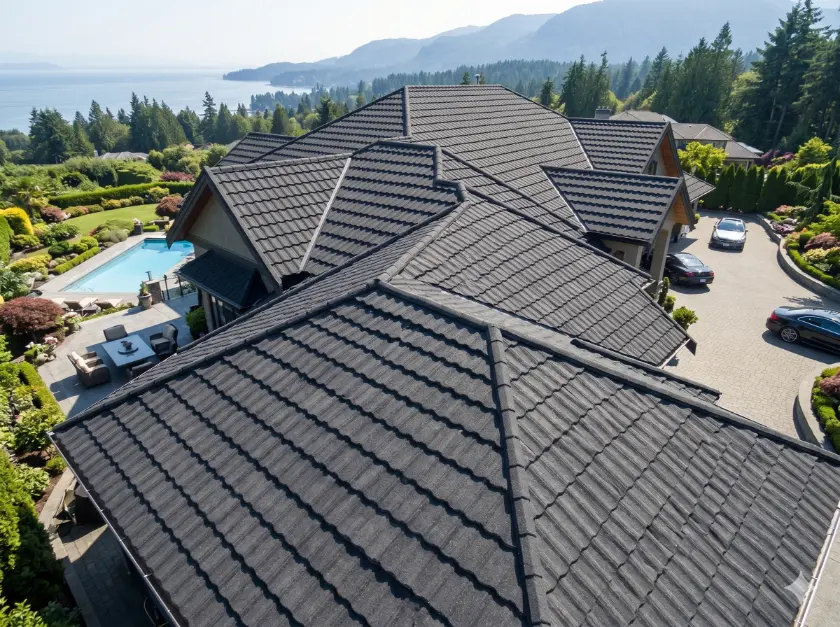

Sourcing roofing material for resale or project supply comes with real risk. For example, wrong specs mean returned containers, and vague certifications mean stalled customs. So this guide breaks down what stone coated metal roofing actually is, how suppliers price it at wholesale volume, and what to check before you commit to a supplier.
What Is Stone Coated Metal Roofing?
Stone coated metal roofing: A roofing panel made from galvanized or Galvalume steel, coated with an acrylic basecoat, embedded with natural stone granules, and sealed with a protective acrylic glaze.
Manufacturers build this material in layers:
- Steel substrate — typically 0.4–0.5mm galvanized or zinc-aluminum coated steel, chosen for strength and corrosion resistance.
- Acrylic basecoat — bonds the stone layer to the metal.
- Stone granules — natural chips that give color, texture, and UV protection.
- Acrylic overglaze — manufacturers bake this on for weather resistance and color retention.
This layered structure explains why the material performs differently than plain painted metal roofing. In short, it combines the strength of steel with the surface texture of tile, shake, or shingle — without the weight of clay or concrete.
For buyers, the layer structure also affects what to ask a supplier for. After all, a thinner substrate or a lighter granule bond can look identical on a spec sheet but perform very differently after a few years in the field. To visually inspect or test granule adhesion simply, you can submerge the tile in water for a few hours, then use a tool like a screwdriver to scratch the surface down to the baseplate. Using the same amount of force, the fewer strokes it takes to expose the base, the weaker the adhesion.
How Is Stone Coated Metal Roofing Priced for Wholesale Orders?
Retail cost data (the numbers homeowners see) isn’t useful for wholesale planning. For instance, installed retail prices in the US market range from $7 to $20 per square foot, but that figure bundles in labor, permits, and contractor markup — none of which apply to a bulk material order.
Instead, for buyers, the number that matters is landed cost per square meter or per container, broken down by profile, coating, and packaging.
Key Factors That Affect Bulk Pricing
| Factor | Impact on Price |
|---|---|
| Steel gauge / thickness | A thicker substrate raises cost but improves wind and impact resistance |
| Coating type | Zinc-aluminum coatings cost more than standard galvanized, but resist corrosion longer |
| Profile complexity | Deep-embossed profiles (e.g. shake, barrel tile) cost more to stamp than flat shingle profiles |
| Color / granule grade | Custom color runs and premium granule blends add cost |
| Packaging & shipping method | The container loading method affects freight cost per unit |
| Order volume | Larger orders typically bring the per-unit price down |
Stone Coated Metal vs Other Roofing Materials — Cost Comparison
| Material | Typical Lifespan | Relative Wholesale Cost | Notes |
|---|---|---|---|
| Asphalt shingle | 15–20 years | Low | Shortest lifespan, lowest upfront cost |
| Stone coated metal | 40–50+ years | Mid | Best durability-to-cost ratio for resale markets |
| Clay / concrete tile | 40–50 years | Mid-high | Heavier, higher shipping and structural cost |
| Standing seam metal | 40–60 years | High | Higher cost, limited design texture |
Overall, the takeaway for buyers is this: stone coated metal sits in a pricing zone that’s competitive with concrete tile, but it ships lighter and installs faster — two points worth highlighting to your own resale customers.
Comparing the Main Stone Coated Metal Tile Profiles
Different profiles suit different markets and climates. Therefore, matching profile to region reduces returns and complaints down the line.
| Profile | Best Suited For | Look |
|---|---|---|
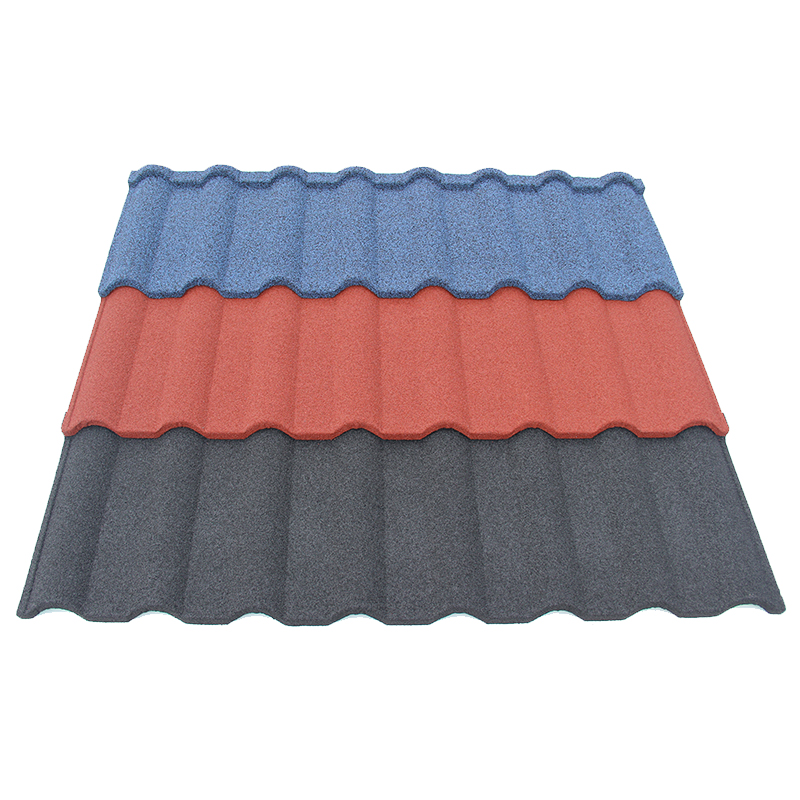
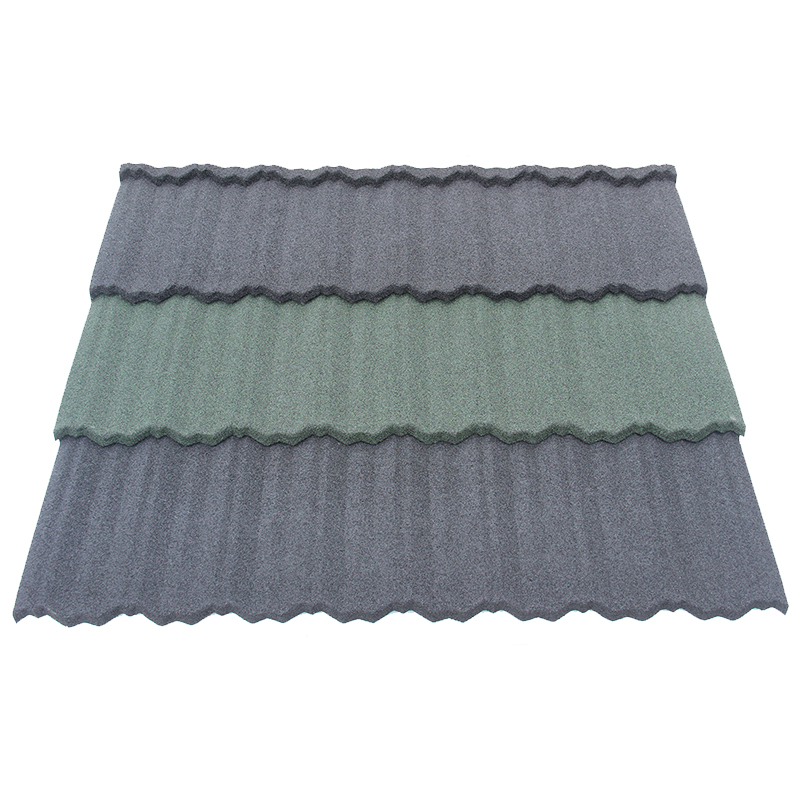
| Bond Tile | Modern residential builds | Clean, low-profile interlocking tile |
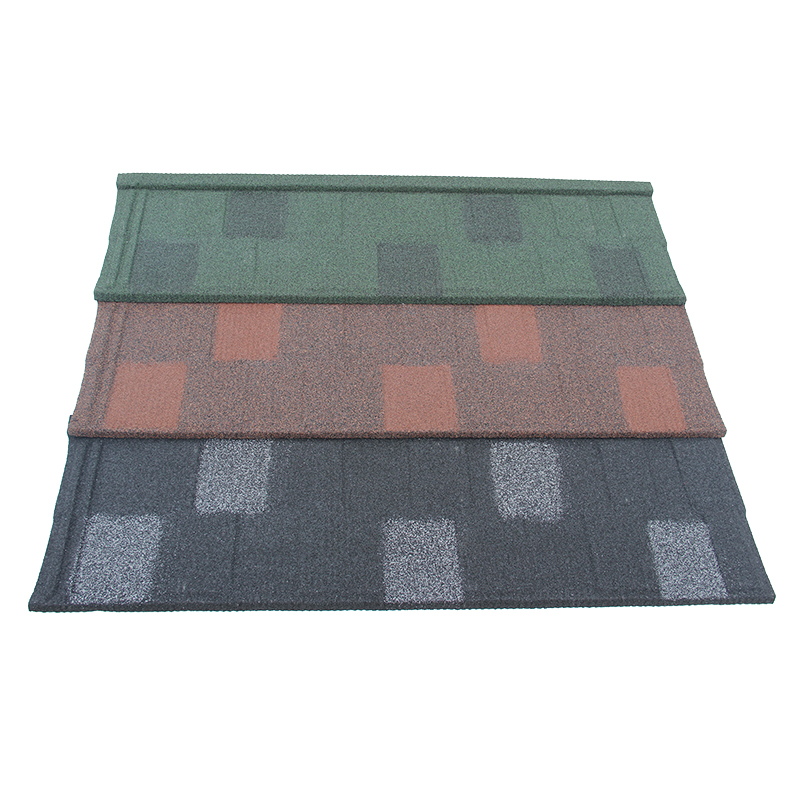
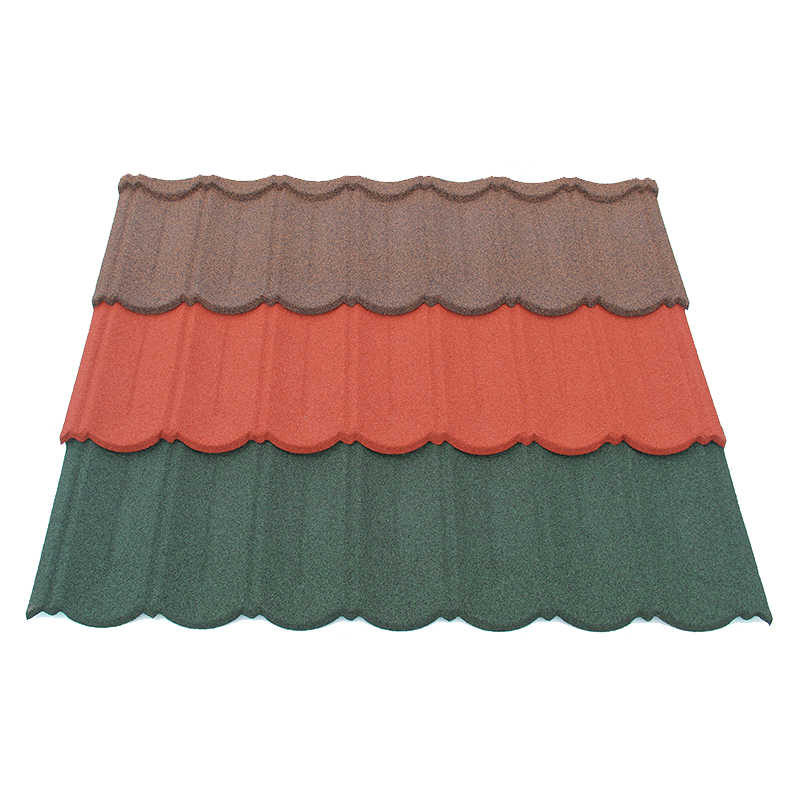
| Shingle Tile | Markets replacing asphalt shingle roofs | Traditional shingle texture |
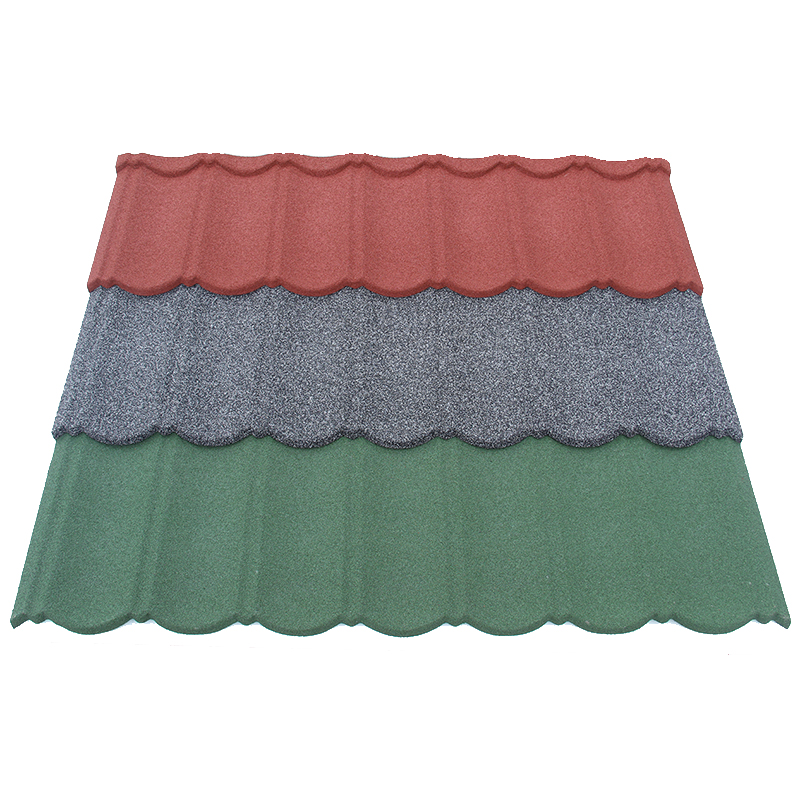
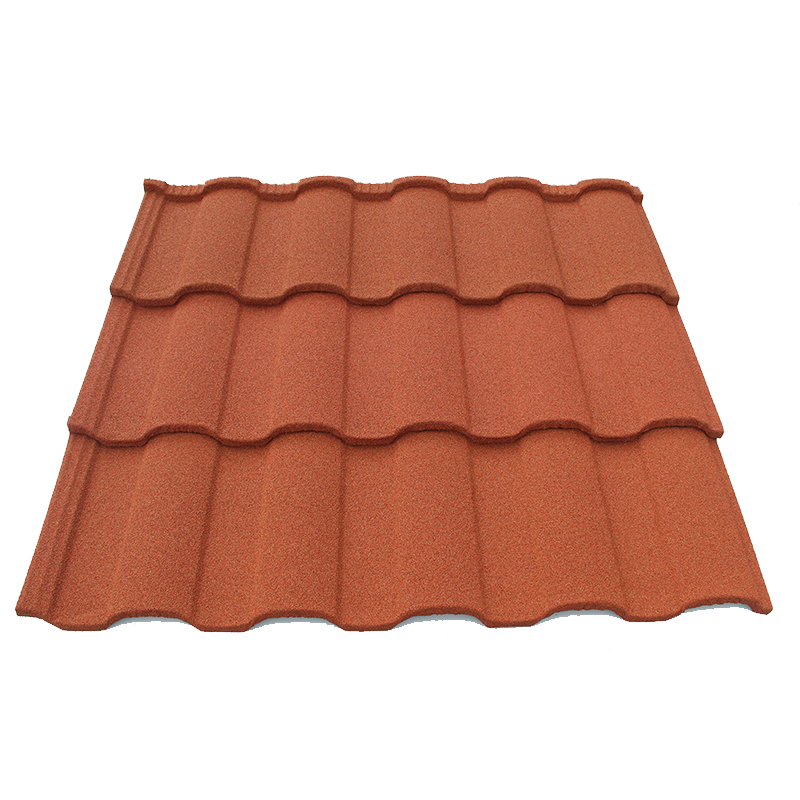
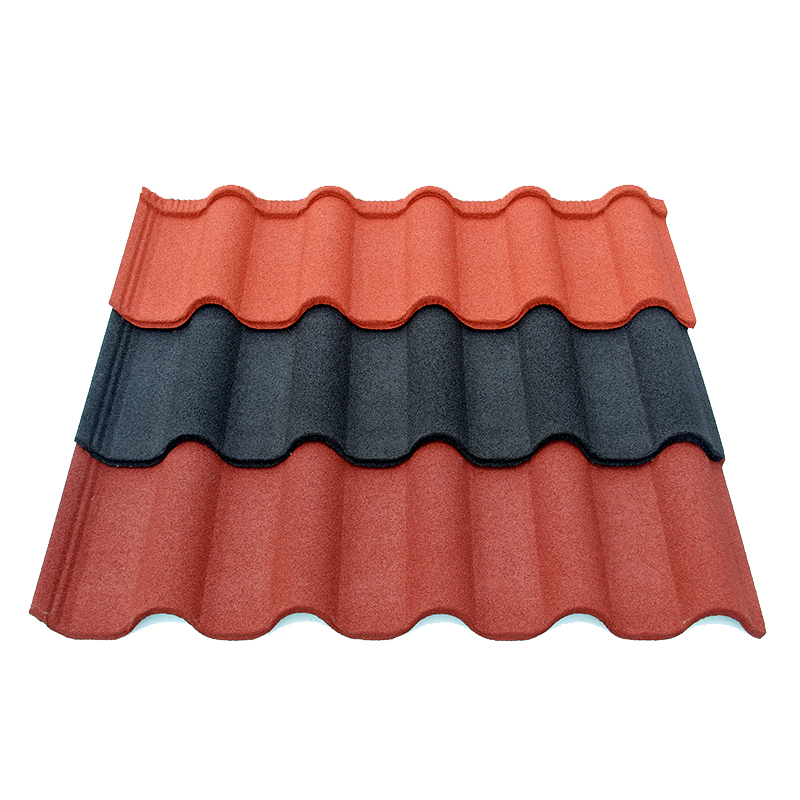
| Milano Tile | Mediterranean and Southern European-style architecture | Barrel-vault, terracotta-style profile |
| Roman Tile | Villas, resorts, classical-style buildings | Deep curved profile with strong shadow lines |
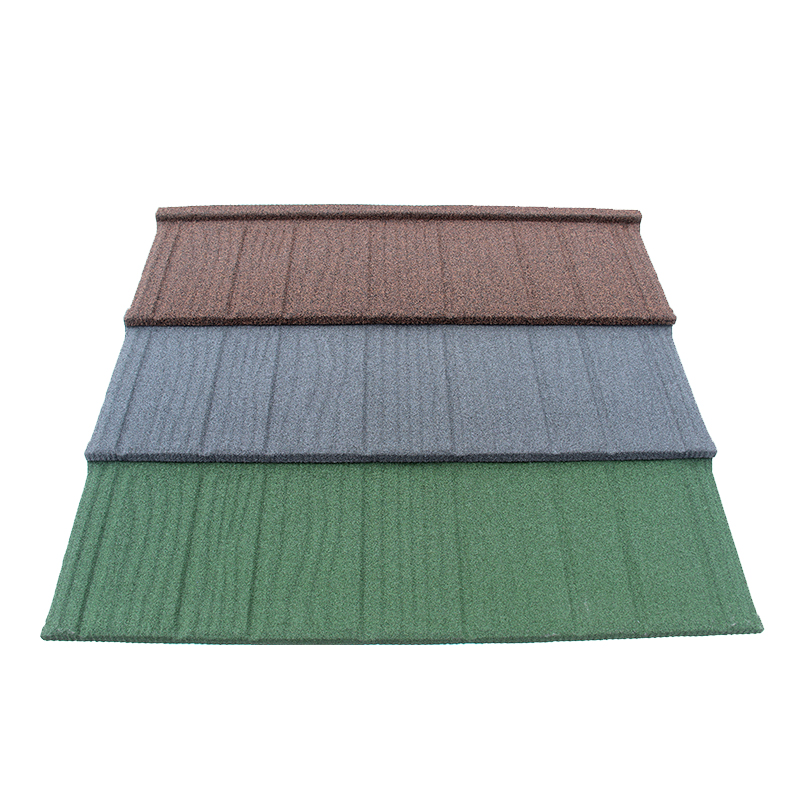
| Shake Tile | Markets favoring a wood shake aesthetic | Rugged, hand-split wood look |
If your end market leans toward a specific architectural style, that’s usually the fastest way to narrow down which profile to stock first. In practice, buyers supplying multiple regions often start with two profiles — one flat (Shingle or Bond) and one dimensional (Roman or Milano) — to cover the widest range of customer requests.
Quality Standards & Certifications Buyers Should Verify
Before placing an order, always ask for documentation — not just claims.
- CE / ISO 9001 certification: confirms the product meets recognized manufacturing and quality management standards.
- Warranty terms in writing: a credible supplier states an exact warranty period, not “long-lasting” or “durable.”
- Third-party inspection reports: independent labs test coating adhesion, wind resistance, and corrosion resistance.
- Sample-first ordering: request small-batch samples before you commit to a full production run, so you can confirm color match and coating quality.
Q: Can I request a factory video audit or third-party inspection before shipment?
A: Yes. Reputable manufacturers accommodate remote factory walkthroughs or third-party inspection scheduling as standard practice.
Q: What documentation should accompany a bulk shipment?
A: Ask for the mill test certificate, coating specification sheet, and — where relevant — the export compliance documents for your destination country.
How to Evaluate a Stone Coated Metal Roofing Manufacturer
A tile can look identical across five suppliers on a spec sheet. However, what separates a reliable long-term supplier is usually not visible in the first quote.
So here’s what’s worth checking:
- Monthly production capacity — this confirms they can support repeat bulk orders, not just a one-time run.
- Standard color/profile stock levels — this determines how fast a reorder can ship.
- Quality checkpoints in the production line — from raw material to finished panel.
- Export experience — ask which regions they’ve shipped to and whether they can meet local building code requirements.
- Responsiveness to problems — how they handle a damaged shipment or a spec mismatch says more than any brochure.
For example, JCROOF is a stone coated metal tile manufacturer with export experience across multiple regions. The company offers documented certifications, sample-first ordering, and factory verification support for wholesale buyers. You can review completed project examples or learn more about the company on the about us page.
Frequently Asked Questions
Q: What’s a typical minimum order quantity (MOQ) for stone coated metal tiles?
A: MOQs vary by manufacturer and container size. For JCROOF, the minimum order quantity (MOQ) is 1 x 20GP container.So confirm this directly with your supplier before you set a budget, since it affects freight cost per unit.
Q: How long does production and shipping typically take?
A: Lead time depends on order size and whether the color/profile is in stock. Therefore, always ask for a specific range in working days — not a vague estimate.
Q: Can profiles or colors be customized for a specific market?
A: Yes, many manufacturers offer custom coating and color runs for larger orders, based on regional climate and building code requirements.
Q: How many tiles fit in a standard shipping container?
A: This depends on panel size, profile depth, and packaging method. So ask your supplier for container loading calculations specific to the profile you’re ordering.
Q: Is stone coated metal roofing suitable for both residential and commercial projects?
A: Yes — builders use it across villas, resorts, hotels, and institutional buildings, given its durability and design range across the available profiles.