“Metal roofing” covers more ground than most buyers realize. A customer who asks for a metal roof might mean a sleek standing seam panel, a budget corrugated sheet, or a stone coated tile that looks nothing like either. So this guide breaks down what actually separates stone coated metal roofing from traditional metal roofing, and how that difference should shape what you stock.
Stone Coated Metal Roofing vs Traditional Metal Roofing: The Core Difference
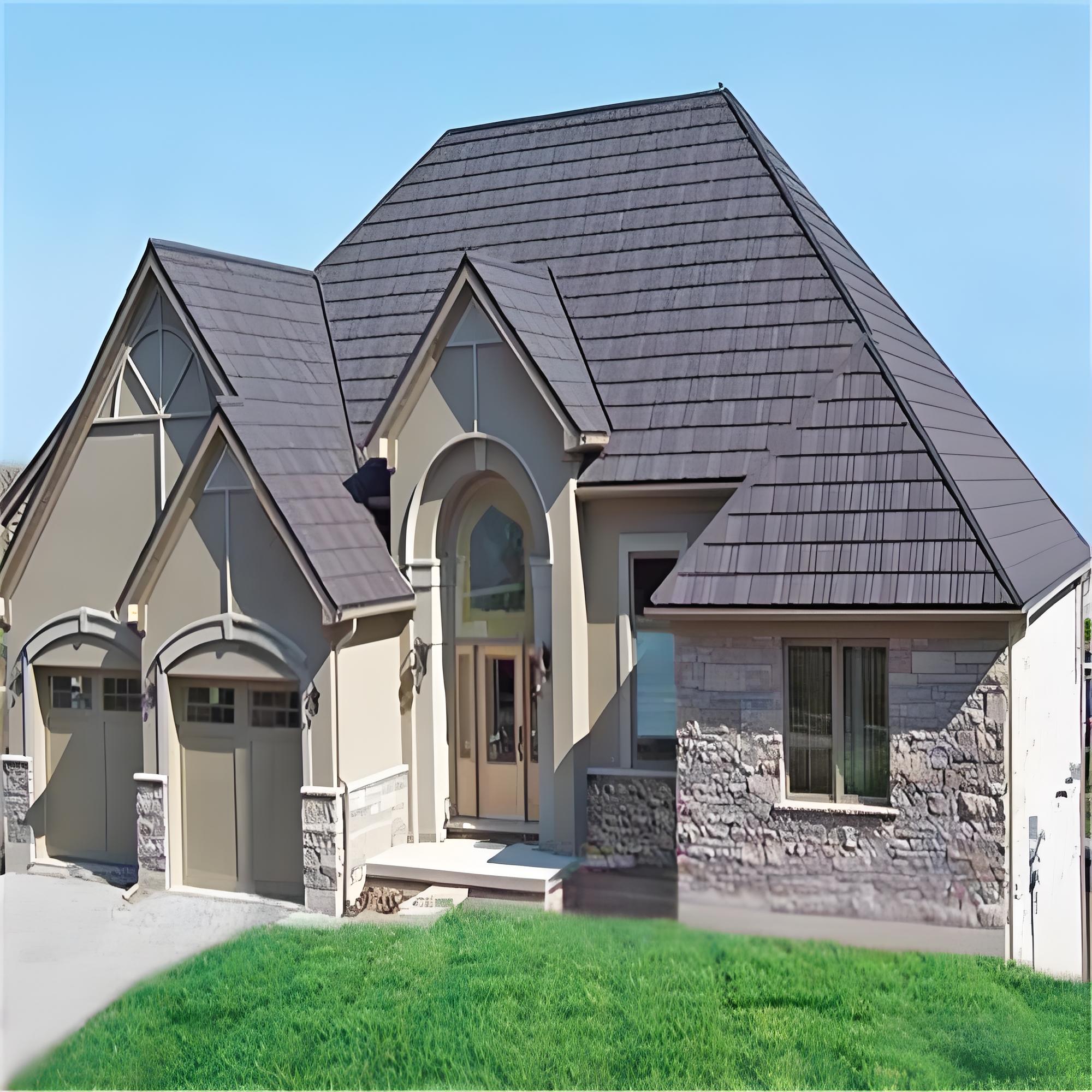
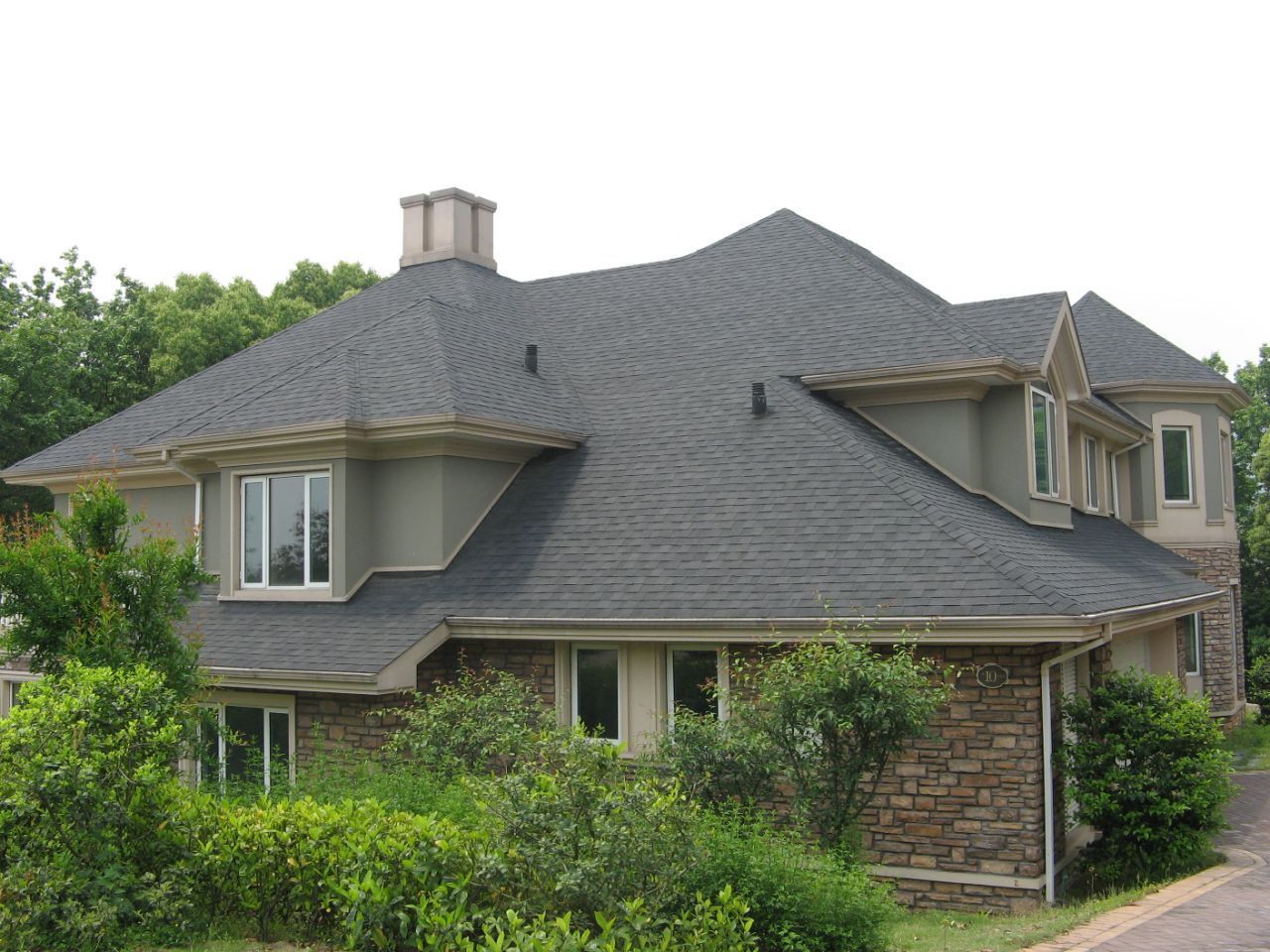
Stone coated metal roofing: Steel panels stamped into a tile, shake, or shingle profile, then coated with natural stone granules and an acrylic glaze to mimic traditional roofing materials.
Traditional metal roofing: Flat or ribbed steel, aluminum, or Galvalume panels, typically finished with a painted or bare metal surface, installed as standing seam or corrugated systems.
The difference comes down to shape and surface. Stone coated panels get stamped into deep, textured profiles and covered in stone. Standing seam and corrugated panels stay flat or lightly ribbed, with a painted finish instead of a stone layer. Here is the quick comparison:
| Factor | Stone Coated Metal | Standing Seam | Corrugated |
|---|---|---|---|
| Surface finish | Stone granules + acrylic glaze | Painted or bare metal | Painted or bare metal |
| Fastening | Interlocking panels | Concealed clips | Exposed screws |
| Appearance | Mimics tile, shake, or shingle | Modern, streamlined | Industrial, ribbed |
| Typical installed cost | About $7.50–$14.50 per sq ft | About $8–$14 per sq ft | About $4–$8 per sq ft |
| Best fit | Traditional-style architecture | Contemporary builds | Budget or utility structures |
Price ranges overlap across all three, so cost alone rarely settles the choice. Appearance and building style usually decide it first.
How Each Type Is Manufactured
The manufacturing process explains most of what buyers see on the surface.
Stone coated panels start as galvanized or zinc-aluminum coated steel. A press stamps the steel into a profile, which copies the shadow lines and texture of tile, shake, or shingle. Manufacturers then apply an acrylic basecoat, embed stone granules into the surface, and finish with a baked-on acrylic glaze.
Standing seam and corrugated panels follow a different path. A roll-forming machine shapes continuous steel or aluminum coil into flat panels with raised seams, or into a wavy corrugated profile. Most finish with a painted coating, such as Kynar 500 or a standard polyester paint, rather than a textured surface.
In short, stone coated manufacturing adds steps — stamping, basecoating, granule application, and glazing — that traditional metal panels skip. Those extra steps explain both the added texture and the different price structure.
Appearance and Design Options
Design flexibility is where stone coated metal pulls furthest ahead. Because the stamping process creates deep, varied profiles, stone coated tiles can copy several traditional roofing looks within one material category.
Buyers whose customers want a shingle-style roof can offer Shingle Tile. It follows the layout of a standard asphalt shingle roof. For a cleaner, more contemporary residential look, Bond Tile offers a low-profile interlocking design.
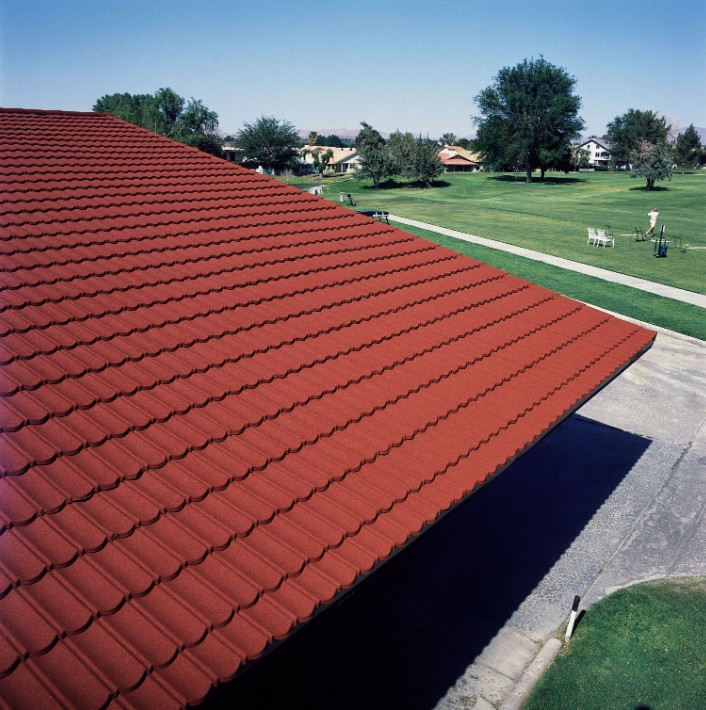
Markets that favor a Mediterranean or classical style tend to prefer Milano Tile or Roman Tile, both of which copy the barrel-vault shape of terracotta tile. Shake Tile suits buyers serving markets that want a wood shake appearance without the maintenance.
Standing seam and corrugated panels, by contrast, offer fewer shape options. Most buyers choose them for their clean, modern look rather than for matching a traditional style. So the two categories often serve different segments of the same market, not the same customer with different price points.
Fastening, Noise and Thermal Performance
Fastening method is a structural difference, not just a cosmetic one.
- Stone coated panels typically interlock along the edges, which spreads wind load across the panel field and reduces single points of failure.
- Standing seam panels use concealed clips under a raised seam, which keeps fasteners out of direct weather exposure.
- Corrugated panels use exposed screws that penetrate the panel face, which makes them faster to install but creates more potential leak points over time.
Noise performance also differs. The stone granule layer on a coated panel adds mass and texture, which helps dampen rain noise more than a bare painted surface does. Builders report that stone coated systems installed with solid decking produce noise levels close to a standard asphalt roof, while uninsulated corrugated panels can sound noticeably louder in heavy rain.
Thermal performance follows a similar pattern. All three metal types reflect more solar heat than asphalt, but a stone coated surface often performs slightly better, since the granule texture reduces direct heat absorption compared with a flat painted panel.
Addressing the Granule Loss Concern
Some comparisons raise one specific concern about stone coated panels: granule loss over time. It’s a fair question, and the honest answer depends on manufacturing quality rather than the category as a whole.
Granule adhesion: The strength of the bond between the acrylic basecoat and the stone granules, determined by resin quality, application process, and curing temperature during manufacturing.
A well-bonded panel sheds very little granule material, even after decades of UV and thermal cycling. A poorly bonded one can lose noticeable amounts within the first few years, which then collects in gutters, exactly as some comparisons describe.
For buyers, this means granule loss isn’t an inherent flaw of the category. It’s a quality control variable worth asking suppliers about directly, through test data rather than marketing language.
Cost Comparison: Stone Coated Metal vs Standing Seam & Corrugated
Published retail price ranges for all three overlap heavily, which makes side-by-side comparison more useful than any single number:
| Material | Installed Cost (US Retail, per sq ft) | Key Cost Drivers |
|---|---|---|
| Stone coated metal | About $7.50–$14.50 | Steel gauge, coating weight, granule grade, profile depth |
| Standing seam | About $8–$14 | Panel gauge, seam fabrication, coating type (e.g. Kynar) |
| Corrugated | About $4–$8 | Panel gauge, coating, simpler fastening labor |
When quotes land in a similar range, the deciding factors usually sit in the specification sheet rather than the sticker price. For stone coated metal, that means steel thickness, coating weight, and granule bond quality. For standing seam and corrugated, it means panel gauge and coating system. Buyers comparing two quotes should match these details before assuming one price is simply “better.”
Which Option Should Wholesale Buyers Stock?
The right product mix depends on what your downstream market actually wants to build.
- Markets with traditional-style housing (shingle, tile, shake aesthetics) generally respond better to stone coated profiles.
- Markets favoring modern, minimalist architecture often lean toward standing seam.
- Budget-driven or utility/agricultural projects typically favor corrugated panels for their lower installed cost.
Many wholesale buyers carry more than one category rather than picking just one. Stocking a stone coated line alongside a standing seam or corrugated option lets you serve both the traditional-style segment and the modern-build segment without turning away either type of customer.
JCROOF manufactures stone coated metal tiles across several profiles, with documented coating specifications and granule bond quality suited for export markets. If your customer base leans toward traditional roofing styles, the team can walk you through which profile and specification fit your target region. You can review the company background on the about us page or see completed installations in the project examples.
Frequently Asked Questions
Q: Is stone coated metal roofing more durable than standing seam?
A: Both can reach a long service life when properly specified. Standing seam often has fewer leak points due to concealed fasteners, while stone coated panels add surface protection from UV and impact through the granule layer.
Q: Does stone coated metal cost more to maintain than other metal roofing?
A: Not significantly. Both types need occasional inspection. Stone coated panels may need a protective recoat after 15–20 years in harsh climates, which standing seam typically does not require.
Q: Can stone coated tiles and standing seam panels be mixed on the same building?
A: It’s uncommon but possible, often used to distinguish a main roof from an accent structure. Confirm compatibility with your installer before planning this.
Q: Which option is better for a roof retrofit over existing shingles?
A: Stone coated metal is often preferred for retrofits because of its lighter weight and interlocking installation, though local building codes ultimately decide whether a retrofit is allowed.
Q: Does corrugated metal ever make sense for residential roofing?
A: Yes, particularly for budget-conscious projects or structures like garages and outbuildings where the industrial look fits the building’s purpose.