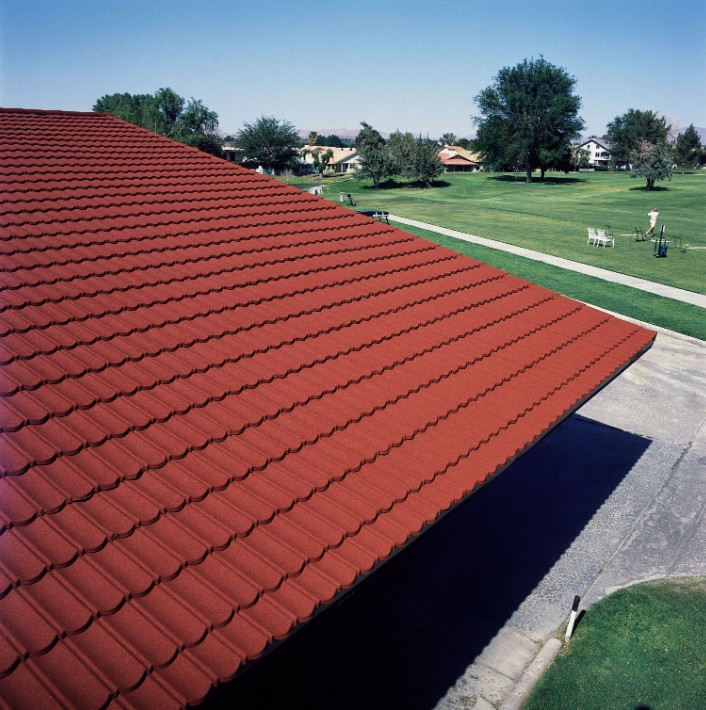
Stone coated roof tile tooling should remain connected to an identified profile, controlled revisions, and evidence from the finished product. Ask how the manufacturer maintains, repairs, and replaces relevant tooling. Equipment photographs alone cannot establish that future production will match the accepted version.
For buyers, the important questions concern repeatable product definition and continuity of the agreed supply. A tool can exist without being suitable for the proposed material or current profile. Its condition and associated verification need separate discussion.
This guide addresses tooling management when assessing a stone coated roofing tiles manufacturer. It does not compare machinery catalogs or quote custom mold prices. Use the questions to examine the arrangements relevant to your proposed product.
Connect the tooling discussion to the approved profile

Begin with the product your team intends to purchase. Identify the features that matter to its use and interfaces. A tooling discussion is more useful when the manufacturer can connect it with specific drawings and acceptance requirements.
Identify the actual product geometry and references
Record the profile name, drawing reference, applicable revision, and relevant component relationships. Ask the supplier to identify the proposed version clearly. Commercial names may remain familiar even when details in the underlying design differ.
For Bond Tile and Shingle Tile, keep the product references distinct. Do not assume that similar descriptions imply shared geometry. Ask which drawings and samples represent each offered version.
Identify which dimensions or features require technical review. They might concern a connection, overlap, edge, or interface with a relevant accessory. Let suitable technical personnel define the requirements rather than inventing a universal tolerance.
Use a manufacturer sample review to preserve the relationship between the physical item and its documents. State what the sample was accepted to represent. A presentation piece should not silently become the master reference for every future change.
Clarify how the proposed material and process relate to the finished geometry. Tooling is one part of that relationship. Ask the factory to explain the other relevant inputs without assuming that every manufacturer follows an identical production route.
Ask which tooling controls the relevant features
Ask the factory to identify the tools involved in forming the features under discussion. A buyer does not need every proprietary manufacturing detail. The explanation should still connect the production arrangement to the accepted product definition.
TRUMPF’s bending-tool information illustrates that forming results depend on tooling, material, and sheet thickness. This is general sheet-metal context. It does not establish which equipment or process any roofing manufacturer uses.
For a supplier such as JCROOF, ask the responsible production contact how the offered profile is controlled. Request relevant identification and verification examples where appropriate. Do not infer particular machinery, tooling ownership, or maintenance capability from company photographs.
Ask how staff select the correct tool and supporting instructions for an order. Determine how obsolete versions are distinguished. A clear selection method matters when several similar profiles or revisions are available at the site.
Keep manufacturing tooling separate from installation cutting tools. Search results and supplier brochures may mix those subjects. A useful roof cutter does not answer questions about the condition or revision of factory forming tools.
Review maintenance and revision control
Focus on how tooling remains suitable over time. Ask for a relevant example linking condition checks, maintenance action, and product verification. A maintenance schedule without understandable follow-up leaves the important purchasing question unresolved.
Ask how wear and condition are monitored
Ask which checks identify damage, wear, contamination, or other relevant condition changes. Clarify who performs them and how concerns are recorded. Avoid imposing an inspection interval that has not been justified for the actual production arrangement.
Review a recent maintenance record connected with relevant tooling. Look for tool identity, the observed condition, the action taken, and responsible personnel. A generic service invoice may not show which profile or tool was affected.
Ask what happens when condition is uncertain or unacceptable. Who can stop use, identify affected work, and arrange further review? The answer should connect tooling status with production decisions rather than describe maintenance as an isolated department activity.
Use the factory quality-control review to examine those decision interfaces. Tool maintenance and product release have different purposes. The factory should explain how relevant information passes between them.
Discuss storage and protection arrangements when tools are not in use. Ask how identification remains available during movement or maintenance. A tool that returns without a clear identity can create a revision-control problem even if it appears undamaged.
Follow a repair or revision into product verification
Distinguish routine maintenance from an action that changes relevant geometry or production behavior. Ask how the factory makes that distinction. Do not assume every repair leaves all accepted product characteristics unaffected.
Request an example of the review performed after a relevant repair. Which product features were examined and against which references? The explanation should show how the manufacturer determined that the resulting product remained acceptable.
If a drawing or instruction changes, identify the old and new revisions. Ask who approved the change and which orders it affects. An updated tool should not leave production and inspection working from incompatible references.
NASA’s configuration-management guidance describes controlling changes against an identified baseline and maintaining consistent product information. It is an engineering-management reference, not a roofing requirement. The same general distinction helps frame questions about accepted and revised product versions.
Record any need for buyer or project review before revised production is accepted. Approval responsibilities depend on the agreed arrangement. A factory’s internal maintenance sign-off should not automatically be interpreted as approval of a changed purchased product.
Evaluate replacement and supply-continuity arrangements

Ask how the manufacturer would handle unavailable, damaged, or discontinued tooling relevant to the proposed profile. The objective is to understand the options and remaining uncertainties. Avoid treating a promise of continuous supply as a demonstrated replacement plan.
Require evidence before treating replacement tooling as equivalent
Ask which controlled references would guide replacement tooling. Identify the drawings, samples, and acceptance criteria available for that purpose. A photograph of the original tool is not a complete product definition.
Clarify how products from replacement tooling would be compared with the accepted version. Include relevant interfaces and supporting documents in the discussion. A new tool that produces a similar appearance may still require further assessment.
Ask how initial results would be identified and reviewed before routine release. Keep the evidence related to the proposed product and material. Do not transfer approval from another profile simply because the replacement equipment has a similar description.
Identify what would happen if the original profile could not be reproduced within the agreed requirements. Ask how the buyer would receive the proposal and evaluate alternatives. Record the difference before accepting a substitute version.
Where technical questions remain, involve the appropriate reviewer early. The purchasing team should understand the conditions requiring that review. Avoid turning a continuity discussion into an unsupported guarantee that every future replacement will be interchangeable.
Clarify access, responsibility, and discontinuation arrangements
Ask who controls the relevant tooling and associated design information. Clarify whether any outside organization is involved. Where rights or access affect the transaction, have the agreed arrangements reviewed and documented appropriately.
Do not assume that a payment, product purchase, or company relationship settles tooling ownership. Ask what the actual agreement says. Keep commercial rights separate from the technical question of whether the tool produces an acceptable item.
Discuss how relevant discontinuation or replacement decisions would be communicated. Identify the responsible contact and the information needed for review. Avoid assuming a universal notification period or an indefinite obligation to retain every profile.
Use the manufacturer technical-support review to clarify who explains affected drawings and interfaces. Continuity depends partly on usable information. A replacement proposal is difficult to assess when the supporting documents remain unclear.
Keep a practical tooling-capability record
Organize the discussion around evidence your team can use later. Record what was demonstrated, what was explained, and what remains conditional. This is more informative than a simple tooling available checkbox.
Use a focused tooling review table
The following table provides a starting record structure. Adapt it to the product and relationship under review. It does not prescribe machine settings, service intervals, or universal dimensional limits.
| Review area | Evidence to seek | Decision question |
|---|---|---|
| Profile identity | Current drawing and sample references | Is the accepted version clear? |
| Tool identification | Relevant tool and instruction references | Can staff select the correct version? |
| Condition checks | Suitable observations and maintenance records | How is unsuitable tooling identified? |
| Maintenance response | Hold, repair, and responsible contacts | Does tooling status affect production decisions? |
| Revision control | Change record and product verification | Were affected characteristics reviewed? |
| Replacement | Controlled references and comparison plan | What evidence would establish acceptability? |
| External involvement | Explained responsibilities and access | Are important dependencies understood? |
| Discontinuation | Communication and alternative-review arrangements | Can the buyer assess a proposed change? |
Tie the findings to future product changes
Keep important conditions with the purchase specification and approved references. Assign responsibility for obtaining missing information. Do not report a future verification plan as an already completed demonstration.
Revisit relevant conclusions when tooling, material, profile geometry, or production arrangements change. Ask which previous findings still apply. The useful result is controlled product continuity supported by evidence, rather than confidence based only on visible machinery.