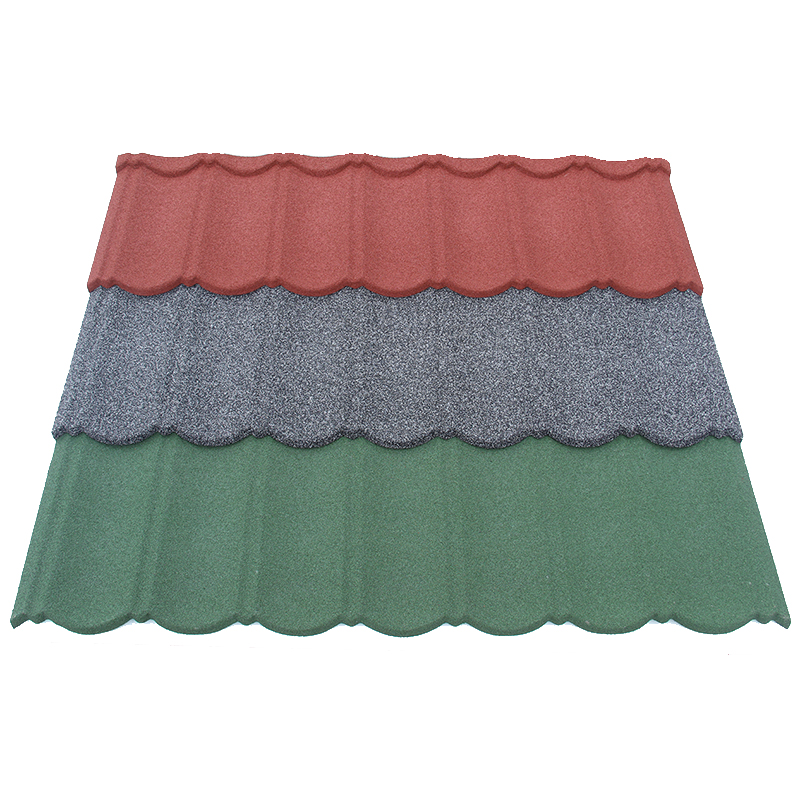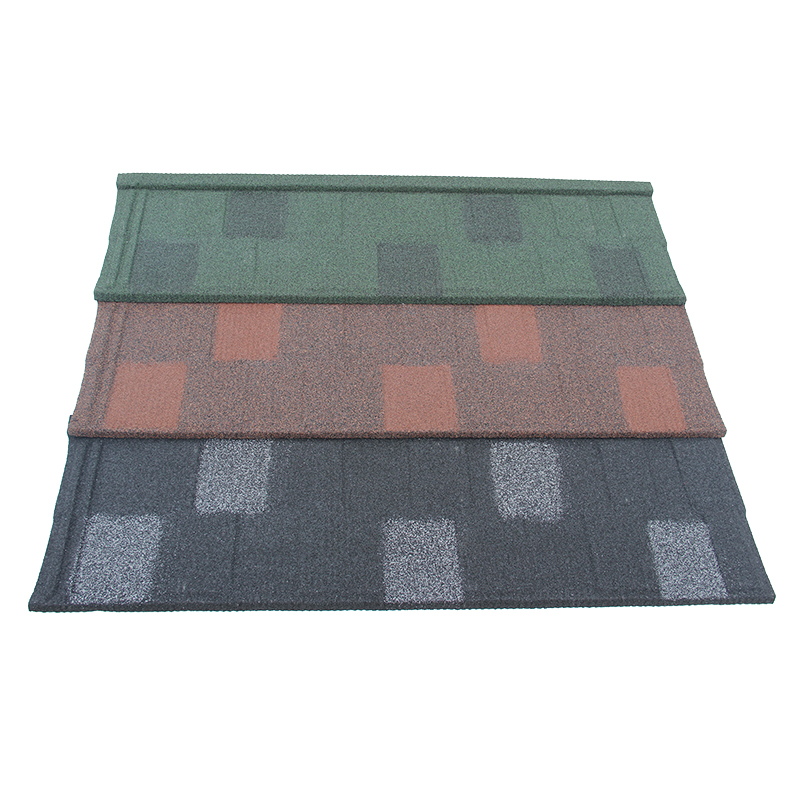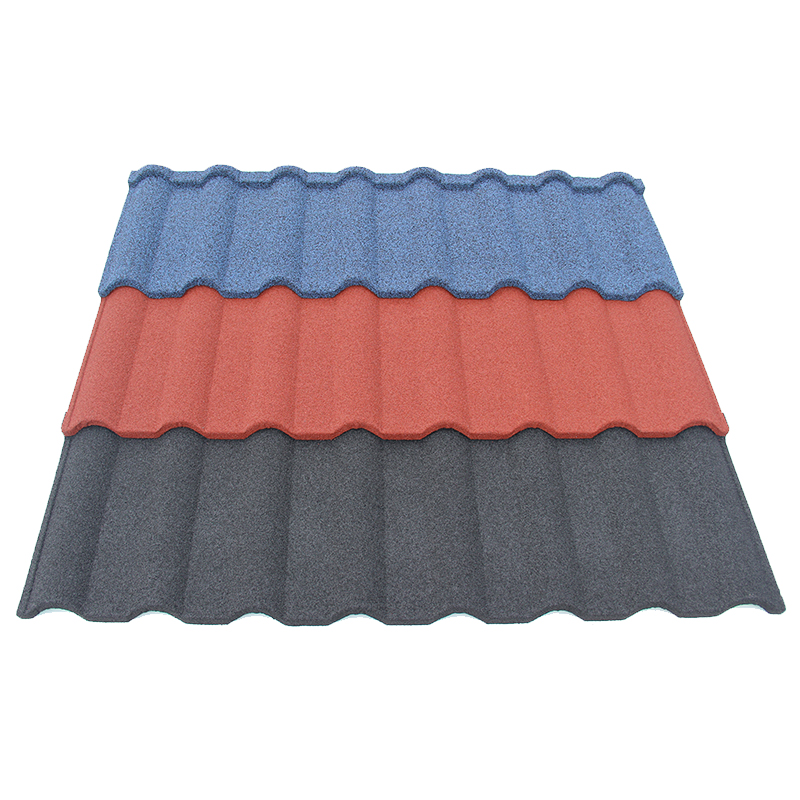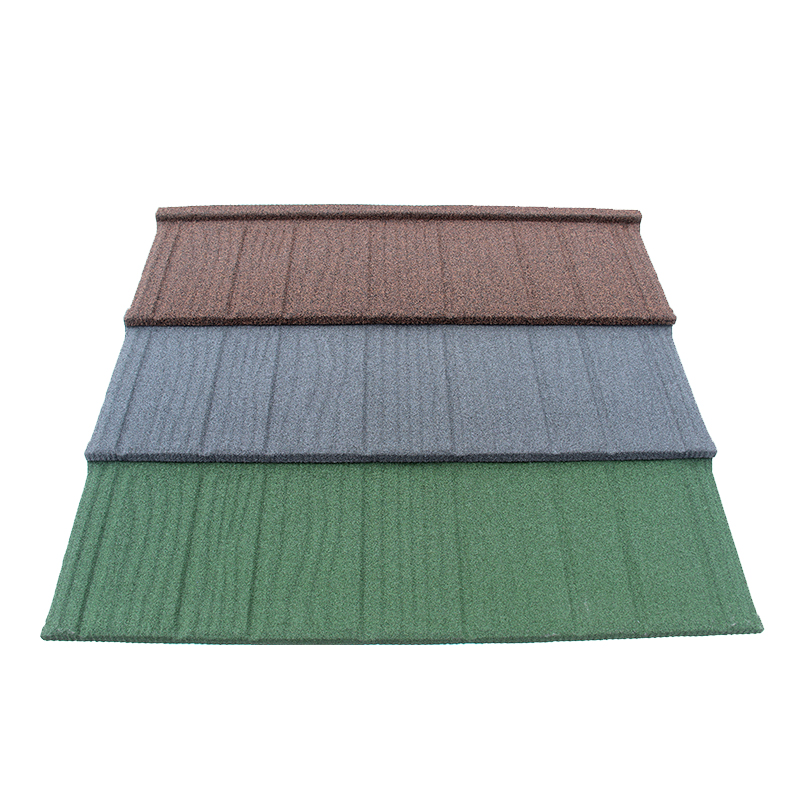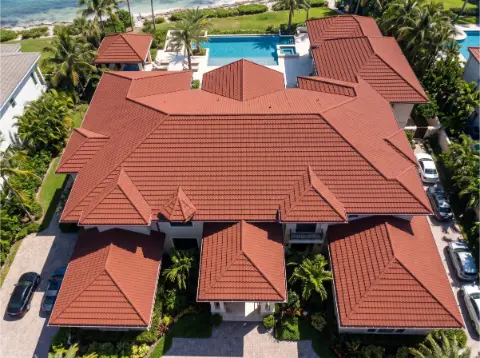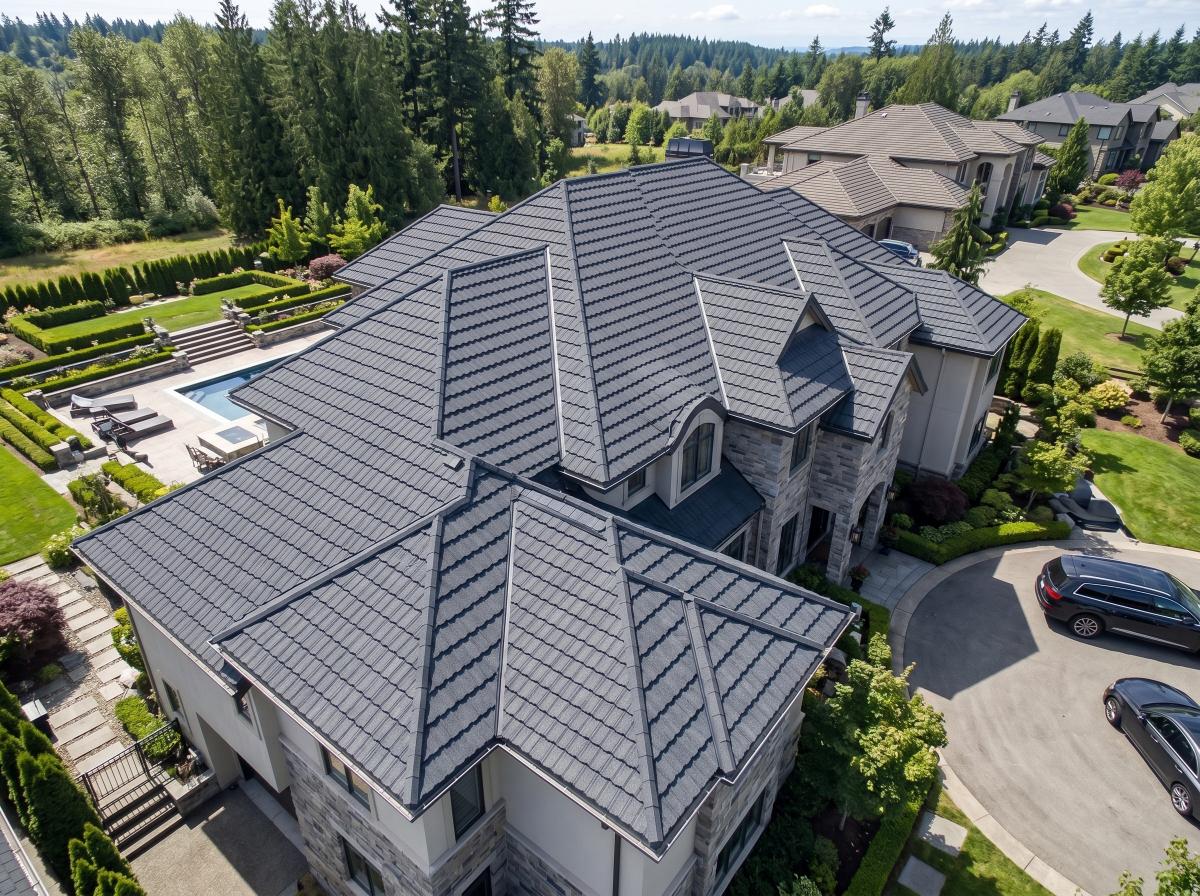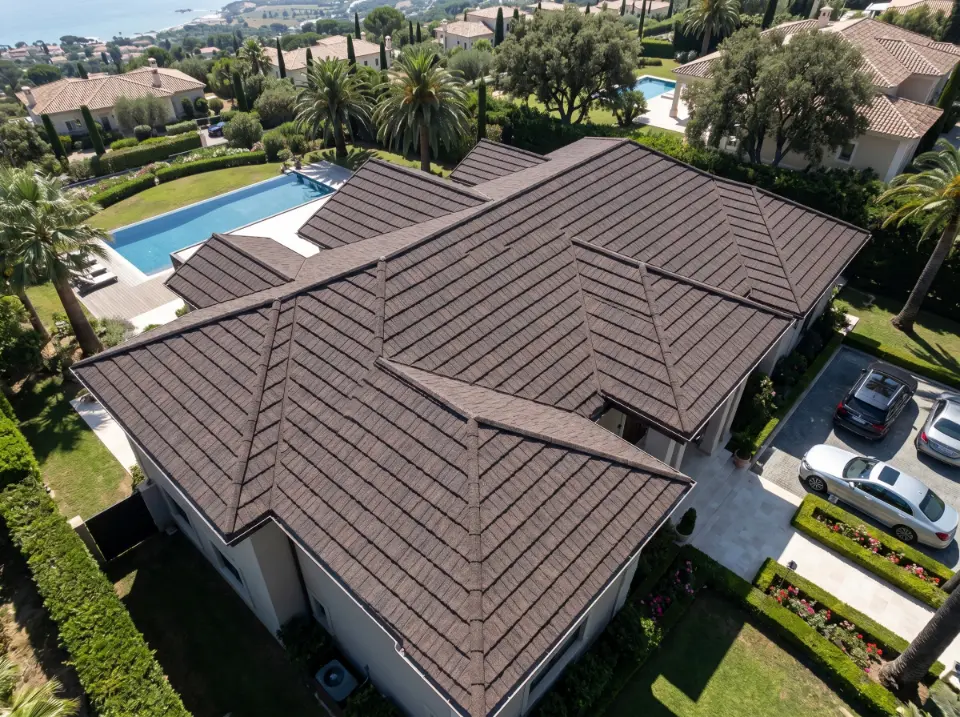

In high-humidity equatorial climates, the proliferation of microorganisms on building surfaces is a primary driver of structural and aesthetic decay. Ensuring stone coated metal roofing algae resistance is a strategic priority for developers who must protect the asset’s Curb Appeal and long-term thermal efficiency. Traditional materials like porous clay or organic bitumen act as thermal sponges, trapping moisture and providing nutrients for fungal spores. This forensic audit dissects the inorganic chemistry and metallurgical engineering that allow modern modular steel systems to maintain a zero-defect envelope for over fifty years.
The Chemistry of Bio-Inhibition: 800°C Sintered Mineral Shields
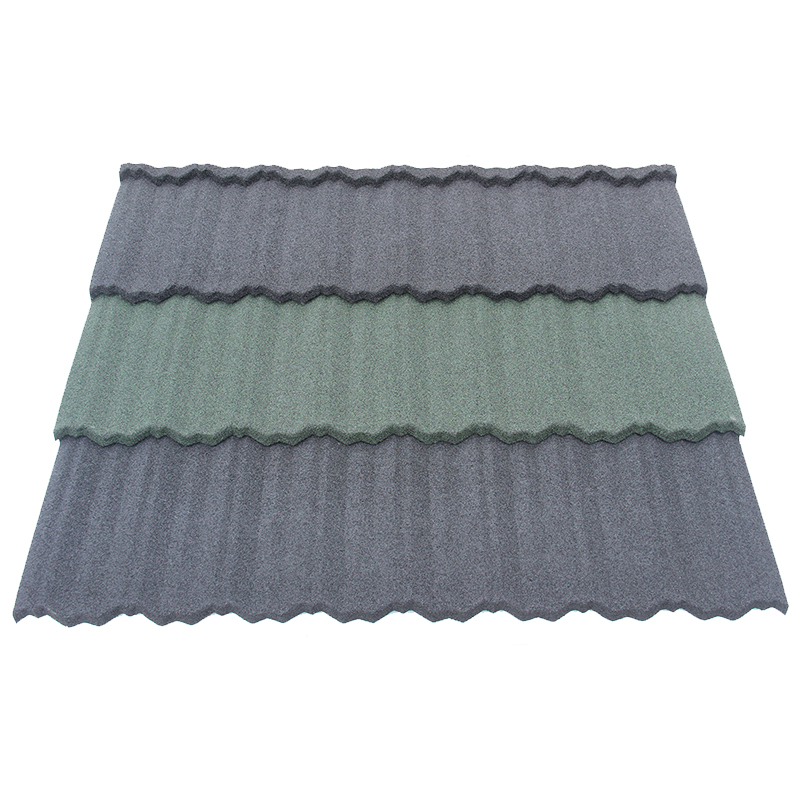
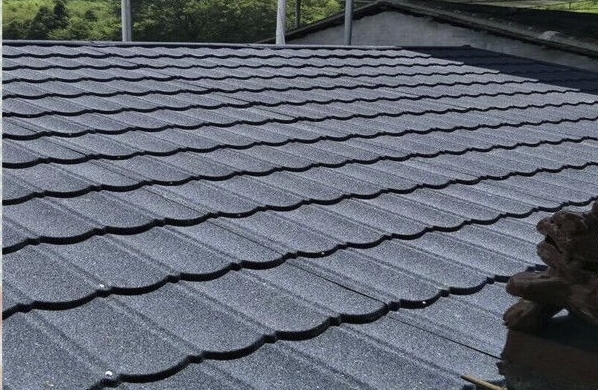
The primary reason for superior stone coated metal roofing algae resistance lies in the chemical composition of the surface granules. Unlike standard asphalt shingles that use organic fillers and cold-dyed sand, JCROOF engineering utilizes basalt rock granules sintered at temperatures exceeding 800°C. This ceramic-glazing process fuses inorganic pigments into the stone’s crystalline structure, creating a non-porous surface with zero nutritional value for spores. This inorganic shield ensures that a shingle tile maintains its crisp architectural lines without the unsightly green streaking that typically plagues residential projects in damp geographic zones.
Surface Tension Management and the milano tile Overglaze
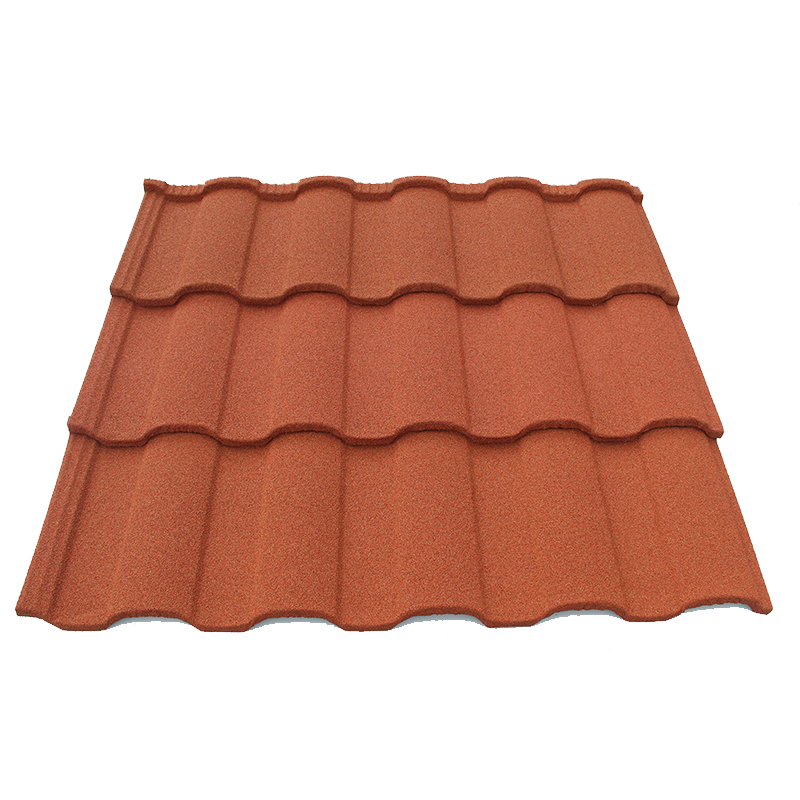
In addition to the sintered stone, a high-performance hydrophobic overglaze is applied during the final manufacturing stage to enhance stone coated metal roofing algae resistance. This transparent acrylic coating creates a low-friction surface that prevents airborne silt and organic debris from finding a mechanical foothold. For a high-profile milano tile, this facilitates a “self-cleaning” effect where rain events wash away spores before they can colonize. By keeping the surface clean and dry, the system effectively neutralizes the primary environmental conditions required for biological growth, preserving the roof’s refractive index and aesthetic prestige.
Metallurgical Endurance: The Aluzinc Shield against Bio-Decay
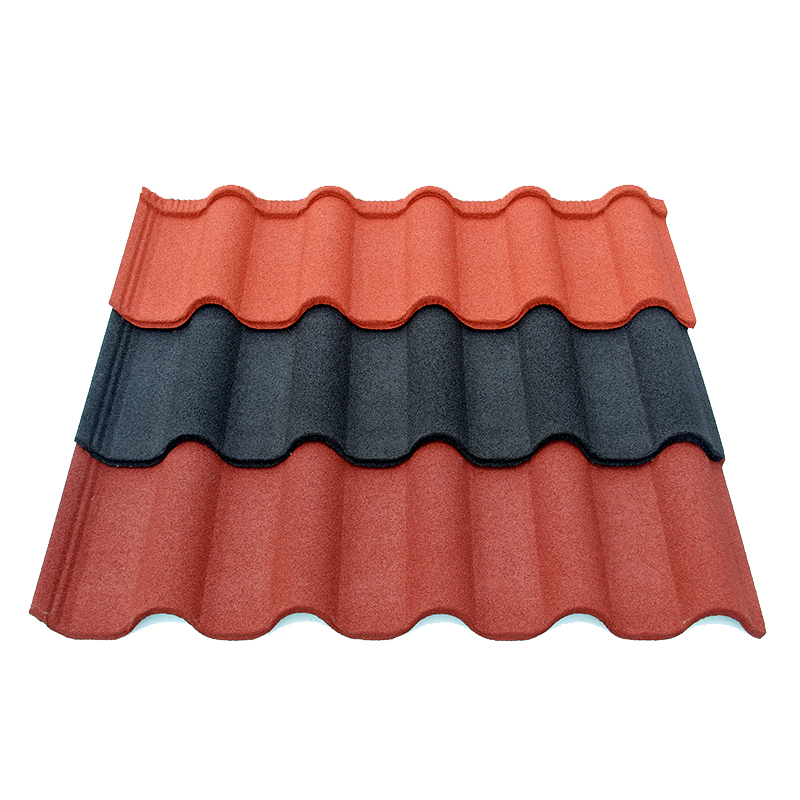
While algae primarily affect the surface, the localized moisture retention caused by biological clusters can accelerate the corrosion of inferior substrates. The structural integrity behind stone coated metal roofing algae resistance is fundamentally linked to the AZ150 Aluzinc core. Even if organic matter accumulates in the deep valleys of a bond tile, the 55% Aluminum-Zinc alloy provided by JCROOF provides a superior anti-corrosive barrier. Laboratory data confirms that this metallurgical shield prevents the structural “softening” and rot often observed when moss roots penetrate the fragile mineral mats of traditional bitumen products, which leads to localized leaking and deck failure.
Thermal Dynamics and the shake tile Passive Aeration
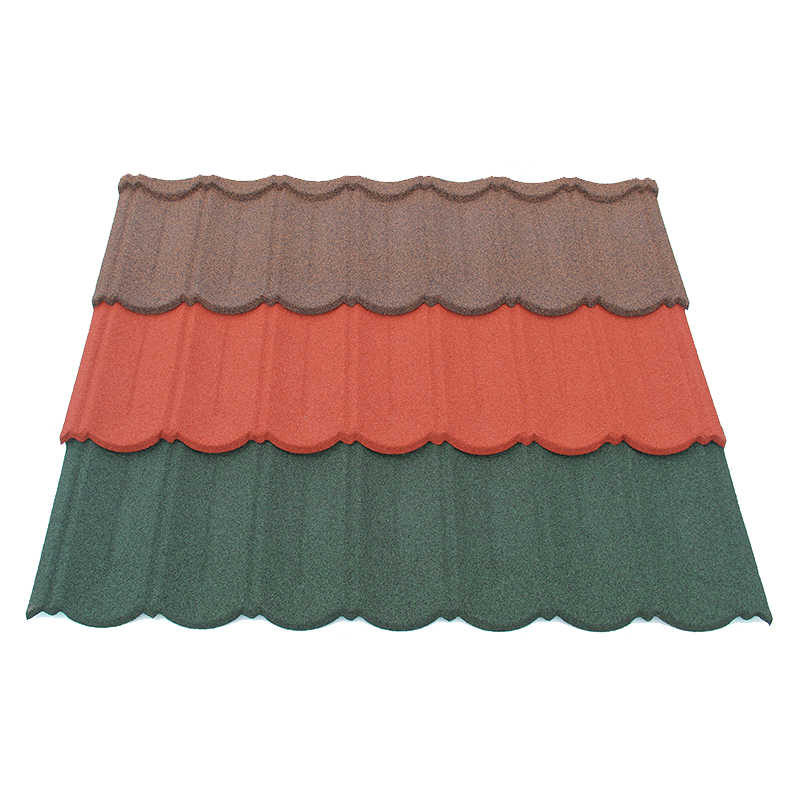
Biological growth thrives in stagnant, humid environments where the dew point remains constant. The batten-mounted installation grid required for modular metal systems creates a continuous air gap beneath the tiles. This design ensures that a shake tile maintains its stone coated metal roofing algae resistance by functioning as a “vented cold roof.” This passive thermal barrier promotes rapid evaporation of surface moisture and manages the thermal expansion of the steel core. By maintaining constant airflow, the system prevents the shaded, damp conditions that allow moss to thrive, effectively protecting the wooden or steel rafters from the hygroscopic stress associated with biological moisture retention.
Lifecycle Economics: The ROI of Bio-Resistant Building Envelopes
Strategic procurement managers must bench-mark the “total cost of hygiene” over a thirty-year horizon. Choosing a material with high stone coated metal roofing algae resistance eliminates the need for expensive chemical pressure washing, which can cost thousands of dollars and traumatize the roof’s polymer layers. Furthermore, many biocidal cleaners are corrosive to traditional iron sheets and harmful to the local ecosystem. By specifying an engineering-grade stone coated system, distributors can market a “set-and-forget” solution that enhances the property’s Net Present Value (NPV) and reduces the owner’s operational budget, providing a significant competitive advantage in the luxury residential sectors.
Comparative Matrix: Bio-Resistance vs. Porous Media
Use the following technical matrix to justify the investment in building materials that prioritize stone coated metal roofing algae resistance. This benchmark compares the biological resilience of stone-coated steel against traditional clay and concrete alternatives common in tropical and coastal markets.
| Performance Metric | Standard Clay/Concrete | Stone-Coated Metal (AZ150 Grade) |
|---|---|---|
| Surface Porosity | High (Water absorbent). | Low (Inorganic ceramic glaze). |
| Nutrient Content | Trace organic fillers. | Zero (Sintered mineral rock). |
| Algae Resistance | Poor (Staining within 24 months). | Extreme (Anti-fungal Overglaze). |
| Fastening Logic | Gravity/Vertical (Weak). | Horizontal Nose-Fix (Shear). |
| Cleaning Frequency | Every 3 – 5 Years ($$$). | Zero / Rare low-pressure wash. |
Professional FAQ: Solving Site-Level Hygiene Challenges
Successful facility management depends on the ability to translate technical specifications into field-level action. Many field problems reported in high-humidity zones are actually symptoms of excessive overhanging foliage or poor gutter management rather than a failure of stone coated metal roofing algae resistance. By providing on-site technical audits and emphasizing the importance of clearing localized organic debris, you establish your firm as a technical authority. These insights help procurement managers defend high-quality building material choices to project stakeholders and ensure a durable outcome for the property owner.
Can Algae Growth Affect the Roof’s Energy Efficiency?
Yes. Algae colonization creates a dark, heat-absorbing film over the roof surface, converting the building into a thermal sponge. By ensuring the surface maintains its stone coated metal roofing algae resistance, you preserve the roof’s high solar reflectance index (SRI). This protects the building’s energy-efficiency profile, lowering HVAC cooling loads by up to 20%. For green-building certifications and sustainable infrastructure projects, this biological resistance is a critical factor in maintaining the predicted energy ROI over the entire service life of the building.
Final Procurement Action Plan
Maximizing the biological defense of your project requires a shift to technical “spec-buying.” Focus your audit on Aluzinc GSM (AZ150), G300 structural ductility, and the 800°C sintering benchmarks of the stone granules. These three engineering pillars support stone coated metal roofing algae resistance, ensuring the roof outlasts any bitumen-based alternative. Partnering with professional manufacturers provides the laboratory data and technical manuals needed to win large-scale government and commercial tenders. Contact our technical team today for a project-specific structural audit and biological resistance submittal guide.