

Stone coated roofing vs concrete tile durability looks very different depending on which climate stress you are applying. A material that performs well in dry Mediterranean heat can crack under freeze-thaw cycles. Similarly, a tile that sheds tropical rain efficiently may corrode near the coast without the right coating. This guide breaks down how these two materials actually age under real climate stress, and which one holds up better across the conditions most commonly faced by buyers worldwide.
Why Climate Is the Most Important Variable in This Durability Comparison
Most durability ratings get established under controlled laboratory conditions. In practice, however, real climate stress is rarely uniform or single-axis. Buildings face combinations of UV exposure, temperature cycling, moisture penetration, and wind-driven impact simultaneously. A material’s durability rating tells part of the story. How it responds to your specific climate combination tells the rest.
Laboratory Ratings Do Not Always Reflect Regional Performance
A concrete tile rated for fifty-year performance in a dry climate may show cracking or surface degradation much earlier in a high-freeze region. As a result, stone coated roofing vs concrete tile durability comparisons need to be anchored to specific climate profiles, not generic lifespan claims. Buyers who skip this step often discover the mismatch only after several difficult winters.
Multi-Stress Climates Expose Material Weaknesses Faster
Coastal climates combine salt air with humidity and wind. Mountain climates, by contrast, combine freeze-thaw cycles with snow load and UV exposure. These combined stresses accelerate material failure faster than any single factor would on its own. Consequently, buyers in these regions need climate-specific data rather than general product ratings.
Breaking Down How Each Material Responds to Key Climate Stresses
Four climate stress categories determine most of the durability gap between stone coated roofing and concrete tile in real-world conditions. These are freeze-thaw cycling, UV and heat exposure, salt and coastal humidity, and impact from wind-driven debris. Understanding how each material handles these stresses individually helps buyers make a more accurate long-term comparison. The table below summarizes typical performance across these stresses.
| Climate Stress | Concrete Tile Performance | Stone Coated Metal Roofing Tile Performance |
|---|---|---|
| Freeze-Thaw Cycling | Moderate risk of surface cracking over repeated cycles | Strong, coated steel does not absorb moisture to freeze |
| UV and Heat Exposure | Good, dense concrete resists UV degradation well | Strong, reflective granule coating resists UV breakdown |
| Salt and Coastal Humidity | Moderate, concrete itself resists salt but fixings may corrode | Strong with aluminum-zinc base and bonded coating |
| Wind-Driven Impact and Debris | Moderate, surface can chip or crack under impact | Strong, coated steel flexes without cracking under impact |
Freeze-Thaw Cycling in Cold Climates
Concrete is porous at a microscopic level. Because of this, moisture that penetrates the surface expands when it freezes, creating internal stress that accumulates over repeated cycles. Over time, this process produces hairline cracks that worsen each winter. Stone coated metal roofing, however, does not absorb moisture in the same way. Its coated steel base remains dimensionally stable through freeze-thaw cycles, which eliminates this cumulative cracking risk entirely.
UV and Heat Exposure in Hot Climates
Both materials handle UV exposure reasonably well, though through different mechanisms. Concrete’s dense composition resists UV degradation at the surface. Stone coated roofing’s granule coating, on the other hand, reflects UV energy rather than absorbing it. This reflective approach also reduces surface temperature, which lowers thermal stress on the steel base beneath. In sustained high-heat climates, therefore, this coating advantage contributes meaningfully to long-term durability.
Salt and Coastal Humidity Exposure
Concrete tile itself resists salt penetration reasonably well. However, the metal fixings holding it in place corrode faster in salt air than the tile surface does. Stone coated roofing with an aluminum-zinc base and fully bonded granule coating resists this combined stress more consistently. Furthermore, the coating protects both the tile surface and reduces the likelihood of corrosion migrating outward from the fixings over time.
How Climate Durability Differences Play Out Across Real Projects
These material responses to climate stress translate into different project recommendations depending on where the building sits. In each case, the dominant local climate stress should guide the durability comparison rather than a generic product rating. The following examples show how stone coated roofing vs concrete tile durability drives real specification decisions.
Mountain and High-Altitude Construction
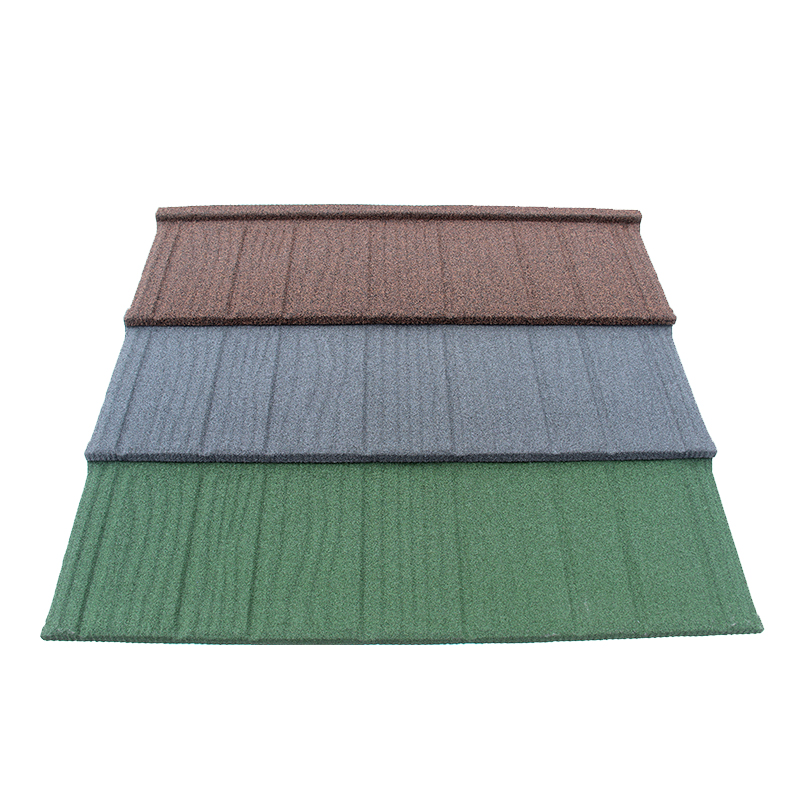
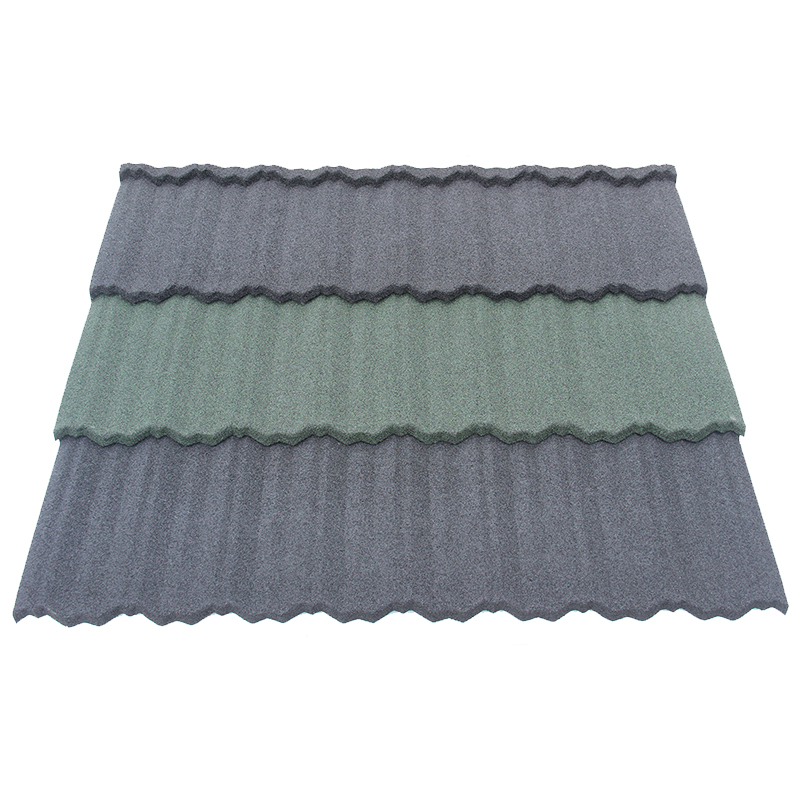
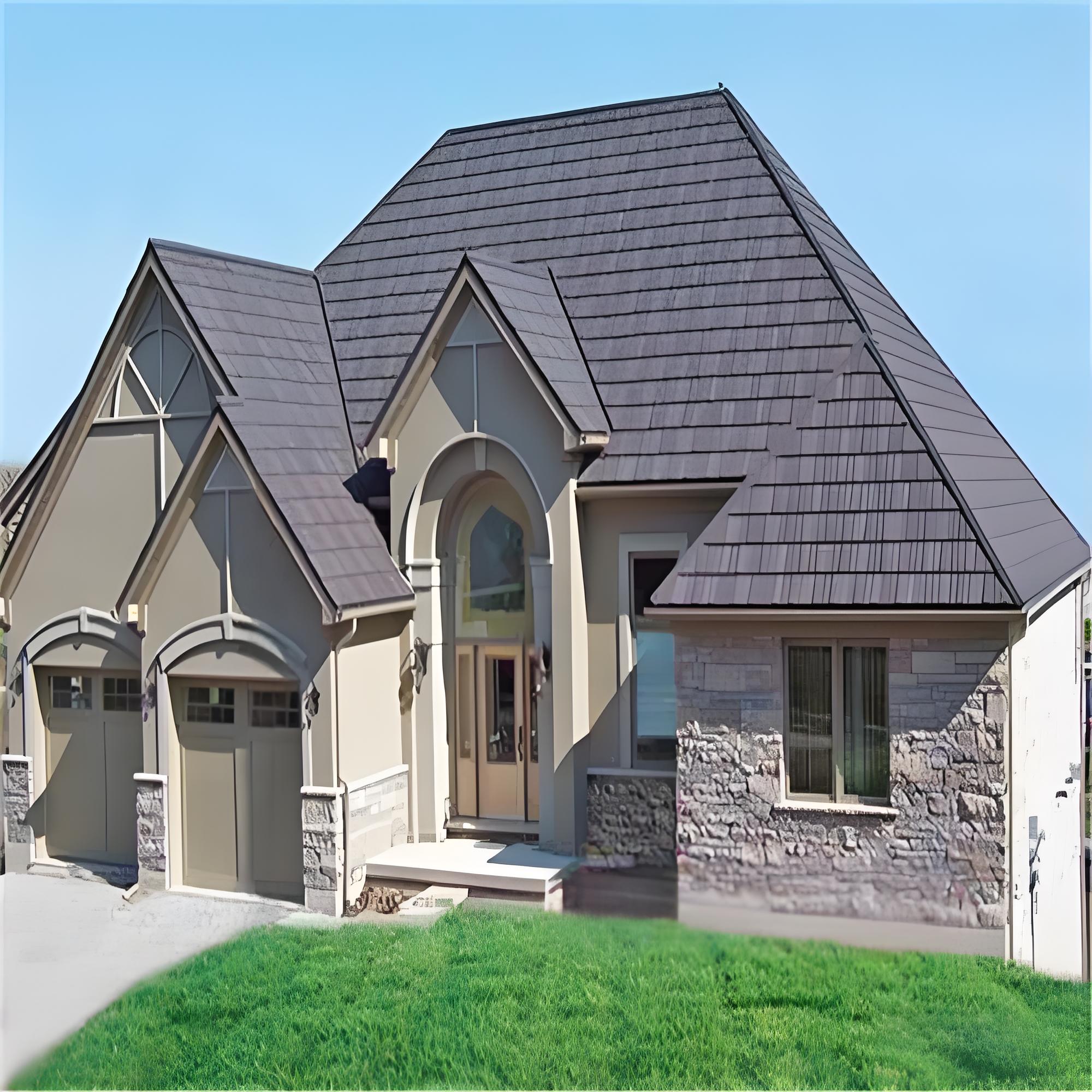
Freeze-thaw stress makes stone coated roofing the more durable long-term choice in mountain climates. A Bond Tile profile installed at high altitude will not accumulate the internal freeze-thaw cracking that concrete tile surfaces develop over decades of seasonal cycling. Moreover, its lighter weight reduces structural load on mountain-built framing.
Tropical and Monsoon Climates
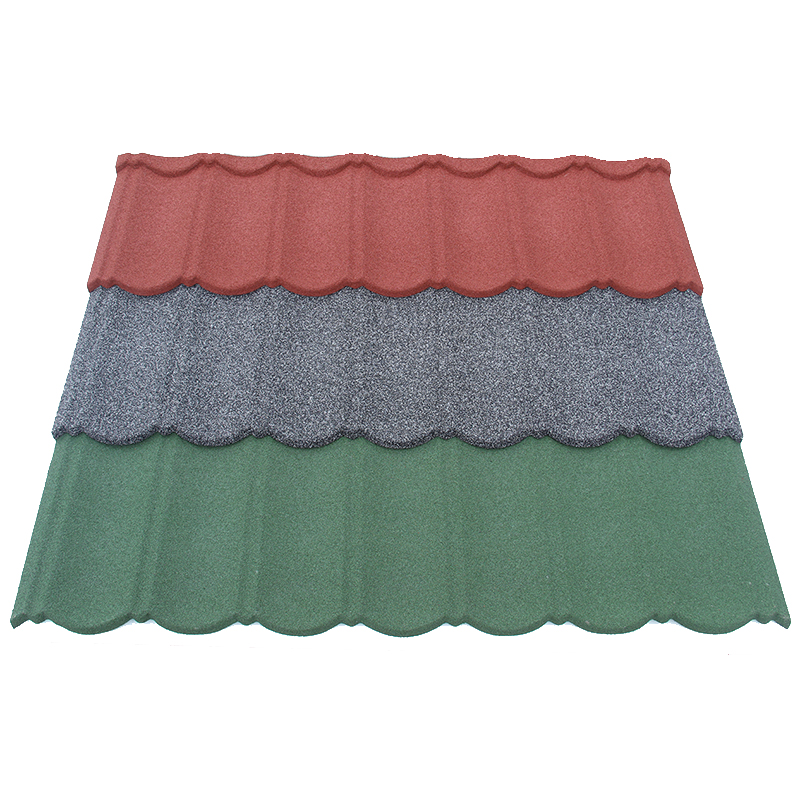
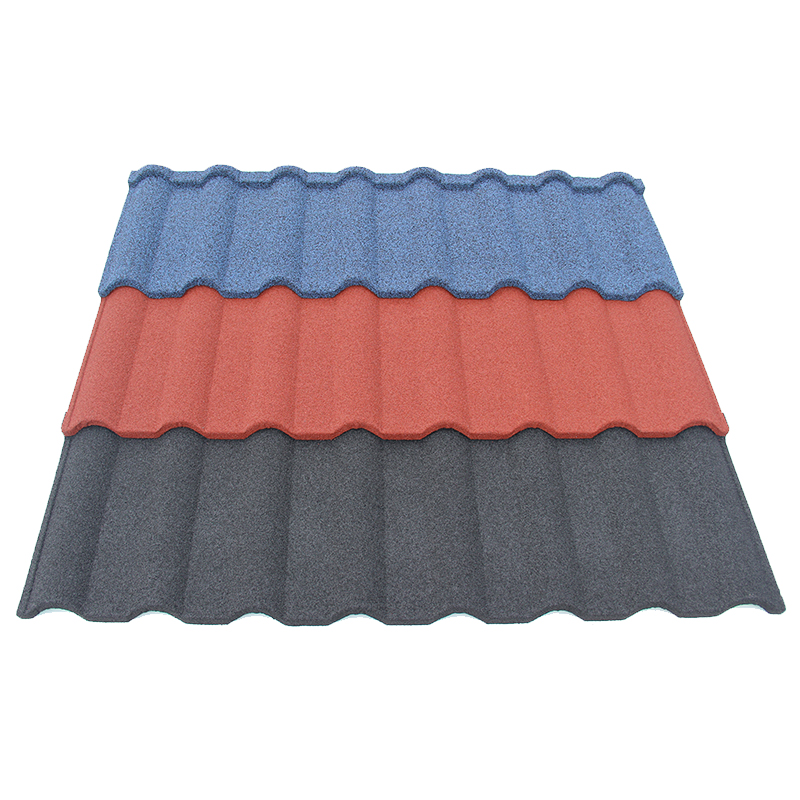
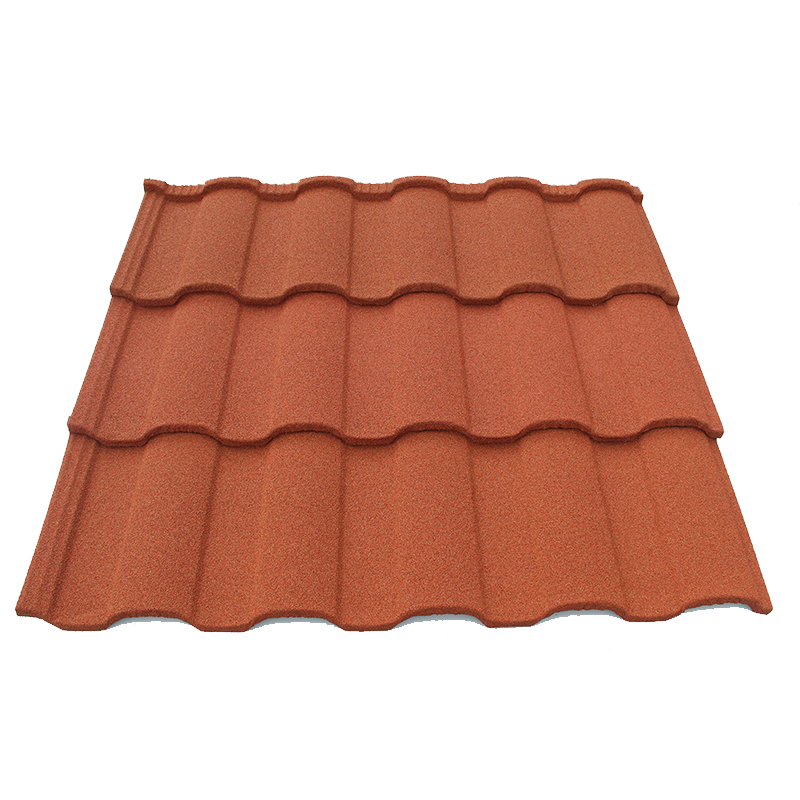
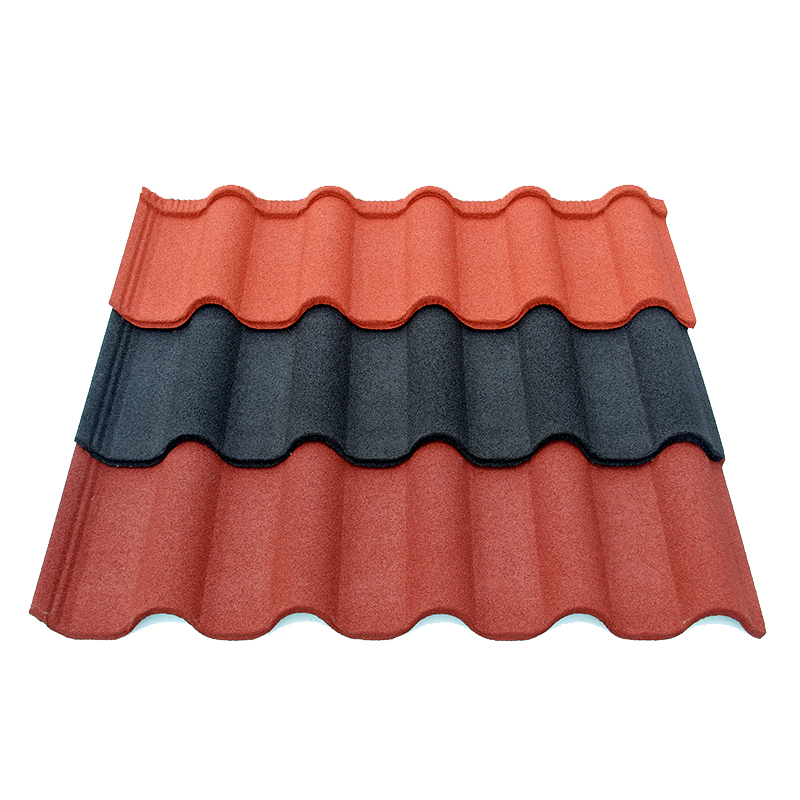
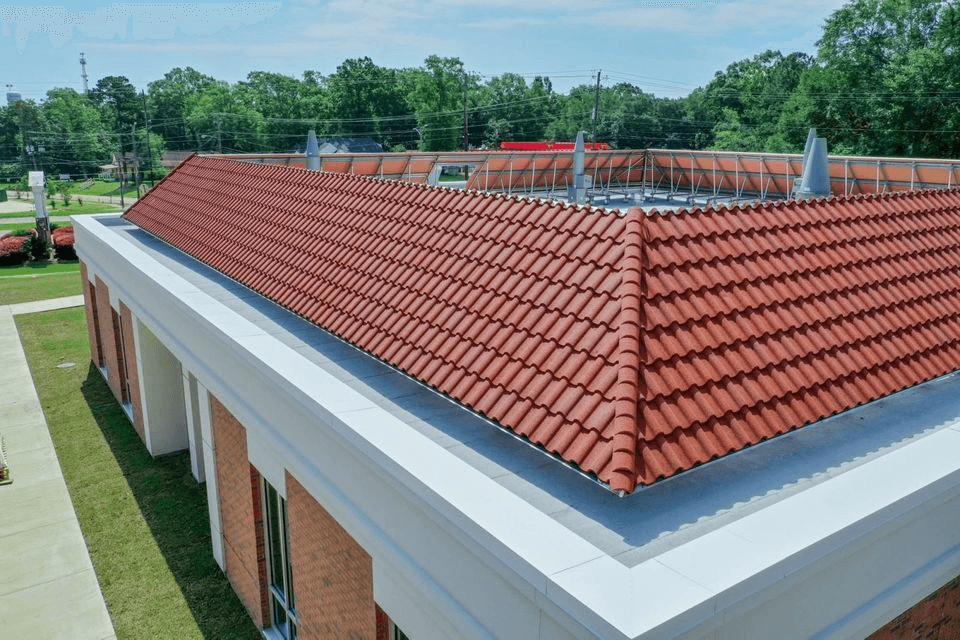
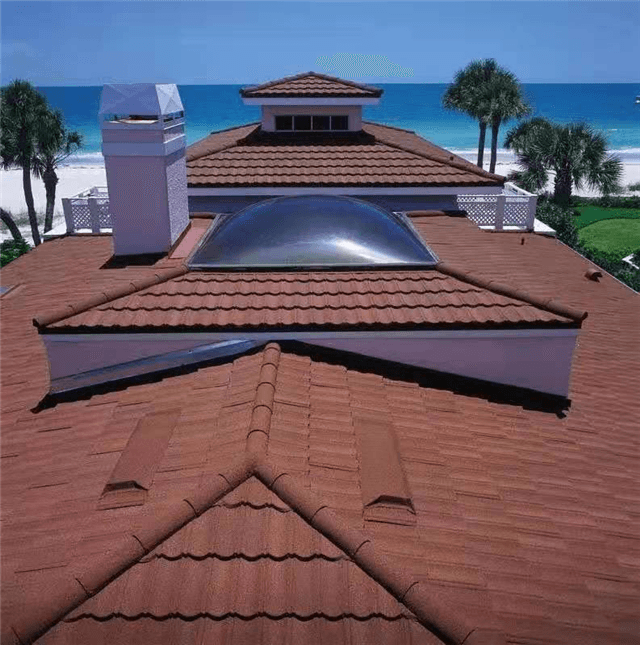
Sustained heat and heavy seasonal rainfall test surface coating and drainage design simultaneously. A Roman Tile profile handles this combination efficiently. Its coated steel base resists heat-related degradation, while its profile geometry channels monsoon-volume water away from the roof deck. As a result, long-term performance remains strong even under intense seasonal stress.
Coastal Residential and Hospitality Projects
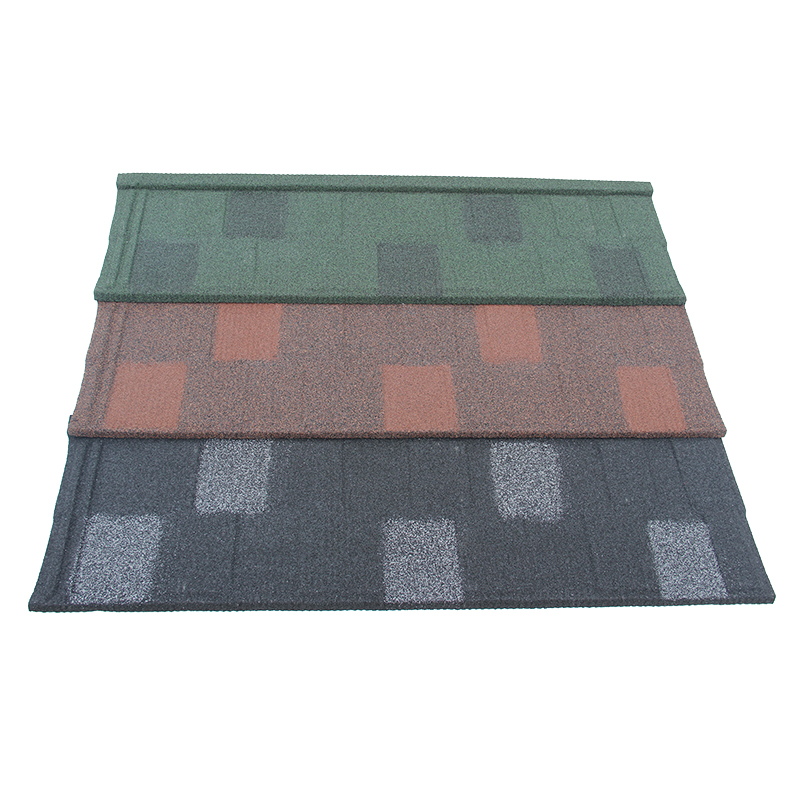
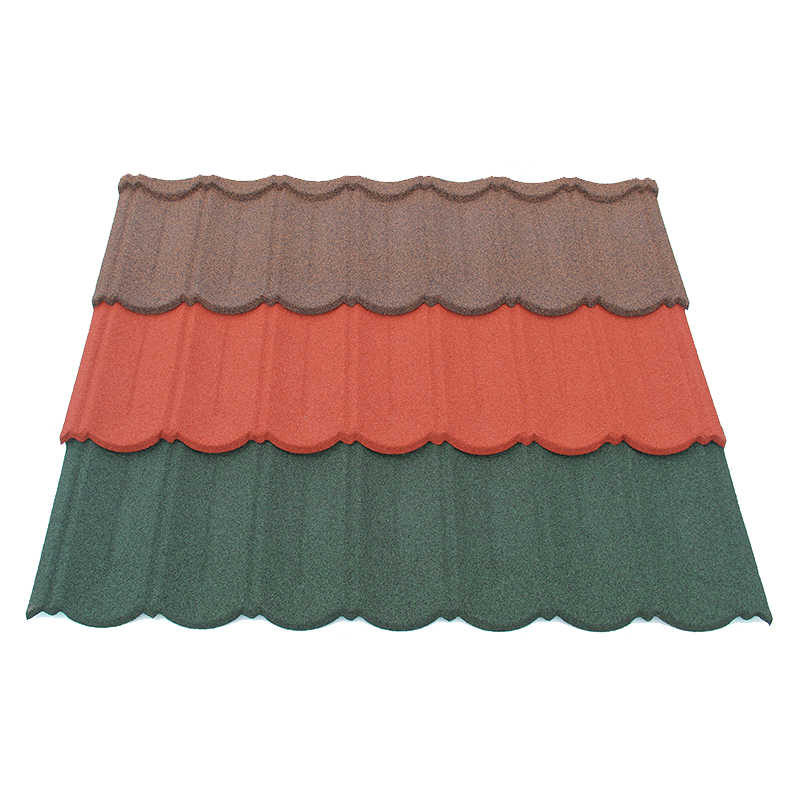
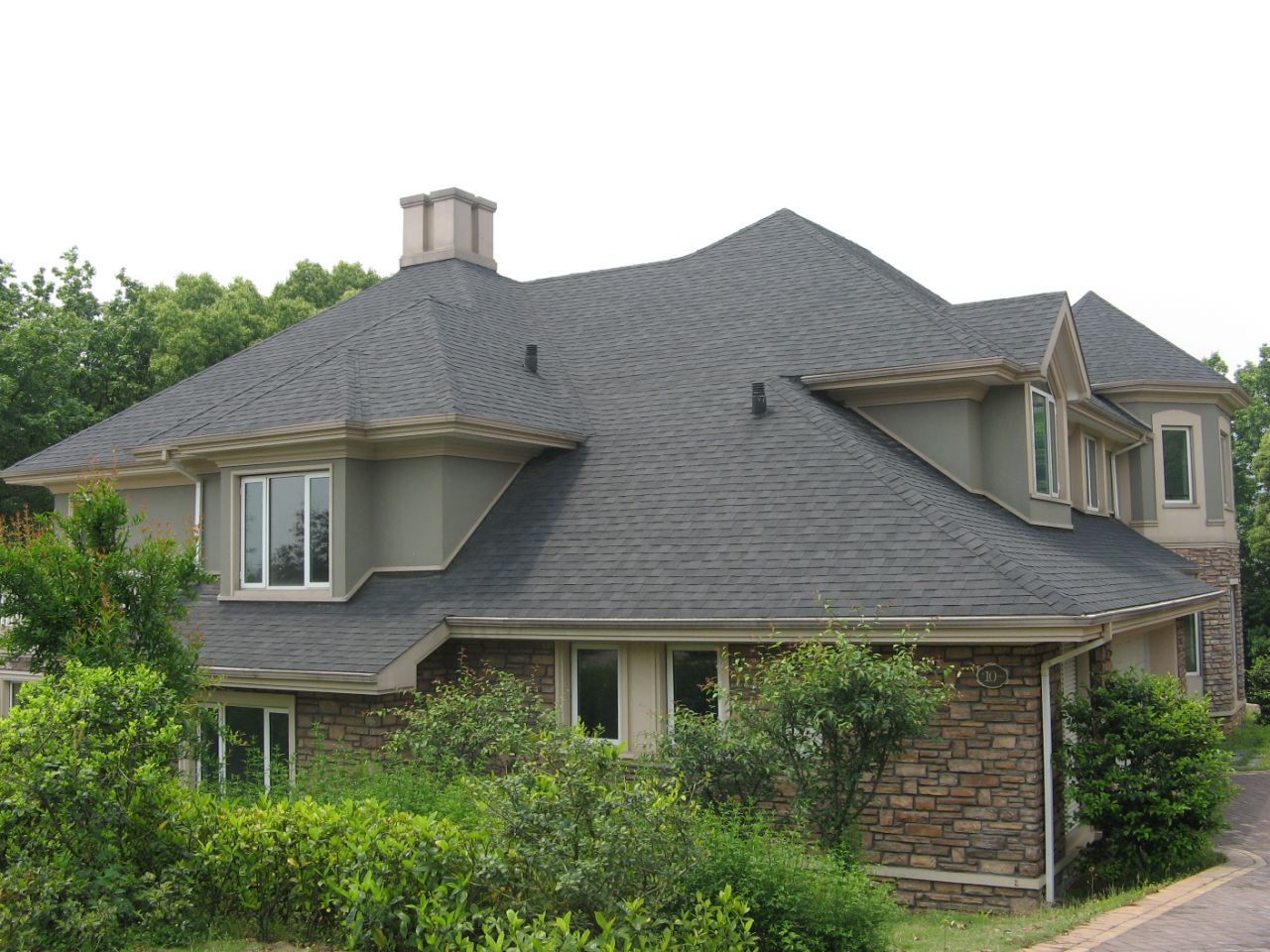
Salt air and coastal humidity tip the stone coated roofing vs concrete tile durability comparison clearly toward the metal option. A Shingle Tile profile with an aluminum-zinc base outperforms concrete tile in coastal settings, particularly as fixing corrosion becomes an issue for heavier tile systems. Additionally, its lower weight reduces stress on coastal buildings often built on less stable foundations.
Arid and High-UV Architectural Builds
In dry, high-UV climates where freeze-thaw and moisture are not primary concerns, the durability gap between these materials narrows. Nevertheless, architects often work with suppliers such as JCROOF to specify a Milano Tile profile with a light reflective coating, gaining measurable UV resistance advantages over standard concrete tile. Rustic-style builds in similar climates sometimes choose a Shake Tile profile instead, benefiting from the same UV and heat reflection advantages without concrete tile’s structural weight burden.
Common Misconceptions About Concrete Tile Durability
Concrete tile carries a strong durability reputation built partly on its mass and density. In certain climates, this reputation is well earned. In others, however, it does not hold up as cleanly as buyers assume. Several common misconceptions lead buyers to overestimate how well concrete tile performs across all conditions.
Assuming Density Always Equals Durability
Concrete’s density protects it from UV degradation and surface abrasion. It does not, however, protect it from internal freeze-thaw cracking, which is a volumetric process driven by moisture absorption rather than surface hardness. As a result, density and freeze-thaw durability are fundamentally different properties that should not be conflated.
Overlooking Fixing Corrosion as a Failure Mode
Concrete tile itself may remain intact long after the metal fixings holding it in place have corroded sufficiently to allow movement. This failure mode is common in coastal climates and often goes unnoticed until tiles begin shifting during wind events. Consequently, buyers in coastal regions need to evaluate fixing compatibility alongside tile durability.
Treating Rated Lifespan as Climate-Independent
A manufacturer’s fifty-year lifespan claim reflects performance under specific conditions that may not match a project’s actual climate. Therefore, buyers should request climate-specific durability data rather than accepting a general lifespan rating as universally applicable.
- Match material choice to your specific climate stress profile, not generic lifespan ratings
- Confirm freeze-thaw durability data for any project in a cold or high-altitude region
- Verify fixing and fastener corrosion resistance for coastal projects specifically
- Request UV and reflectivity performance data for hot or high-altitude UV exposure
- Ask for climate-specific test data rather than general durability claims
Making a Climate-Matched Durability Decision
Stone coated roofing vs concrete tile durability is not a single answer that applies universally. In freeze-thaw climates, stone coated roofing holds a clear structural advantage. In coastal environments, its corrosion resistance and fixing compatibility give it a consistent edge. In hot, dry climates, both materials perform reasonably well. Even so, the reflective coating advantage of stone coated roofing adds a thermal durability benefit that concrete tile cannot match.
Questions to Ask Before Making a Climate-Based Durability Decision
Ask for test data specific to your climate zone’s dominant stress type. In addition, confirm fixing and fastener specifications match the material’s corrosion resistance claims. Together, these two questions consistently reveal more about real durability than a general product rating ever could.
Stone coated roofing vs concrete tile durability comparisons make the most sense when anchored to a specific climate profile rather than evaluated in the abstract. Buyers who match material choice to their actual climate conditions consistently achieve longer real-world performance than those selecting based on general lifespan ratings alone.