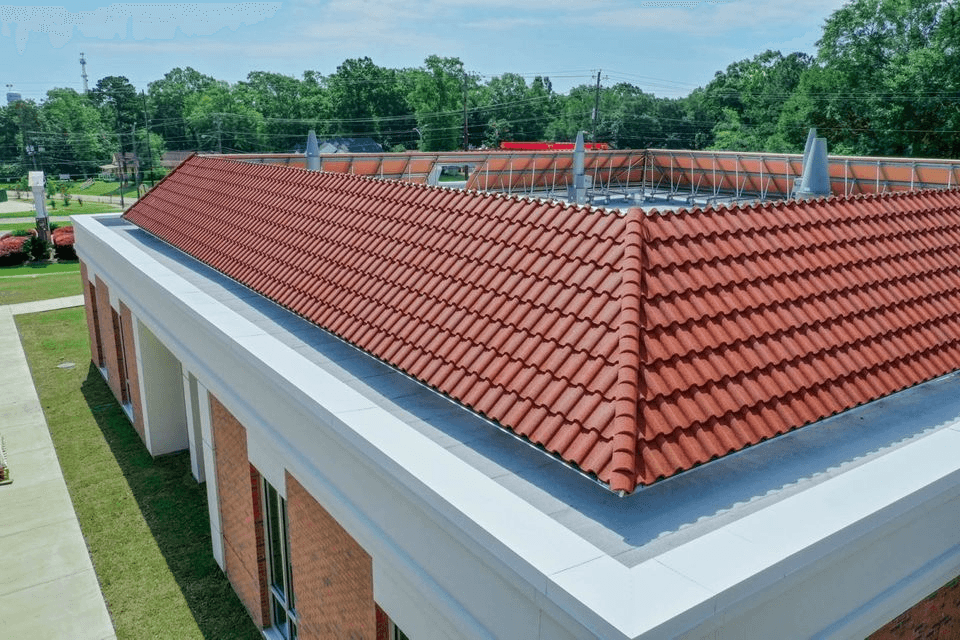
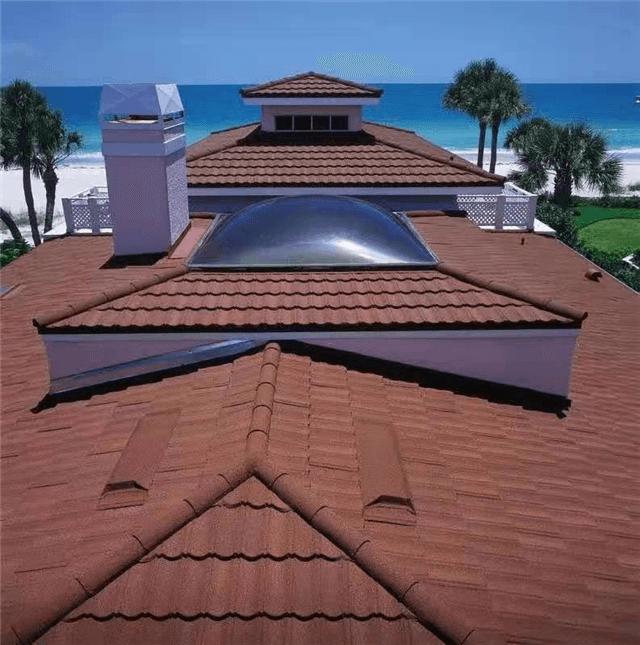
The main types of stone coated roofing sheets include Bond, Roman, Shingle, Shake and Milano-style profiles. Their names describe appearance, not a universal performance grade. This guide helps buyers compare profile drawings, installed coverage, accessories and supply requirements before choosing a range for a roofing project or distribution business.
What Are Stone Coated Roofing Sheets and How Do They Work?
Stone coated roofing sheets are steel-based roofing products designed to combine the structural strength of metal with the visual appeal of traditional roofing materials. At their core, these sheets are made from galvanized or Galvalume steel, coated with an acrylic layer, and finished with natural stone granules. This layered structure is engineered to provide corrosion resistance, UV protection, and enhanced durability in various climates.
However, the finished roof performance depends on the full assembly. Color, surface properties, underlay, ventilation, insulation and installation all affect the result. A stone finish alone does not establish a measured cooling, acoustic or weather rating. Compare documented values for the specified product rather than assuming every stone coated sheet performs alike.
Core Material Structure
- Base layer: Galvanized steel or Galvalume steel
- Protective coating: Anti-corrosion layer
- Adhesive layer: Acrylic resin
- Surface layer: Natural stone granules
Why buyers compare these roofing systems
Buyers often consider stone coated steel when they want a formed metal roof with a granular appearance. Compare the complete installed weight, product documents and maintenance terms against the alternative materials. Service life, transport cost and installation time depend on the supplied system and project conditions; profile names alone cannot establish them.
Main Types of Stone Coated Roofing Sheets by Profile
In the market, stone coated roofing sheets are primarily categorized based on their profile or shape. Each type is designed to mimic traditional roofing styles while offering modern performance advantages. For distributors and project planners, choosing the right profile depends on regional preferences, architectural style, and installation requirements.
Bond Tile (Classic Tile)
Bond Tile is one of the most widely used profiles globally. It features a wave-like pattern that provides a clean, modern look suitable for residential and commercial buildings. Its uniform design allows for efficient stacking and easier installation, making it a popular choice for large-scale projects.
- Best for: Residential housing, housing developments
- Advantages: Cost-effective, easy installation, strong market demand
Roman Tile
Roman Tile profiles replicate the deep curves of traditional Mediterranean roofing. This type is often used in villas, resorts, and high-end residential projects where aesthetics play a critical role.
- Best for: Luxury projects, villas, resorts
- Advantages: Premium appearance, strong visual impact
Shingle Tile
Shingle Tile is designed to resemble asphalt shingles using a formed steel panel. Actual durability depends on the supplied specification and the installation environment. It provides a flatter, more uniform appearance, making it suitable for markets where asphalt roofing is common.
- Best for: North American-style housing, retrofit projects
- Advantages: Lightweight, familiar look for certain markets
Wood Shake Tile
Shake Tile mimics the texture of natural wood shakes with a metal-based system. Compare the documented fire classification and maintenance instructions for the exact assembly rather than assuming a wood-look profile alone establishes either. It is particularly popular in regions where wood roofing is traditional but less practical due to climate conditions.
- Best for: Rustic-style architecture
- Advantages: Natural appearance without maintenance issues
Milano Tile
Milano Tile uses a contoured tile-style appearance in this range. Do not treat “Milano” as a universal synonym for a flat shingle. Manufacturers can use similar names for different drawings. Check a physical sample, side profile and installed view before specifying the product.
Compare its shape and accessory requirements with Roman and Bond alternatives when the design calls for a pronounced tiled roof. Confirm the approved support and fixing details rather than assuming that a similar silhouette permits interchangeable installation.

Key Factors to Consider When Choosing a Roofing Sheet Type
Choosing the right type of stone coated roofing sheet goes beyond visual preference. For procurement teams and contractors, several technical and logistical factors should be evaluated to ensure the selected product aligns with project requirements and market expectations. Ignoring these factors often leads to mismatched inventory or increased installation costs.
Climate and environmental conditions
First, match the documented roof system to the location. Coastal exposure needs a manufacturer-approved material and accessory specification; a change of shape alone does not solve corrosion risk. Read the AZ coating grade guide to separate coating mass from steel thickness when comparing quotations.
Installation requirements
Ask for the installation manual, minimum permitted pitch, support spacing, fastener schedule and flashing details. Do not rank profiles as easy or difficult without considering the roof geometry and the installer’s experience. A simple sample roof can expose compatibility issues before a project order.
Transportation and Packaging
Profiles that stack efficiently reduce container costs, which is critical for exporters and distributors working on tight margins.
Market demand and customer preference
Use enquiries, approved samples and installer feedback from your own sales territory. A country can contain several architectural styles and price segments. Test a limited product range before expanding inventory; avoid treating an assumed regional preference as a demand forecast.
Cost and product positioning
Compare effective coverage, accessory requirements and the finished specification before comparing price per piece. A premium-looking curve does not automatically deliver a higher margin. Calculate the landed cost and expected stock turnover for your actual customers.
Comparison table of common stone coated roofing types
Next, use shape to shortlist the appearance, then verify the technical drawing. The descriptions below describe visual families rather than certified performance levels. For a closer comparison of three curved styles, read the Milano, Roman and Bond comparison.
| Profile family | Visual cue | Check before ordering |
|---|---|---|
| Bond | Repeated curved tile pattern | Wave geometry, overlap and accessory fit |
| Roman | Pronounced rounded tile contours | Profile depth, layout and valley details |
| Shingle | Lower-profile segmented appearance | Panel layout, joints and fixing details |
| Shake | Textured wood-shake appearance | Texture, joint pattern and sample color |
| Milano | Contoured tile-style appearance; drawing varies by maker | Actual cross-section rather than a “flat tile” label |
Common Mistakes Buyers Should Avoid
In real procurement scenarios, mistakes often happen not because of lack of knowledge, but due to misaligned priorities. Many buyers focus too heavily on price or visuals while overlooking installation and long-term performance factors, which in practice affects profitability.
Choosing Based on Price Alone
A low price needs a specification check. Establish whether thickness, coating, coverage and accessories match before attributing the price difference to quality.
Ignoring Market Fit
Stocking the wrong profiles can slow inventory turnover significantly.
Overlooking Installation Complexity
Roof geometry, detailing and installer familiarity can change labor requirements. Ask the contractor to assess the actual layout.
Not Checking Coating Quality
The durability of stone coated roofing heavily depends on adhesive and granule quality.

Turn the Profile Shortlist Into a Comparable Roofing Order
Furthermore, a roofing order needs more than a profile name and color. Define the supplied panel, accessories and inspection requirements together. This gives distributors a repeatable purchase record and helps contractors order components that belong to the same system.
Use effective coverage to compare quantities
Effective coverage means the installed area after specified overlaps. Nominal dimensions describe the full panel and can overstate the roof area one piece covers. Ask the supplier to state both figures. Do not calculate a purchase quantity from overall length times overall width unless the installation drawing supports that approach.
A preliminary panel count divides the relevant roof area by the effective coverage per panel. The contractor then considers cuts, hips, valleys and layout. This is a planning method, not a universal waste allowance. Keep the accessory schedule separate so that ridge caps and flashings do not disappear into an unexplained percentage.
Compare weight and thickness on a common basis
Base metal thickness describes the steel before coating layers. Total coated thickness can include additional layers and is not an interchangeable figure. Ask which basis each quotation uses, along with the tolerance and checking method. The 0.4 mm versus 0.5 mm roofing comparison explains the separate thickness decision.
Record panel weight and installed coverage together to compare weight per effective roof area. Add support, underlay and accessories when assessing the complete roof build-up. Do not infer structural suitability from the profile name or use the weight of a single showroom sample as a batch acceptance test.
| Order field | Required evidence |
|---|---|
| Shape and coverage | Profile drawing, overlap detail and effective area |
| Steel and coating | Thickness basis, standard, grade and material documents |
| Installation | Pitch limitations, support layout, fasteners and accessories |
| Shipping | Panel count, pallet dimensions, protection and loading plan |
Build a manageable distributor range
Start with the profiles that current customers and installers can identify and specify. Confirm whether colors share the same production and reorder terms. A large catalogue can create slow-moving stock if every profile needs its own accessories and small replacement orders. Request an agreed sample set and a documented packing plan before expanding.
- Approve the actual color and profile sample before production.
- Record accessory compatibility for every stocked profile.
- Check reorder quantities and batch color expectations.
- Keep installation documents available for the local contractor.
Use source documents when comparing product claims
For coating terminology, the GalvInfo coating designation guide explains why the standard and units matter. It does not certify a particular tile. Obtain the actual product and material documents from the supplier. JCROOF can receive a specification-based enquiry through its stone coated roofing product catalogue; the buyer should request the data relevant to the chosen profile.
Questions Buyers Ask About Stone Coated Roofing Types
Finally, resolve naming and quantity questions before comparing price. Similar names can hide different dimensions or installation systems. A confirmed sample and a drawing provide a clearer basis for an order than an attractive catalogue label.
Which profile is best for heavy rain?
Shape alone cannot establish that result. Check the permitted roof pitch, overlap, fixing details and drainage design for the supplied system. Ask the supplier and contractor to assess the roof geometry and local conditions together.
Is Milano the same as a flat shingle?
No universal naming rule makes them equivalent. Compare the actual drawings and installed appearance. In this product range, Milano uses a contoured tile-style form, while Shingle provides a lower-profile segmented look.
Can accessories from different manufacturers fit together?
Do not assume compatibility. Similar panel dimensions can conceal different joints or fixing positions. Obtain written approval for any proposed combination and keep the agreed detail with the order.
Should importers compare price per piece or per square meter?
Compare the same effective coverage and accessory scope first. Price per piece can mislead when panel sizes differ. Then include packing, freight, installation and any required inspection to compare the complete supplied roof.