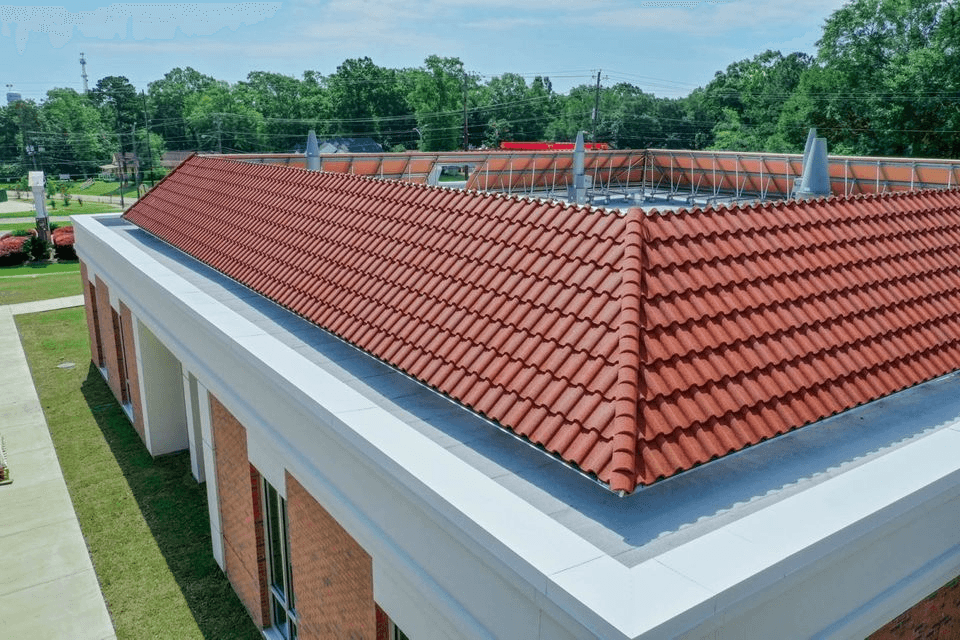
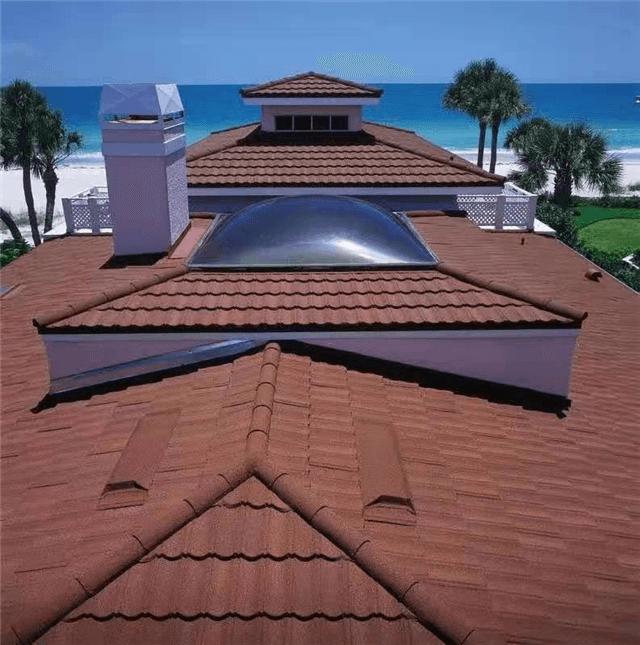
0.4mm vs 0.5mm stone coated roofing is a specification comparison, not a complete quality verdict. When both figures mean the same thickness basis, 0.5 mm describes a thicker steel sheet. It does not independently prove a longer roof life, better wind resistance or permission to walk anywhere on the panel.
Confirm What the Thickness Number Measures
First, ask whether the quotation describes base metal thickness or total coated thickness. A supplier can include different layers in a measured figure. Comparing unlike definitions can make two offers appear closer or further apart than they really are. Record the definition alongside the quoted number.
Base metal thickness and coated thickness
Base metal thickness means the steel substrate thickness before additional coating layers. Total coated thickness includes the layers defined by the relevant specification or measurement method. A stone finish is irregular, so a casual reading across the finished surface does not automatically establish the thickness of the steel beneath it.
Request the tolerance, test method and material certificate for the order. A nominal figure states a specified target; the permitted variation and acceptance criteria determine how the buyer checks a batch. Avoid inventing a universal tolerance because a previous supplier accepted it.
Ask for a comparable quotation
- State the thickness basis and unit.
- Identify the steel grade and relevant material standard.
- Specify the metallic coating separately.
- Request the profile drawing and effective coverage.
- Agree the inspection and acceptance method before production.
Keep these fields in separate columns. A sales description such as “heavy duty” does not replace them. If a supplier uses a gauge label, request the corresponding stated thickness and applicable basis rather than assuming every gauge system means the same value.
Compare Steel Thickness With the Complete Roof System
Next, check how the sheet forms part of the specified panel and support system. Profile geometry, steel properties, support spacing and fixings affect performance. A change from 0.4 mm to 0.5 mm cannot automatically substitute for a tested or designed assembly. Ask the responsible designer to approve the proposed product.
What a thickness increase can and cannot establish
For like-for-like steel and dimensions, more thickness changes the amount of steel in a panel. The exact weight and forming response still depend on the product. Obtain the supplier’s actual data rather than deriving a roof rating from that observation. Do not apply a simple thickness ratio to wind capacity, impact resistance or expected service years.
| Comparison field | What to hold consistent | Evidence needed |
|---|---|---|
| Steel thickness | The same thickness basis and agreed tolerance | Specification and inspection method |
| Corrosion protection | Alloy, standard and coating designation | Material documents for the supplied batch |
| Panel geometry | Profile drawing and effective coverage | Current technical drawing |
| Installation | Supports, overlaps, fixings and accessories | Approved installation and design documents |
| Roof performance | The exact assembly and project conditions | Relevant test or engineering evidence |
Separate coating mass from steel thickness
A coating mass designation and a thickness number answer different questions. One does not replace the other. The AZ coating specification guide explains how standards and units can affect a coating comparison. Ask the supplier to state both requirements on the same purchase specification.
Evaluate Handling, Installation and Access Without Assumptions
Furthermore, handling damage depends on the panel and the process, not only the nominal thickness. Review pallet support, stacking, lifting and site storage. Ask how the contractor will prevent local deformation when fitting and moving the product. A thicker option still needs appropriate handling.
Check the installer’s proposed system
Confirm that the installation instructions match the actual profile and material option. Ask whether a different thickness changes the forming, fixing or accessory requirements. Do not mix a panel from one quotation with a fastening schedule taken from another supplier’s brochure.
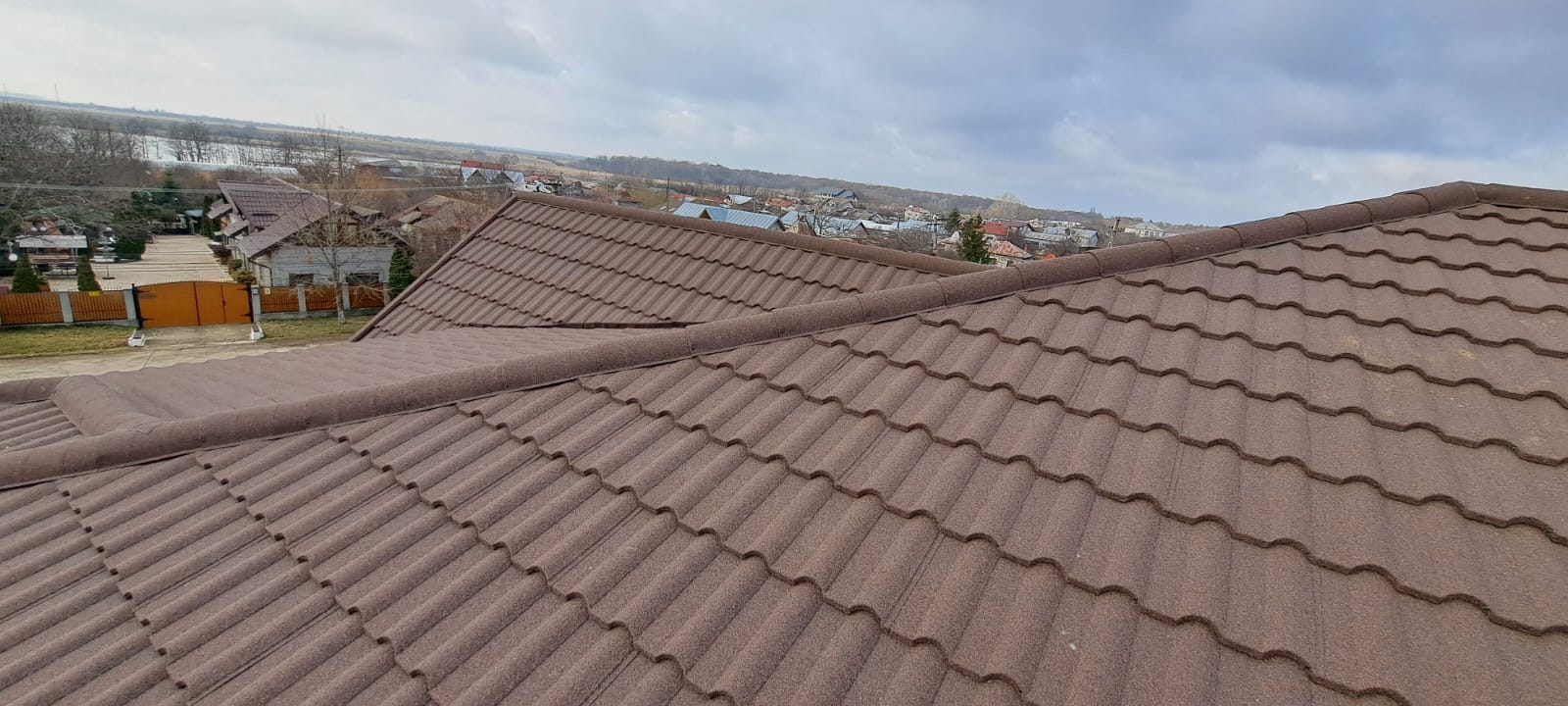
For maintenance access, consult the stone coated roof access guide. It separates panel condition from fall protection and explains why steel thickness is not a general walking permission. If the building needs regular access to equipment, tell the roof designer before placing the order.
Use samples for the right questions
A sample can help approve profile appearance, color and handling characteristics. It does not establish the acceptance of every shipped panel. Label reference samples with the proposed specification and supplier. Agree which documents and inspections will connect the sample to the production batch.
- Retain the agreed drawing and color reference.
- Record the material definition supplied with the sample.
- Check the packaging plan against the shipment method.
- Keep installation and maintenance information with the order.
Compare Price per Effective Roof Area
However, a price per piece can conceal differences in coverage or accessories. Ask for effective coverage and a full material schedule, then compare offers for the same roof. Include the agreed waste allowance, ridges, flashings, fasteners, packing and delivery scope before choosing a supplier.
Calculate a fair comparison
Effective coverage means the installed area after the specified overlaps. Overall panel dimensions do not necessarily equal that area. A preliminary quantity calculation divides the relevant roof area by effective coverage; the contractor must then consider cuts and layout. Do not apply a universal waste percentage to every roof shape.
Ask for separate quotations if you want both thickness options. Hold the other specifications constant and identify any changes. This makes the price difference traceable. If a supplier changes the coating or profile to meet a target price, record that as a different offer rather than calling it the same product in another thickness.
Set the acceptance plan before paying
The contract should identify the material requirements, sampling, inspection timing and response to a nonconforming result. Keep batch references and reports with the shipment record. This provides a more useful safeguard than a general assurance that a thicker product will perform better under every condition.
When reviewing Bond Tile or Milano Tile, compare the actual available specification for that profile. Do not infer an available thickness or performance class from a picture or a product-family name.
Questions About 0.4 mm and 0.5 mm Roofing
Finally, choose the option that meets the documented project requirement and supplied assembly. Neither figure establishes a universal budget, premium or climate category by itself.
Is 0.5 mm always the better purchase?
Not automatically. Confirm that the thickness basis, material, coating and installation system match the requirement. Compare the complete offers and obtain the necessary design acceptance before choosing.
Can a supplier measure finished tile thickness with a hand gauge?
Ask which method and preparation the acceptance specification requires. An irregular granular surface can affect a reading, so a casual measurement may not establish base metal thickness.
Does thicker steel prevent corrosion?
Thickness and corrosion protection are separate specification fields. The complete material, coating, environment, details and maintenance need assessment. Do not replace a coating requirement with a thicker substrate.
What if the delivered batch differs from the quote?
Record the discrepancy and follow the agreed inspection and claim procedure before accepting or installing the affected material. Compare against the signed specification rather than an informal sales description.
The roofing buyer checklist helps organize the wider order review. Keep the final quotation, drawings, material documents and acceptance record together so future reorders use the same defined specification.
Write an inspection request that a laboratory can follow
Specify what material parameter you want checked and how the specimen relates to the shipment. A request simply saying “test roof thickness” leaves the thickness basis unclear. Ask the supplier and inspection provider to agree the method, sampling and reporting format before the order reaches the port. Include the signed specification with the inspection instruction.
For coating terminology, consult GalvInfo Note 1.1. It distinguishes metallic coating mass designations from a casual surface-thickness reading. Use the relevant material documents to define the required test; the guide does not certify the quoted tiles.
Control specification changes and repeat orders
When the buyer changes a thickness option, issue a clear order revision. Ask the supplier to identify any consequences for forming, weight, packing, available profiles or delivery. Do not let an informal price discussion replace the signed technical schedule. Keep the accepted drawing and material definition associated with the revised order number.
On a repeat order, confirm the same thickness basis and other specification fields again. A matching color or profile name does not establish that the material remained unchanged. Compare the current technical sheet and quotation with the earlier approved order. Ask the supplier to explain differences before production starts, particularly when another factory or coil source will fulfill the order.
Keep the comparison within its evidence
A supplier may recommend one thickness for a particular product or project. Ask for the reasoning and scope. That recommendation should not become a universal rule that another roof in a different location requires the same option. Preserve the distinction between a material comparison, a product claim and a project design decision.
JCROOF publishes product information for trade enquiries. Request the documents for the exact roof system and destination before approving an order.
Compare the stone coated metal roofing range and include the selected profile, project location and quantity in your enquiry.