
Energy efficiency has become a primary metric for evaluating the long-term ROI of commercial and residential developments. As global temperatures rise, the cooling load on buildings represents a massive operational expense for property managers. Standard roofing materials like asphalt or dark concrete act as thermal batteries, absorbing solar radiation and radiating it into the living space. Consequently, B2B procurement is shifting toward Stone Coated Metal as a strategic cooling solution. This material creates a sophisticated thermal barrier that can reduce indoor temperatures by up to 5°C. Understanding the thermodynamics of solar reflectance and ventilation is essential for developers aiming to meet green building standards.
Solar Reflectance and the Cool Roof Phenomenon
The primary mechanism for heat reduction lies in the surface’s ability to reflect infrared radiation. Stone Coated Metal utilizes specialized volcanic granules that offer high solar reflectance. Unlike flat metal surfaces that can become scorching hot, the textured stone surface breaks up the light and bounces a significant portion of energy back into the atmosphere. Consequently, the roof substrate remains much cooler than traditional materials. This initial reflection prevents the heat from ever entering the building structure, which is the most effective way to manage indoor climates.
The Science of Emissivity and Heat Release
Thermal performance is determined not only by reflection but also by emissivity, which is the material’s ability to release absorbed heat. High-quality products from JCROOF are engineered with an aluminum-zinc alloy that has an excellent emissivity rating. This means that even if the roof absorbs some warmth during the day, it sheds that heat rapidly once the sun sets or a breeze passes. Specifically, the stone coating provides a massive surface area for convective cooling. Therefore, the building does not suffer from the “nighttime heat island” effect commonly associated with heavy masonry tiles.
Thermal Decoupling via Air Gaps
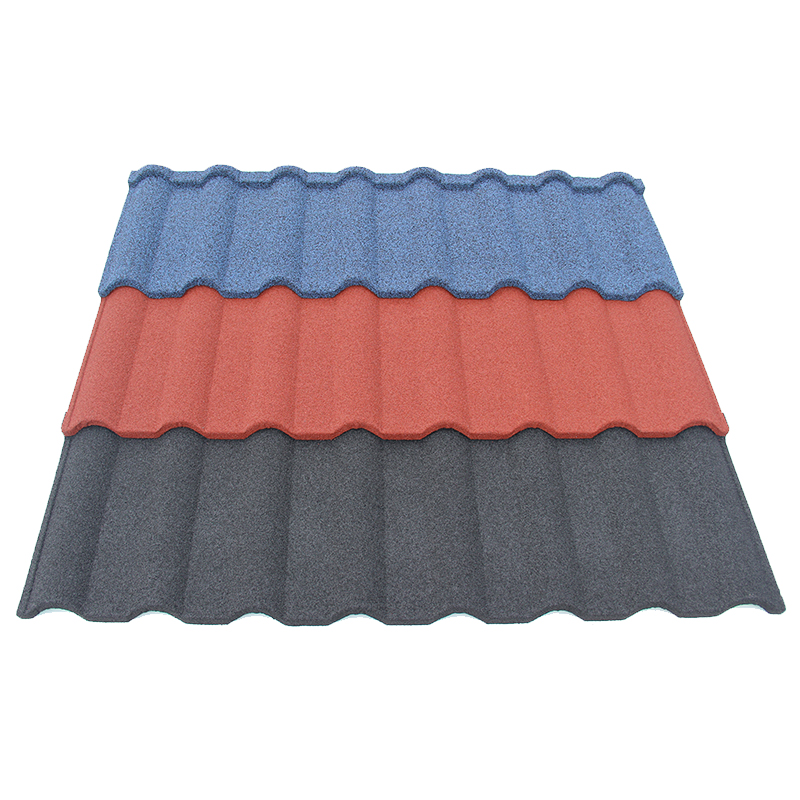
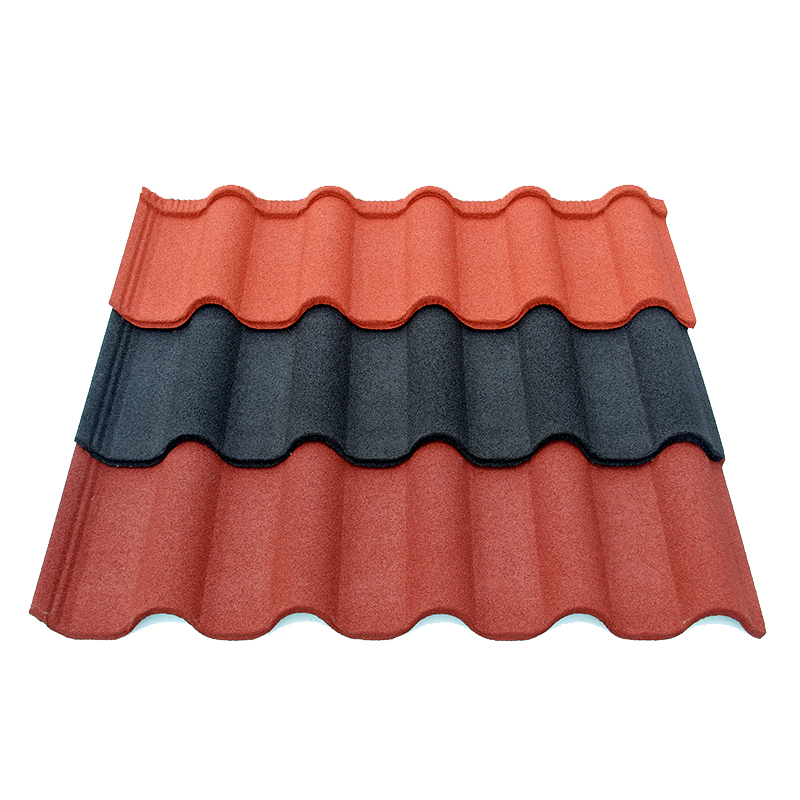
Effective heat management requires more than just surface reflection; it requires a break in the path of thermal conduction. When installers fit the Bond Tile profile, they typically use a batten system that creates an air gap between the roof deck and the metal panels. This gap acts as a thermal break, significantly reducing the amount of heat that transfers into the attic through conduction. Consequently, the ceiling temperature remains stable even during the hottest parts of the afternoon. This thermal decoupling is a key reason why engineers specify metal systems for projects in tropical and desert climates.
Energy Savings and HVAC Lifecycle Optimization
The reduction of indoor temperatures by 5°C has a direct impact on the building’s mechanical systems. When the internal ambient temperature is lower, the HVAC system does not need to cycle as frequently or run at peak capacity. Consequently, property owners experience a measurable reduction in monthly utility costs. Furthermore, reducing the workload on air conditioning units extends their service life and lowers maintenance frequency. For large-scale commercial developments, these cumulative savings can pay back the initial roofing investment within a few years.
Above-Sheathing Ventilation (ASV) Benefits
- Passive Cooling: The air gap in the Milano Tile system allows hot air to rise and escape through ridge vents.
- Moisture Control: Constant airflow prevents the buildup of humidity, protecting the building’s structural timber.
- Reduced Carbon Load: Lower energy consumption helps developers achieve higher LEED or carbon-neutral certifications.
- Consistent Comfort: Eliminating “hot spots” in the upper floors increases the market value of the real estate units.
Comparative Internal Temperature Reduction Analysis
| Roofing Material Type | Solar Reflectance Index (SRI) | Average Attic Temperature | HVAC Load Impact |
|---|---|---|---|
| Standard Asphalt Shingles | Low (~15-20) | 65°C – 75°C | Very High |
| Traditional Clay/Concrete | Moderate (~30-40) | 55°C – 60°C | High |
| Stone Coated Metal | High (~65-80) | 40°C – 45°C | Low (Optimal) |
Architectural Integration of High-Performance Profiles
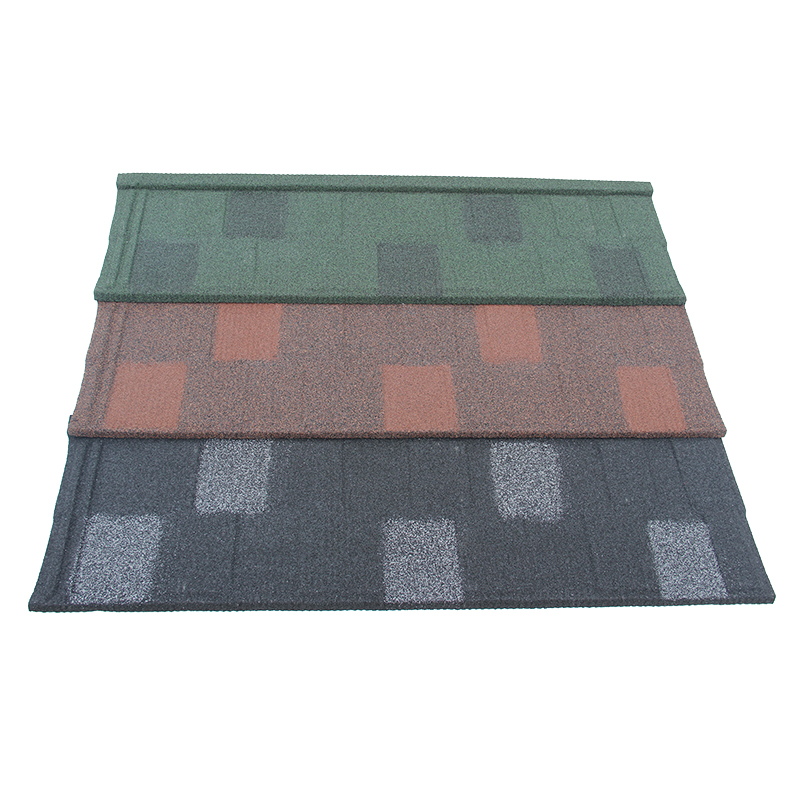
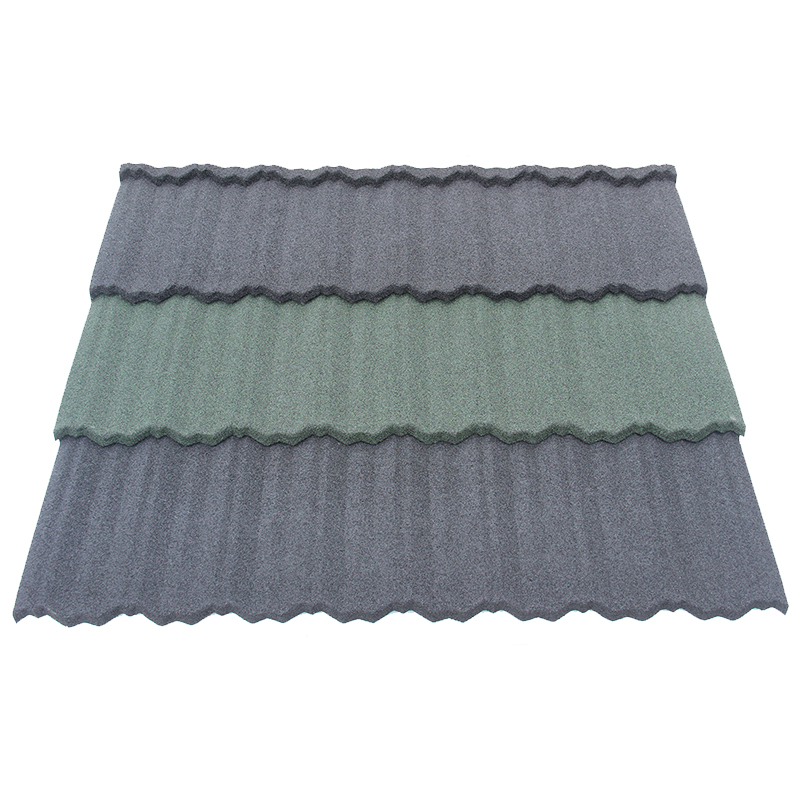
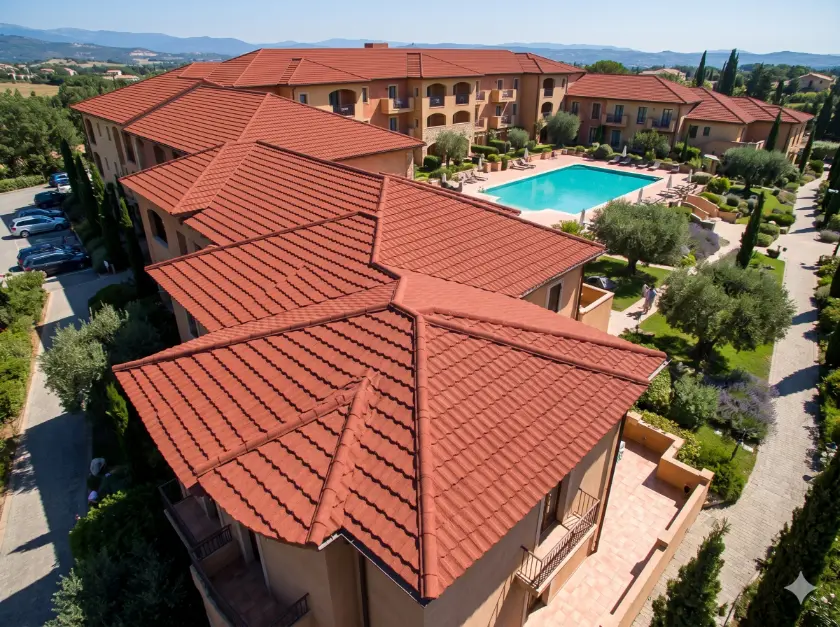
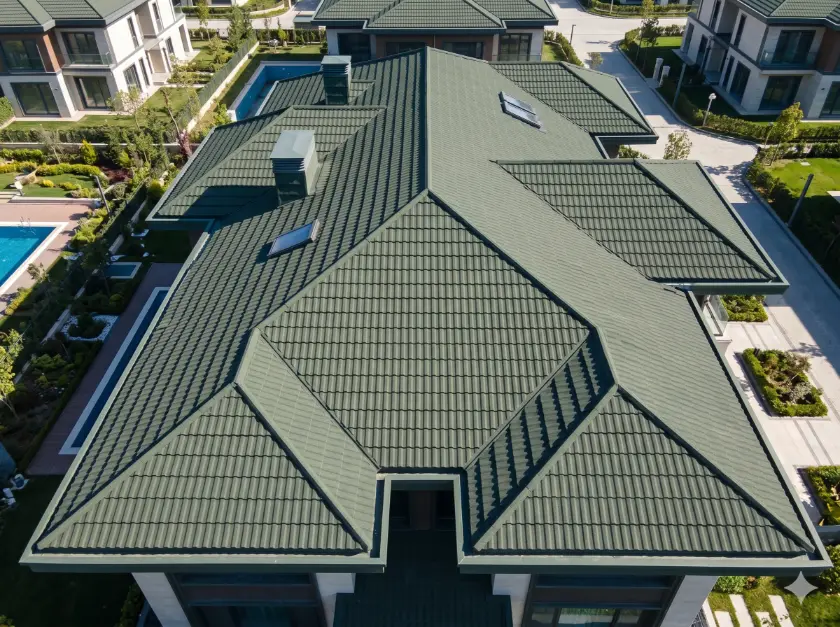
Modern energy-efficient design no longer requires sacrificing architectural beauty. Stone Coated Metal comes in various profiles that complement diverse building styles while maintaining their “heat shield” properties. The Shingle Tile, for example, is ideal for contemporary office parks where a sleek, low-profile look is required. Because this profile is installed with precise air-gap spacing, it provides exceptional thermal performance without the bulky appearance of traditional insulation layers. This allows architects to design thinner roof assemblies while still exceeding local energy codes.
Optimizing Airflow with Specific Geometries
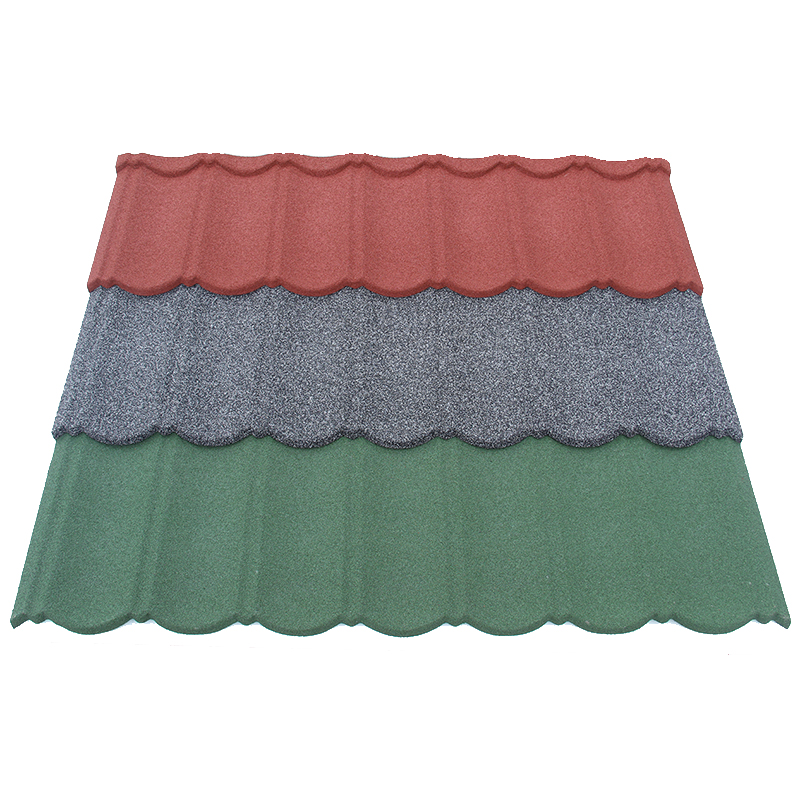
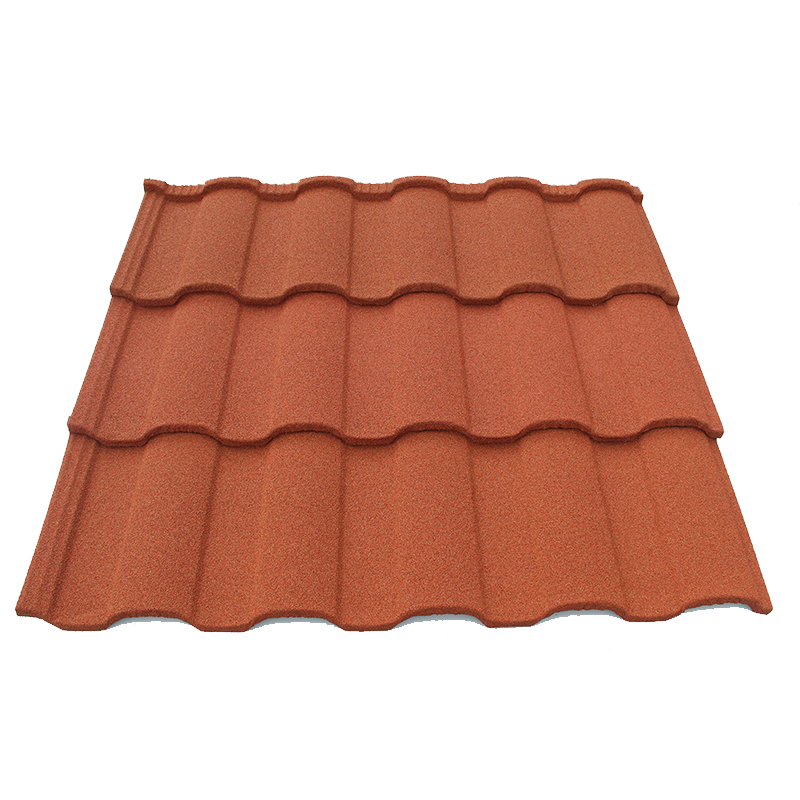
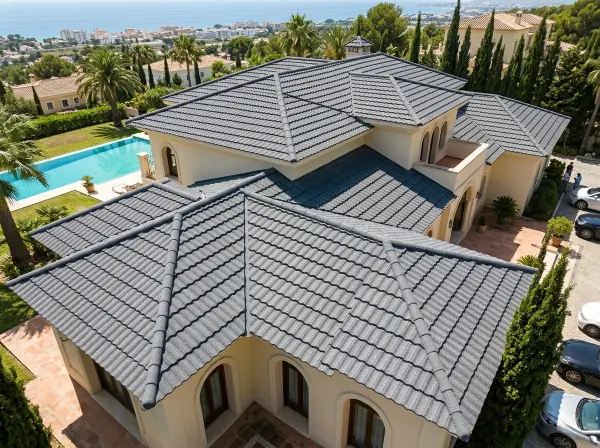
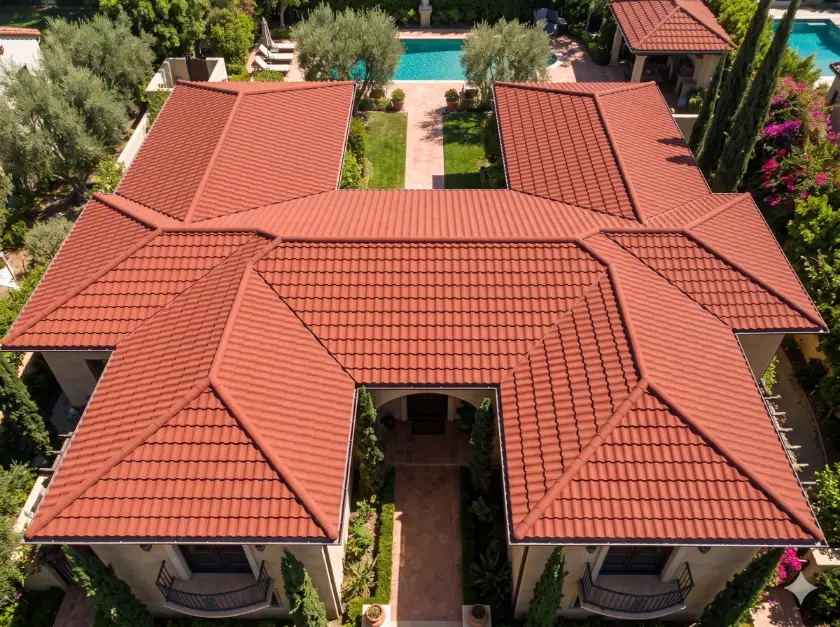
The geometry of the roof panel significantly influences how air moves beneath it. The Roman Tile profile features high ridges that create larger internal air channels. These channels facilitate a chimney effect, drawing cool air in from the eaves and exhausting hot air through the ridge. Consequently, the natural convection is much more powerful than in flat roofing systems. For industrial buildings or schools without centralized air conditioning, this passive cooling effect is vital for maintaining a productive and healthy indoor environment for the occupants.
Natural Aesthetics and Modern Fire Safety
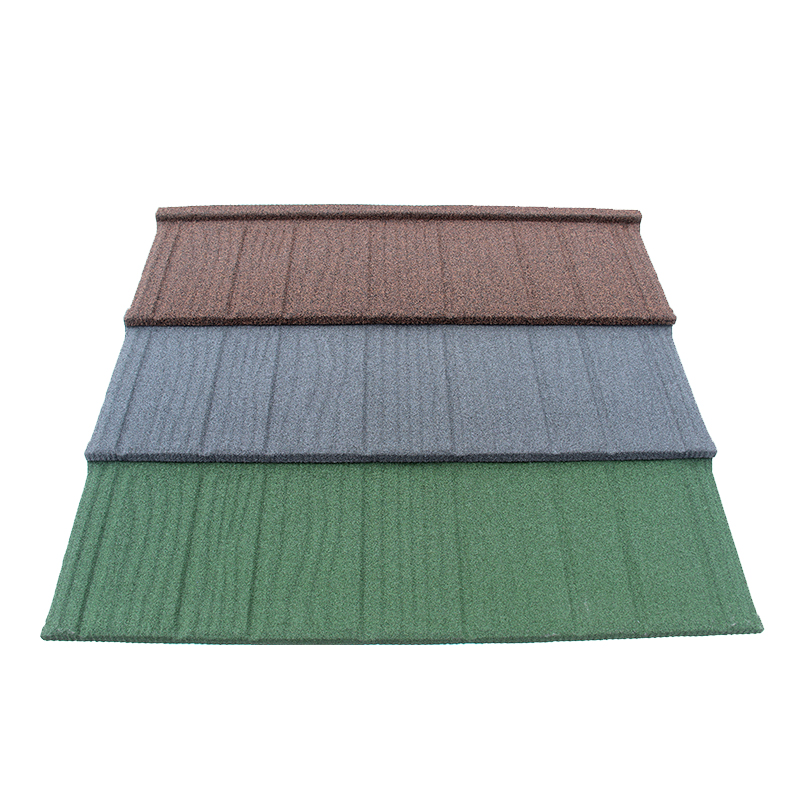
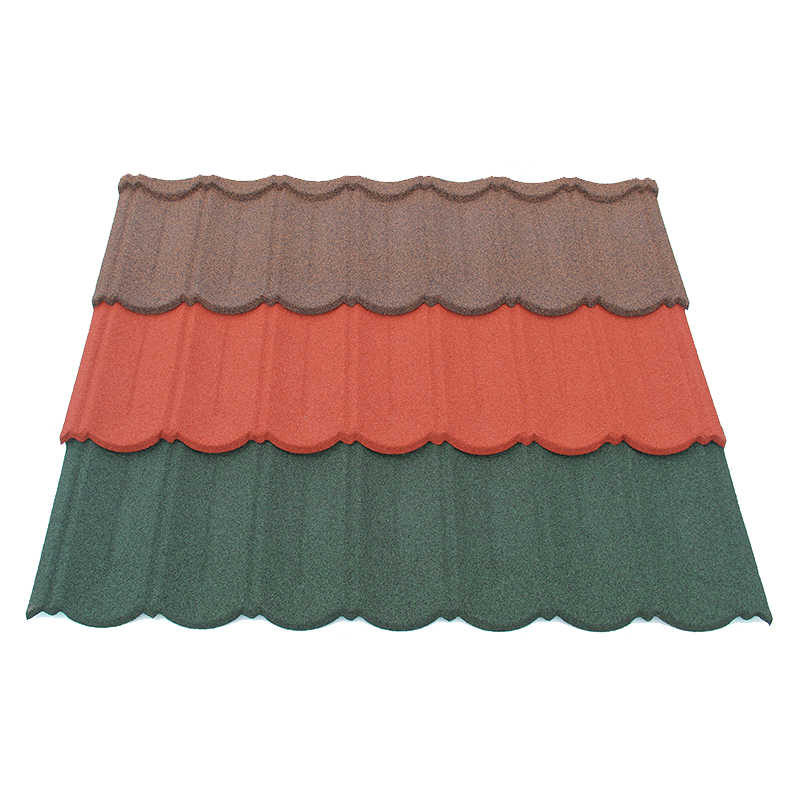
In rural developments where a natural look is required, the Shake Tile offers the perfect balance of eco-friendly performance and safety. It mimics the appearance of wood but provides the reflective and fire-resistant benefits of steel. Specifically, the metal panels do not absorb heat like real wood shakes, which can become dry and flammable in high temperatures. By choosing this profile, developers can achieve a rustic aesthetic while ensuring the building remains cool and fire-secure. This dual benefit makes it a top choice for luxury mountain resorts and eco-lodges.
Procurement and Technical Verification for Energy Projects
B2B buyers should prioritize suppliers who provide verified Solar Reflectance Index (SRI) data. The SRI is a standard scale from 0 to 100 that measures a roof’s ability to stay cool. High-performance Stone Coated Metal should ideally have an SRI score that complies with local green building initiatives. Furthermore, the choice of underlayment and ventilation accessories is critical. A cool roof system is only as effective as its ventilation components. Ensuring that the ridge vents and eave starters are compatible with the specific tile profile is essential for achieving the maximum 5°C temperature reduction.
Assessing the Long-Term ROI of Cool Roofs
When presenting a roofing proposal to investors, focus on the lifecycle energy savings rather than the upfront material cost. A cool roof reduces the peak electricity demand, which can lead to lower commercial utility rates in many regions. Furthermore, the durability of these systems ensures that the reflective properties do not degrade over time. Specifically, verify the UV resistance of the acrylic bonding used by the manufacturer. By sourcing high-specification materials, procurement teams ensure that the building’s thermal performance remains a competitive advantage for the entire 50-year service life of the roof.