


Stone coated metal roofing vs clay tiles should be compared using actual product weights and complete installation requirements. Weight differences can affect structural review, delivery planning, and site handling. They do not remove the need to assess the proposed roof assembly and the building receiving it.
Clay tiles and stone coated metal products can create similar architectural impressions while requiring different procurement arrangements. Buyers should compare product identity, effective coverage, accessories, packing, and installation support. A familiar tile shape does not make two roofing systems interchangeable.
This guide focuses on practical decisions for importers, distributors, and project buyers. It explains how to interpret published weight figures, plan handling, and prepare comparable purchasing briefs. Structural decisions remain with the qualified people responsible for the building.
Compare Documented Weight on the Same Basis
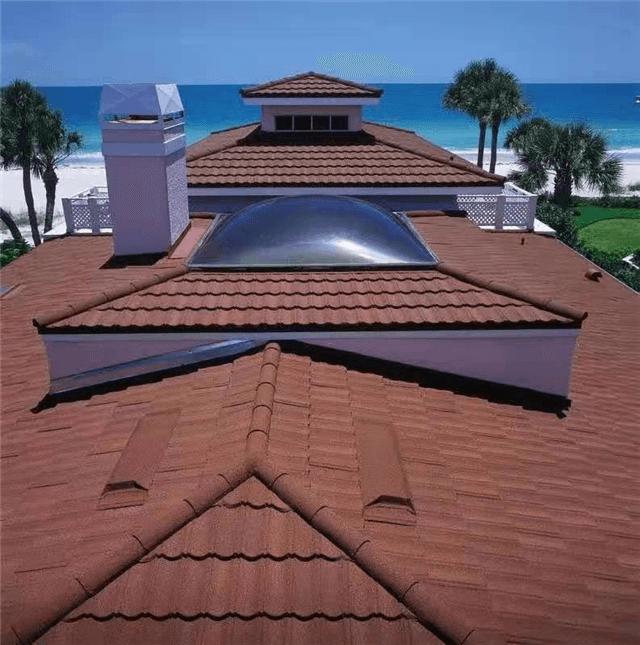
Use product examples without turning them into universal figures
Published product data can demonstrate why weight deserves attention. DECRA’s Villa Tile installation guide lists an installed panel weight of 160 pounds per roofing square. Ludowici’s French clay tile page lists 1,025 pounds per square. These are figures for two named products, not specifications for every metal or clay tile.
A roofing square represents 100 square feet. The listed figures therefore correspond to 1.6 and 10.25 pounds per square foot, respectively. Those conversions make the units comparable, but they do not establish total roof assembly loads. Confirm what each published figure includes before using it in project calculations.
Do not apply either example to an unverified quotation. Request current weight and coverage information for the actual products being considered. Identify the finish, substrate, dimensions, and relevant specification revision. A different product under a similar profile name may have a different documented weight.
Keep packing weight separate from installed weight. A pallet includes packaging and may contain products with different coverage rates. Shipping data helps plan logistics, while installed weight supports a different calculation. Mixing the two can produce a misleading comparison even when every individual number is accurate.
Review the complete assembly and existing structure
Ask the designer to identify all components included in the roof load review. Roofing, supporting materials, underlayment, and other specified items may contribute to the complete arrangement. Existing conditions also matter in renovation work. A lighter covering does not automatically establish that an existing structure is acceptable.
Record the exact system proposed by each installer. Confirm whether the quotation assumes a particular deck, support arrangement, or additional preparation. Keep structural assessment distinct from a supplier’s general weight description. The supplier can provide product information, but the project team must evaluate the building-specific implications.
For clay roofing, the Tile Roofing Industry Alliance installation guides provide industry installation resources. Their scope includes different application conditions and associated guidance. Use the relevant manufacturer and project documents when defining the installation. Do not transfer clay tile instructions to a metal product that only resembles clay.
Review substitutions before purchasing. If a project originally specified clay and now considers a metal alternative, document the proposed change. Check appearance, support, interfaces, and required performance evidence together. A lower product weight is useful information, but it is not a complete substitution approval.
Plan Handling for the Actual Material and Packaging
Compare the route from delivery to roof installation
Map the delivery and handling route for both options. Include unloading equipment, temporary storage, movement through the site, and access to the installation area. Ask the contractor to review the proposed pack sizes. Product weight per area does not explain every practical handling constraint.
Clay tiles need handling methods appropriate to their shape and susceptibility to breakage. Coated metal products need protection against deformation, abrasion, and unsuitable storage conditions. Request the manufacturer’s instructions for the particular product. Neither material should be treated as immune to damage during transport or installation.
Identify which packaging protects the goods during the intended journey. Ask how pallets, bundles, surface protection, and restraints are arranged. Check whether handling instructions remain visible after unloading. A shipping plan should explain how goods will arrive in usable condition. Packed quantity is only one planning consideration.
For imported products, coordinate packaging information with the logistics provider and site team. Confirm relevant package dimensions, gross weights, lifting arrangements, and destination access. Avoid assuming a standard container or pallet arrangement applies to every profile. Those details depend on the actual products and agreed packing configuration.
Keep damage allowances and acceptance criteria explicit
Ask how the supplier inspects products before packing. Agree the inspection points for visible damage, dimensional conformity, finish condition, and packaging integrity. Define how findings will be documented and resolved. A general statement that extra pieces are included does not explain which damage is acceptable.
Keep installation waste separate from transport damage and spare stock. Cutting around roof features creates a different requirement from replacing goods damaged in transit. Ask the estimator to identify the basis for each allowance. Avoid using one unexplained percentage for every material loss or future replacement need.
Review a representative pack before confirming bulk arrangements where practical. Inspect how products contact one another and how they are identified. Ask the handling team whether the pack can be opened and moved as planned. Packaging that works inside a factory may still be unsuitable for a constrained destination site.
Record any damage observed at receipt with item and package identification. Retain photographs and the relevant delivery information. Follow the agreed reporting procedure promptly. Clear records support investigation of problems during production, packing, transport, or site handling. They reduce the need for guesswork.
| Purchasing issue | Stone coated metal roofing | Clay roof tiles |
|---|---|---|
| Weight comparison | Obtain the specific product’s installed weight | Obtain the specific tile’s installed weight |
| Structural review | Assess the complete proposed assembly | Assess the complete proposed assembly |
| Handling focus | Protect geometry and coated surfaces | Protect tile edges, shapes, and integrity |
| Packing | Confirm bundle restraint and surface protection | Confirm pack support and breakage protection |
| Accessories | Match profile interfaces and finishes | Match tile geometry and system components |
| Acceptance | Define damage and specification criteria | Define damage and specification criteria |
Compare Architectural Intent and Complete System Scope
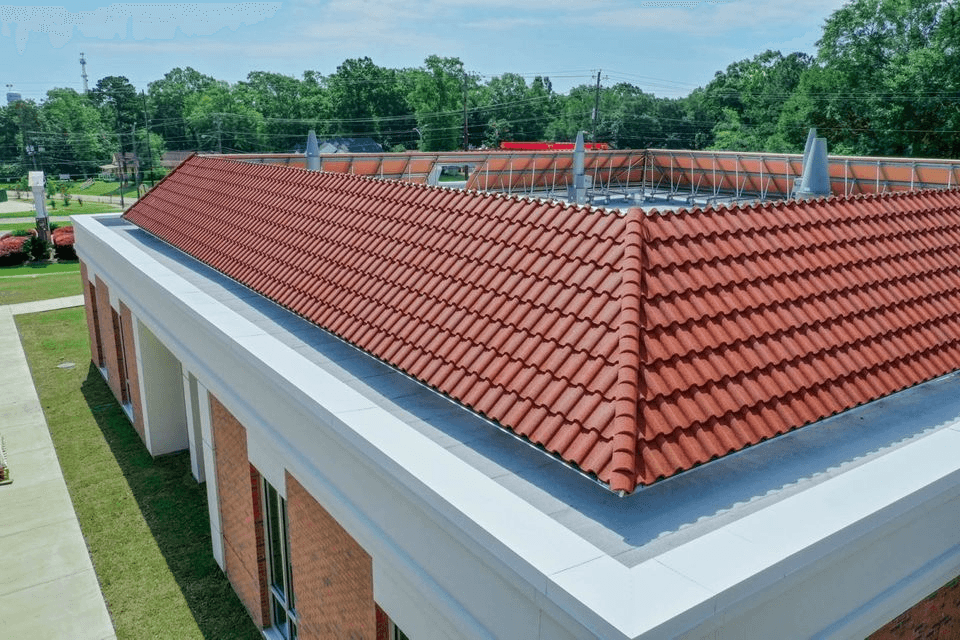
Review appearance beyond a single sample
Compare samples at the intended roof pitch and viewing distance. Clay textures, formed metal geometry, finish blends, and course patterns can create different visual effects. Include the edge and ridge details in the review. The roof’s overall appearance is not determined by the central field tile alone.
A Milano Tile provides a curved metal tile option for architectural comparison. Review its actual geometry and finish alongside the proposed clay product. Similar stylistic intent does not establish matching dimensions or detailing. Ask the designer to record which differences are acceptable for the project.
For restoration or regulated appearance requirements, confirm the review process before ordering. Ask which material, color, geometry, or visible details must be retained. Obtain the appropriate project approvals rather than assuming visual similarity is enough. This avoids buying a technically plausible substitute that the project cannot use.
Supplier background can help organize the discussion. When considering JCROOF, connect company information with the specific profile samples and documentation being reviewed. Ask for current order details and supporting evidence. Keep architectural acceptance and technical approval as clearly identified parts of the decision.
Include accessories and performance evidence
Request a complete component schedule for each system. Identify ridge, hip, valley, edge, penetration, and other required details according to the project. Ask who supplies each component and who confirms compatibility. A field tile quotation can look complete while leaving essential installation items unresolved.
Assess performance evidence for the actual roof arrangement. Ask which tested product and installation details support the required claims. Do not assume every clay product has identical properties or every stone coated metal product shares one classification. Material selection should remain connected to the identified technical evidence.
Climate-related questions need the same product-specific approach. Ask the responsible reviewer which exposure, temperature, wind, and other conditions affect the project. Request relevant documentation from both suppliers. Broad statements that one material works everywhere are less useful than a clearly defined scope and supported limitations.
Check the installation team’s experience with the proposed system. Ask which instructions, tools, and training resources it will use. Discuss difficult interfaces before the order is placed. An attractive material choice becomes harder to manage if the installation method is resolved only after delivery.
Make the Procurement Decision with Comparable Offers
Request complete and current quotations
Send both suppliers the same project brief. Include quantities, approved product references, accessory schedules, packaging needs, and the agreed delivery arrangement. Ask them to identify exclusions and assumptions. Compare offers against the same revision so changes in scope do not masquerade as price advantages.
Separate the product quotation from logistics and installation estimates. Ask relevant providers to review handling, access, and site conditions. Include any confirmed preparation requirements. Published material prices from unrelated markets cannot replace these inputs when assessing the actual order’s cost and practical feasibility.
Document the schedule for samples, approvals, production, inspection, and delivery. Identify any customized colors or components that need separate confirmation. Ask which item controls complete order readiness. The availability of field tiles does not establish that every matching accessory will be ready at the same time.
Evaluate replacement supply as part of the offer. Record product codes, finish references, and the process for future quantities. Ask how changes or discontinuation would be communicated. This matters for both materials when a distributor or building operator needs identifiable products after the original order.
Release the order against approved references
Keep an approved file containing the selected product, drawings, samples, and inspection requirements. Record who accepted the structural, visual, and installation aspects. Make the file available to procurement and site staff. Clear references reduce the chance of a later substitution being accepted through an informal conversation.
Inspect the first shipment against that file. Check item identification, packing condition, quantities, and the relevant product criteria. Investigate deviations before they enter installation. Use the result to refine later packing and handling requirements instead of relying on the original material comparison alone.
For phased projects, plan how approved finishes and component references remain consistent. Retain records for each delivery and connect them to installation areas. Ask the supplier to flag proposed changes before production. This supports practical replacement and investigation if a difference appears between project phases.
Compare stone coated metal roofing and clay tiles through documented products, complete assemblies, and realistic handling plans. Weight can be an important distinction, but it belongs within a broader review. Confirm architectural intent, components, and supplier scope together. Then release the order using references that the whole project team understands.












