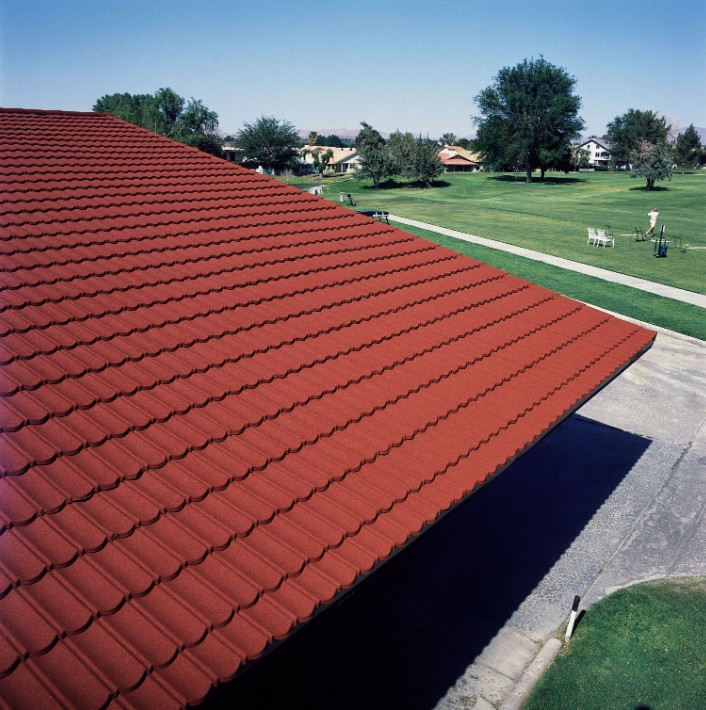
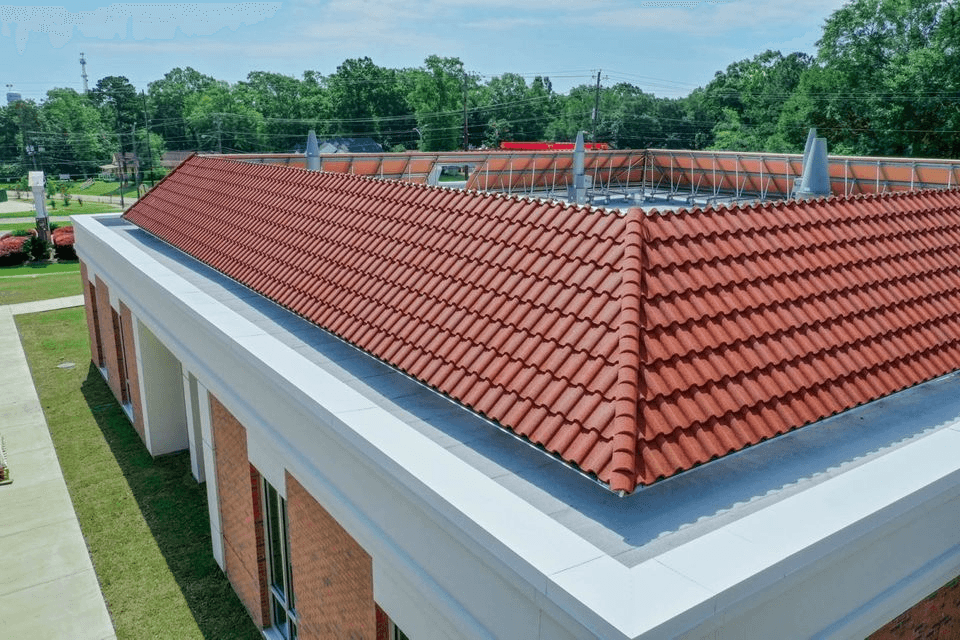
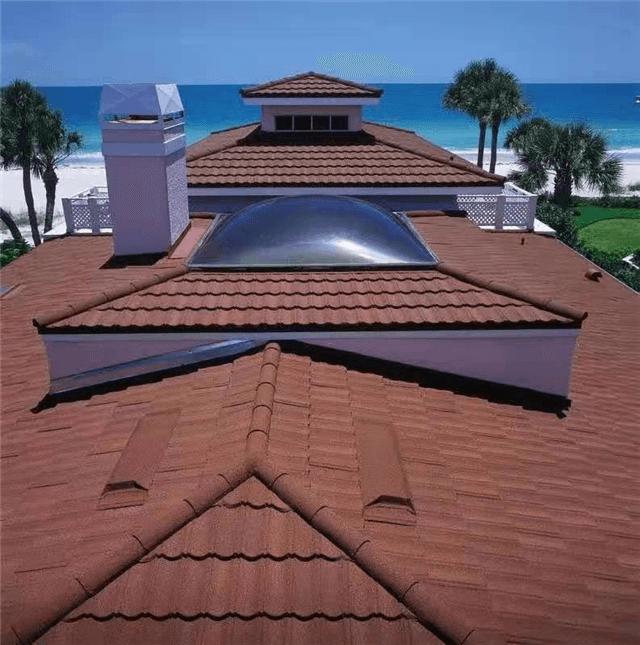
Use the effective installed area per panel when you check Milano roof tile dimensions coverage for an order. Read that figure alongside the full panel size and the drawing that shows the lap. Then check the count against your roof layout and the supplier’s pack sizes.
A technical sheet can give full dimensions, installed dimensions, area per panel, and pieces per square meter. These figures answer different buying questions. The dimensions help you identify the panel, while the coverage rate helps you estimate how many pieces you need.
Ask for a sheet and drawing for the exact item on your quote. Keep both with your takeoff so each count can be traced to its source. That matters when the buyer, supplier, and installer work from different copies of a plan.
Read Milano roof tile dimensions coverage on the technical sheet
Find the two sets of dimensions
Overall length and width describe the panel from edge to edge. Use them to check the item drawing, the space needed for storage, and the fit of a sample. If a quote only says tile size, ask which dimensions it lists.
Effective length and width describe the panel’s contribution once adjacent pieces overlap as shown. The sheet may call these dimensions cover length and cover width. Use the drawing to see which direction each figure measures on the roof.
Check the drawing labels when a supplier uses width for the long edge. Terms can vary with the drawing’s orientation. The arrows and points of measurement give you a better way to compare two documents.
The published technical table for this panel gives separate fields for overall size, effective size, and coverage. Ask for the drawing that matches the exact item and finish on your offer. Milano Tile
Match the document to the product
Start with the maker, profile name, item code, and sheet revision. Milano appears on different makers’ product sheets, so keep the full product identity on each quote line. A shared profile name leaves room for differences in size, overlap, and fit.
Gerard’s Milano document for a batten system shows a dimension drawing, a lap detail, and a separate coverage table. Its labels illustrate how a maker can record the two sets of dimensions for one system. Gerard Milano product specification
Check whether the sheet calls its values nominal or gives a tolerance. Ask the supplier which limits apply when you check a sample or shipment. The purchase record should show the dimension, unit, measurement points, and acceptance limit where needed.
Check the coverage units before counting panels

Read area per piece and pieces per area
Area per panel tells you how much roof surface a panel covers in the stated layout. Panels per square meter tells you how many pieces the same layout uses for that area. Check the unit beside each figure before you put it into a spreadsheet.
Divide the net area by the stated area per panel for a first count. If the sheet gives panels per square meter, multiply that rate by the net roof area in square meters. Both methods should give close results when they use the same basis.
Take a test area of 30 square meters and assume each piece covers 0.60 square meters. Dividing the area by the cover gives a base count of 50 pieces. These made-up figures show the calculation for a simple test area.
Round the final count to whole panels after the team checks the layout. If the stated rates have different levels of rounding, the estimates may differ slightly. Ask the supplier which value it uses to build the order quantity.
Check that the figures agree
When a sheet gives effective dimensions in millimeters, convert them to meters before multiplying for a square meter check. Divide each dimension in millimeters by 1,000 to get meters. Then check the result against the supplier’s stated area per panel.
Use that multiplication as a cross-check where the drawing supports a rectangular cover calculation. Some sheets report a rounded area alongside more precise dimensions. A larger difference needs a written explanation before you use either value.
If an offer uses square feet and your takeoff uses square meters, bring the figures to one unit first. Keep the source values beside the converted ones. This lets another person check the math without looking up the quote again.
Ask about the basis of terms like square, bundle, or carton if they appear on the offer. A pack count and a coverage rate measure different things. Record how many panels are in the pack and which coverage figure applies to each piece.
Build a count that follows the roof layout
Use the area of the roof planes
Check whether the area on the plan follows the roof slope or shows its horizontal projection. A takeoff for the panels needs the roof planes the product will cover. Ask the estimator to label each plane and record the area used.
Use the approved plan revision for the count. If a porch, extension, or dormer changes, update the affected plane before you revise the total. A small change in roof area can still change the number of pieces in a course.
The area calculation gives you a starting count for field panels. Then have the estimator check how courses and panel widths fit each plane. Short runs, staggered rows, and angled edges can change the number of whole panels you need.
If the plan includes openings, confirm how the estimator treats each one. An opening can change the net area while leaving pieces to cut around it. Record any cut allowance with the plane where it arises.
Keep cuts, spares, and packs visible
List the base count, cut allowance, spare pieces, and final purchase quantity in separate fields. Ask the installer where offcuts can serve another part of the same layout. Count reuse only where the profile and required laps allow it.
Keep any spares the buyer wants for later service in their own line. Then use the supplier’s confirmed pack count to check how the goods will ship. If rounding to full packs adds pieces, record that difference in the order.
Use the roof plan to count ridge, hip, verge, valley, and flashing items by their own units. Confirm the part and cover length for each run. For the records to request for those parts, see the roofing accessories checklist.
Compare quotes using the same area and units
Check what each price covers
Put each offer on the same net roof area and compare the same parts. Ask whether the tile price is per panel, per pack, or per covered area. If the seller quotes per square meter, ask which panel count and cover rate it uses.
To compare field panel prices, multiply the quoted piece price by the stated pieces per square meter. Keep that rate separate from the full order total. The total may also include cuts, spares, fittings, packing, and delivery.
A low piece price can produce a different result when another panel covers a different area. Check both rates and keep the material and finish fields in view. The roof tile profile price guide covers other differences that affect the comparison.
If a pack price appears on a quote, divide it by the confirmed count to check the piece price. Keep the currency and delivery basis on the same comparison line. Ask the supplier to show any excluded items before you choose an offer.
Send one clear request to each supplier
When requesting a quote from JCROOF, send the profile, roof plan, finish, and takeoff units together. Ask for the effective coverage and pack count for the exact item it offers. Use the response to reconcile the quote and the count before ordering.
| Field to request | What it helps you check |
|---|---|
| Product code and sheet revision | Whether the quote matches the drawing |
| Overall dimensions and tolerance | What to measure on the supplied panel |
| Effective length, width, and area | What to use for the installed coverage |
| Pieces per area and unit | What rate to use in the first count |
| Net area and layout allowance | How the base count becomes a project count |
| Pack count and final pieces | How the order matches the shipment |
| Accessory codes and units | How the separate parts complete the roof package |
Keep the approved values with the order
Review a sample against the drawing
If the team reviews a sample, label it with the item code and the sheet revision. Use the measurement points the supplier identifies for the overall dimensions. Ask it to explain any difference before you accept the sample as the order reference.
For effective coverage, ask how the supplier checks the panel in the stated lap arrangement. A single panel on a bench shows the full size. A matched set can help the project team review the fit under the specified layout.
Put the agreed drawing, takeoff, quote, and pack count in the order file. The buyer can then trace each quantity to the same product record. This is especially useful when a later shipment needs to match the first one.
Recheck the count when something changes
If a supplier changes the panel code, dimensions, or packing, ask for the updated sheet and quote. Check which layout and order lines the change affects. The revised count should follow the new cover rate and pack count where either has changed.
At receiving, check the label, number of packs, and pieces per pack against the packing list. Record any difference before distributing the goods. Keep the approved drawing nearby so the receiving team can identify the panel if a label is unclear.
Send the current takeoff and drawing to the people who will use them on site. If they find a roof change, ask the estimator to update the affected counts and record the new basis. Keep that revision with the order so everyone can trace the change.
Planning a Milano tile order? Send us an inquiry with your roof plan, finish, and area units. Our team will help confirm the documents and quantity details to request.