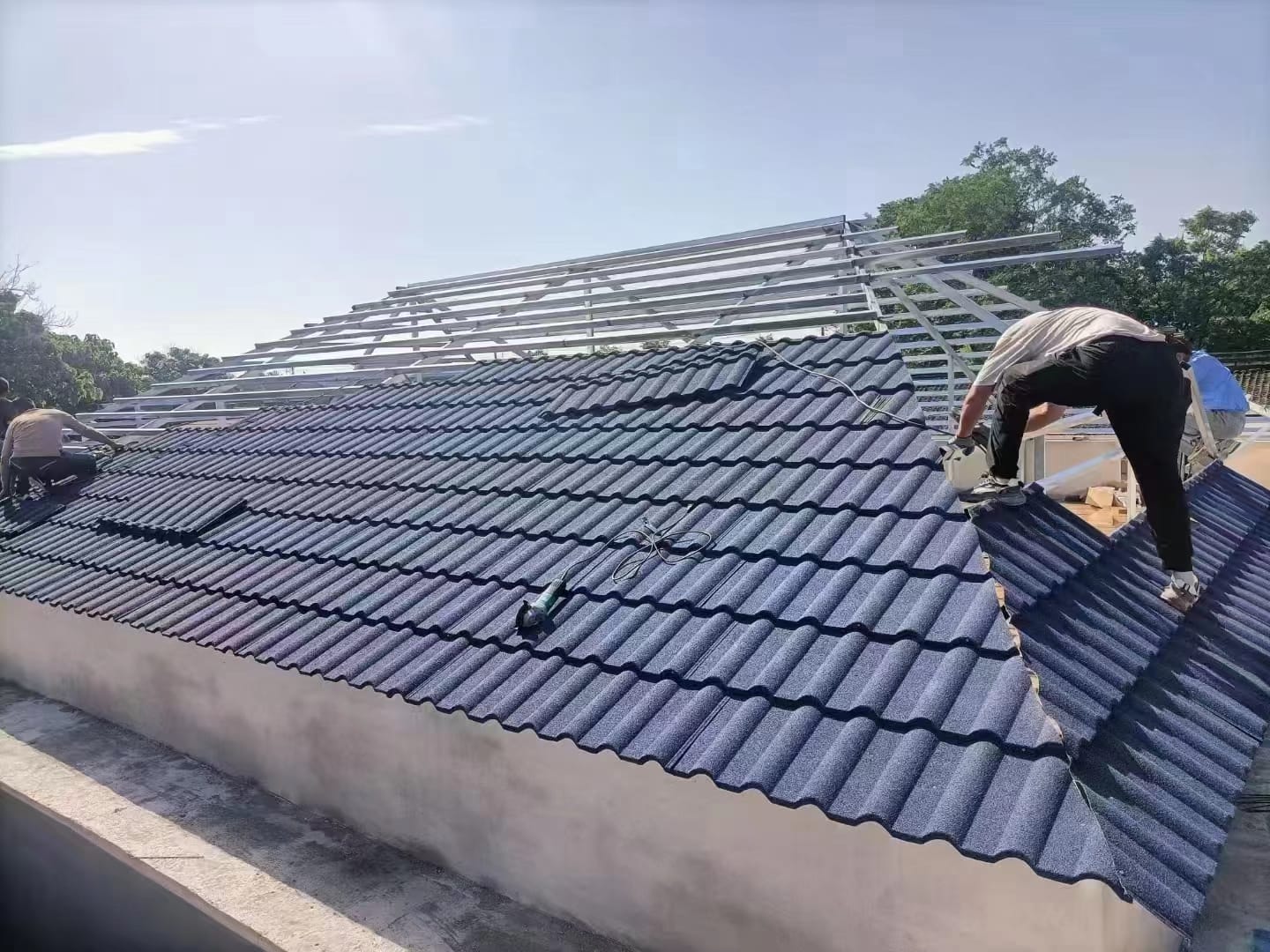


Stone coated roofing tiles are designed for long-term durability, aesthetic appeal, and weather resistance. However, in some cases, users may notice stone chip loss over time. This issue does not usually happen immediately after installation; instead, it is often caused by material quality, production processes, handling, or environmental conditions.
Understanding how to prevent stone chips from falling off roofing tiles is essential for importers, contractors, and distributors who want to ensure product quality and reduce long-term maintenance issues.
1. Use High-Quality Stone Granules from the Start
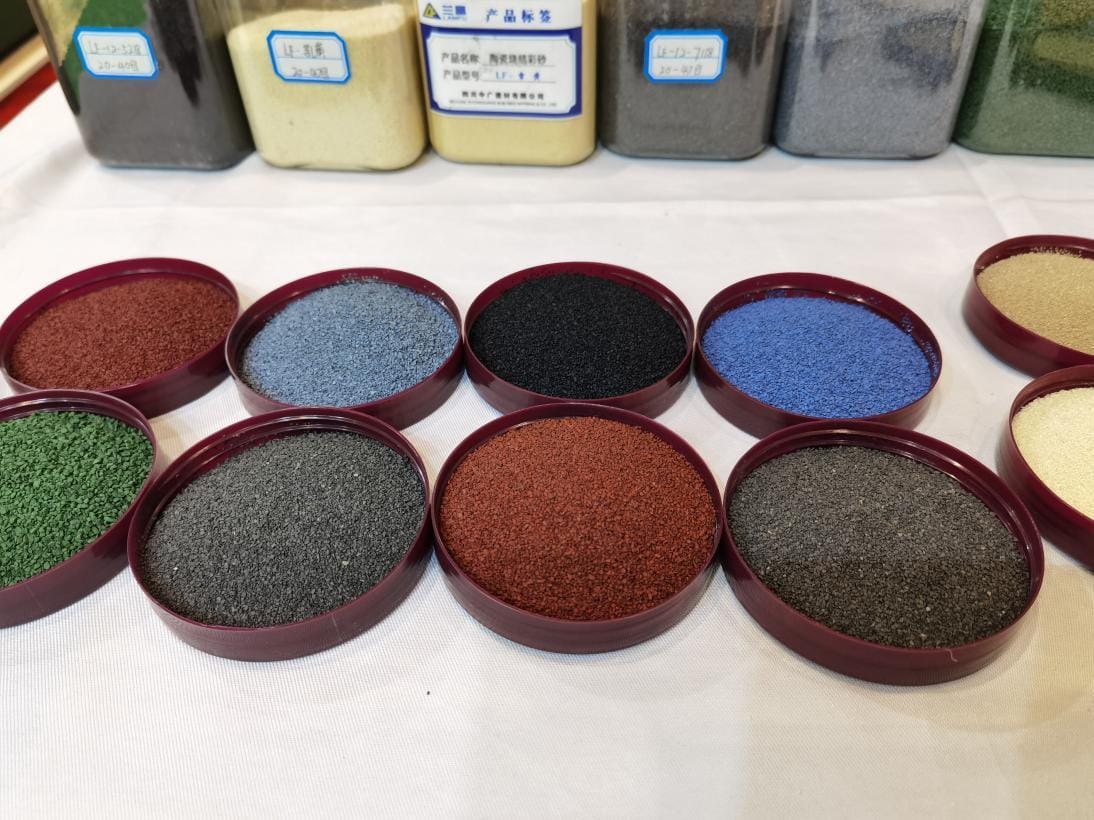
The foundation of strong adhesion lies in the quality of the stone granules used during production. Poor-quality granules are more likely to detach over time, especially under UV exposure and heavy rain.
UV-resistant colored stone granules
Premium manufacturers use ceramic-coated natural stone granules that resist fading and improve bonding strength. These materials are designed to maintain color stability even in harsh climates.
Granule size consistency
Uniform particle size ensures even coating coverage and stronger adhesion to the resin layer. In contrast, inconsistent granule sizes can create weak bonding points.
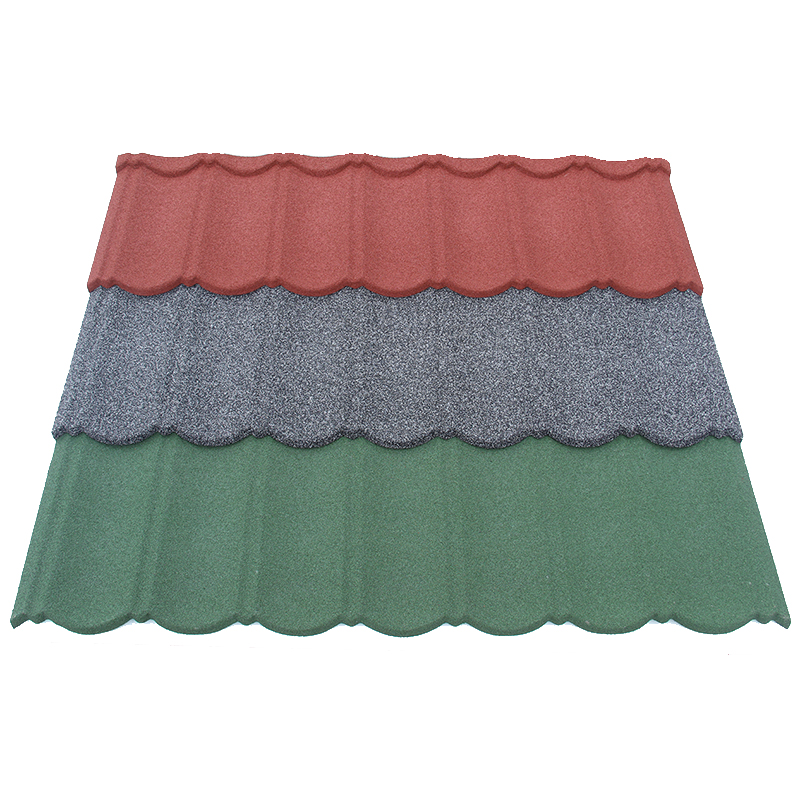
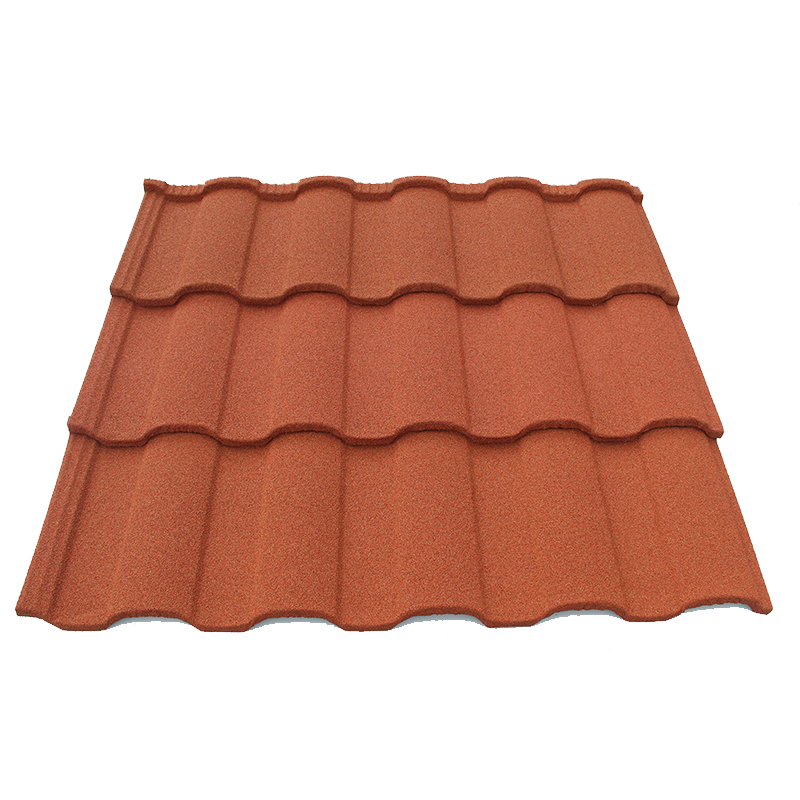
For example, architectural roofing profiles such as Roman Tile rely heavily on uniform granule distribution to maintain a clean and stable surface appearance.
2. Improve Adhesion with High-Quality Acrylic Resin
Stone chips are bonded to the steel sheet using acrylic resin. Therefore, resin quality plays a critical role in preventing chip loss.
Strong bonding performance
High-grade acrylic resin creates a stronger connection between the steel base and stone granules, reducing the risk of peeling during weather exposure.
Weather resistance
Premium resin systems remain stable under UV radiation, rain, and temperature changes, ensuring long-term adhesion performance.
3. Ensure Proper Manufacturing Temperature and Curing Process
Even with good materials, improper production control can lead to weak bonding. Therefore, manufacturing conditions must be carefully controlled.
Controlled curing process
After stone granules are applied, tiles must go through a controlled curing process. This allows the resin to fully bond with both the steel surface and the stone layer.
Temperature stability
If curing temperatures are too low or uneven, adhesion strength decreases, leading to long-term granule loss.
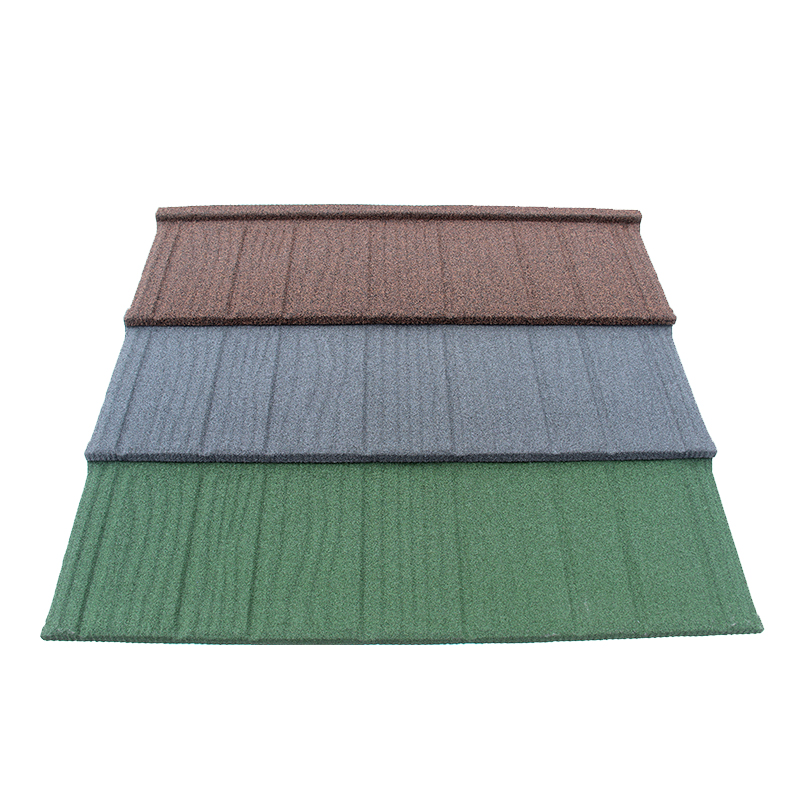
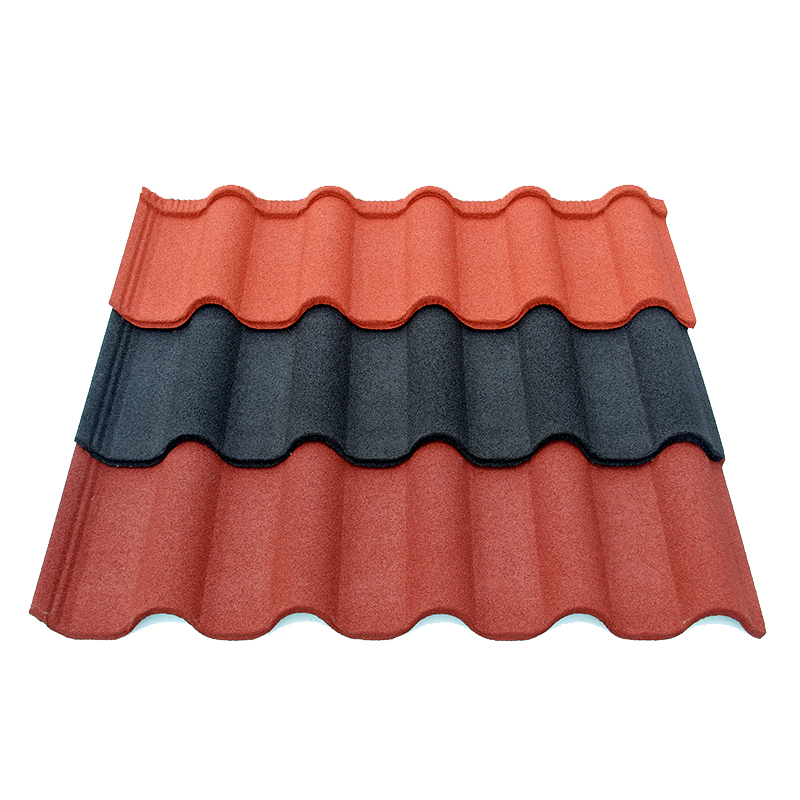
Products such as Bond Tile require strict curing control to maintain consistent surface durability across large production batches.
4. Avoid Improper Handling During Packaging and Transport
Stone chip loss can also occur after production due to mechanical damage during packaging, loading, or transportation.
Proper stacking methods
Tiles should be stacked with protective layers to avoid friction between surfaces. Without protection, repeated movement during shipping can loosen surface granules.
Reinforced export packaging
High-quality manufacturers use waterproof wrapping, steel pallets, and corner protection systems to minimize movement during container transport.
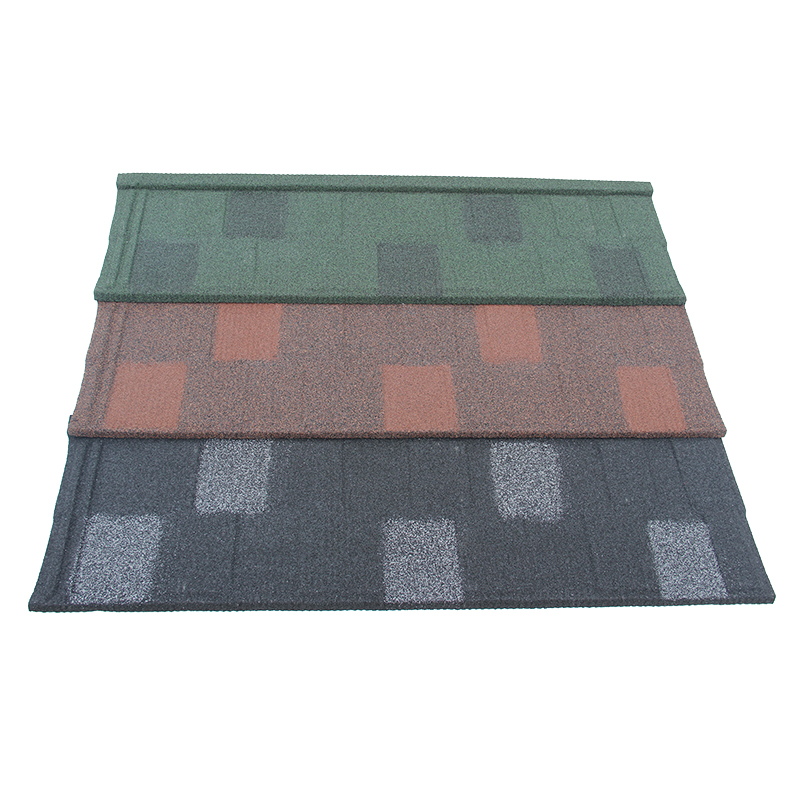
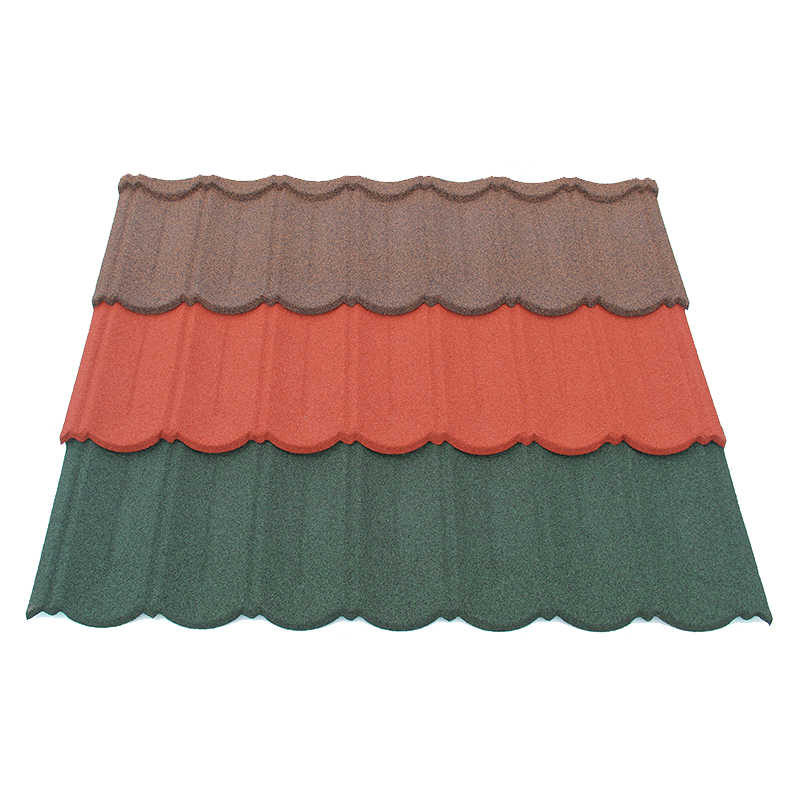
For example, lightweight profiles such as Shingle Tile must be carefully packaged to prevent abrasion during long-distance shipping.
5. Install Roofing Tiles Correctly
Improper installation can also contribute to stone chip loss. Although stone coated roofing is designed for easy installation, correct procedures must still be followed.
Avoid excessive foot traffic
Walking directly on unprotected roofing surfaces can damage the stone layer. Installers should follow proper walking paths during installation.
Correct fastening system
Using appropriate nails and fastening techniques ensures that tiles remain stable and do not shift under wind load, which helps protect surface granules.
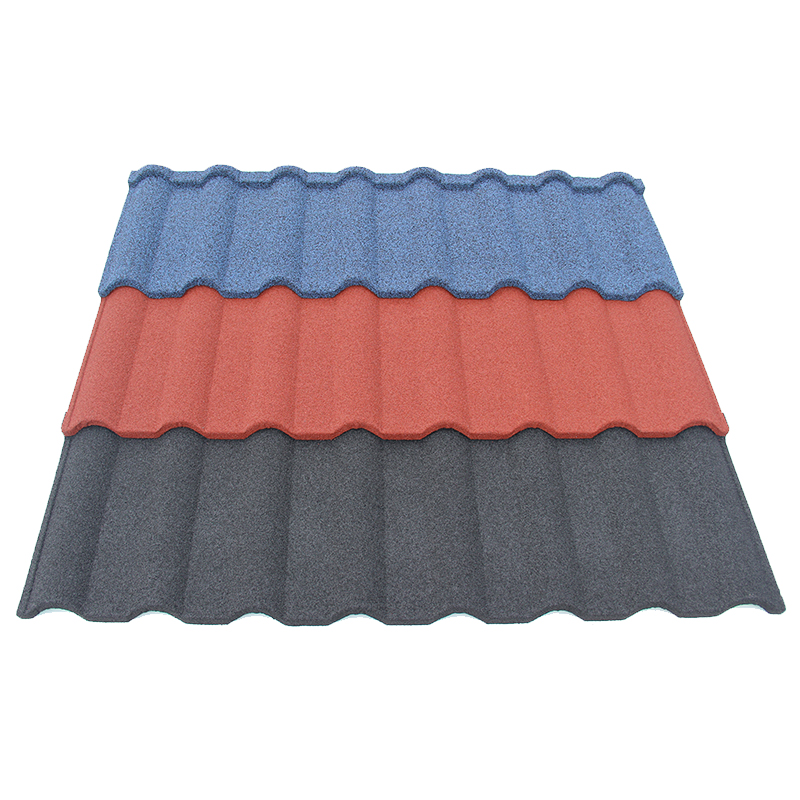
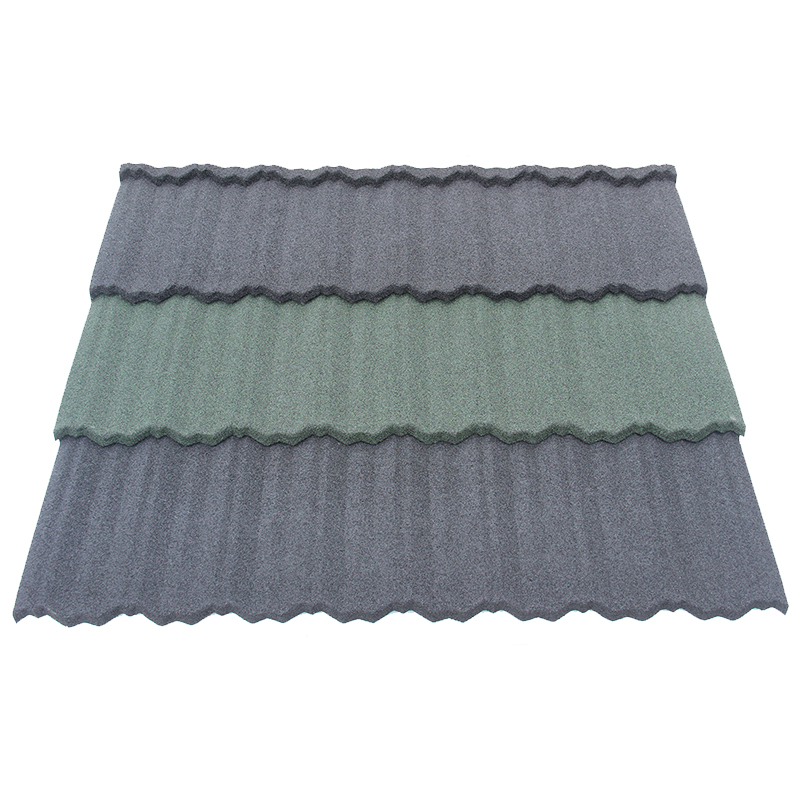
Profiles such as Milano Tile require precise installation alignment to maintain both visual consistency and surface integrity.
6. Select a Reliable Manufacturer with Strict Quality Control
The most effective way to prevent stone chip loss is to choose a manufacturer with strong quality control systems. Reliable factories monitor every stage of production to ensure consistent bonding performance.
Multi-stage QC inspection
Professional manufacturers inspect raw materials, monitor resin application, control curing conditions, and test finished products before shipment.
Export-grade production standards
Factories with export experience are more likely to maintain stable quality because they must meet international performance expectations.
For example, JCROOF implements strict production and inspection systems to ensure consistent stone adhesion performance for global roofing markets.
7. Perform Proper Storage Before Installation
Storage conditions before installation can also impact product quality.
Avoid moisture exposure
Roofing tiles should be stored in a dry and ventilated environment. Excess moisture may weaken adhesive layers over time.
Prevent heavy stacking pressure
Excessive stacking weight can cause friction damage to the top layers of tiles, leading to premature granule loss.
Common Causes of Stone Chip Loss
- Low-quality stone granules
- Weak acrylic resin bonding
- Improper curing temperature
- Poor packaging and handling
- Rough transportation conditions
- Incorrect installation practices
- Long-term UV exposure in low-grade products
Conclusion
Stone chip loss is not a normal outcome for high-quality stone coated roofing tiles. In most cases, it is caused by poor material selection, weak production control, or improper handling and installation.
By choosing a reliable manufacturer, ensuring proper production standards, and following correct installation and storage practices, importers and contractors can significantly reduce or eliminate stone chip loss issues.
Ultimately, consistent quality control across the entire supply chain is the key to long-lasting roofing performance and customer satisfaction.