
For distributors, contractors, and project buyers, consistency is often more important than specifications on paper. In stone coated roofing (stone coated steel roofing), even small variations between batches can lead to installation issues, color mismatch, or long-term performance risks. That is why batch-level quality control is not optional—it is fundamental.
This article breaks down how a structured quality control system works in practice, using a typical batch-testing workflow applied by JCROOF. The goal is not to present theory, but to explain how each test connects directly to real-world performance and procurement reliability.
Why Batch Testing Matters in Stone Coated Roofing
Unlike single-component products, stone coated metal roofing is a multi-layer system. Variations in steel, coating, adhesive, or granules can occur from batch to batch, even within the same production line.
Without proper testing, these variations may only become visible after installation—when correction is costly or impossible.
Batch testing ensures that every shipment meets consistent standards before leaving the factory.
Key Risks Without Batch Control
- Color inconsistency between shipments
- Granule shedding after installation
- Dimensional mismatch affecting installation
- Reduced durability due to coating defects
Incoming Material Inspection: Controlling Quality at the Source
Quality control begins before production starts. Each batch of raw materials—especially steel coils and stone granules—is inspected to verify compliance with specifications.
This step prevents downstream issues that cannot be corrected later in the process.
For steel-based systems, material consistency is critical for structural performance.
Inspection Items
- Steel core thickness verification
- Aluzinc or galvanized coating weight
- Granule color consistency and grading
- Adhesive material certification
In-Process Quality Control: Monitoring Every Production Stage
During production, multiple checkpoints are implemented to ensure that each process step meets defined standards. This includes forming, coating, adhesive application, and granule embedding.
Real-time monitoring allows immediate correction if deviations occur.
This reduces the risk of producing large volumes of defective products.
Critical Control Points
- Roll forming accuracy and profile consistency
- Coating thickness and uniformity
- Adhesive application coverage
- Granule distribution across the surface
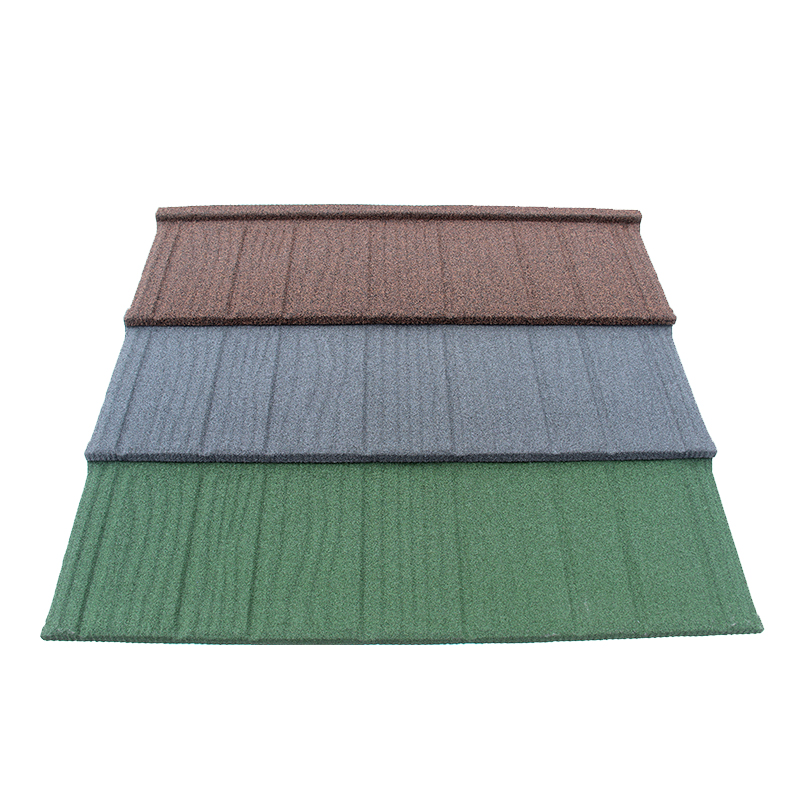
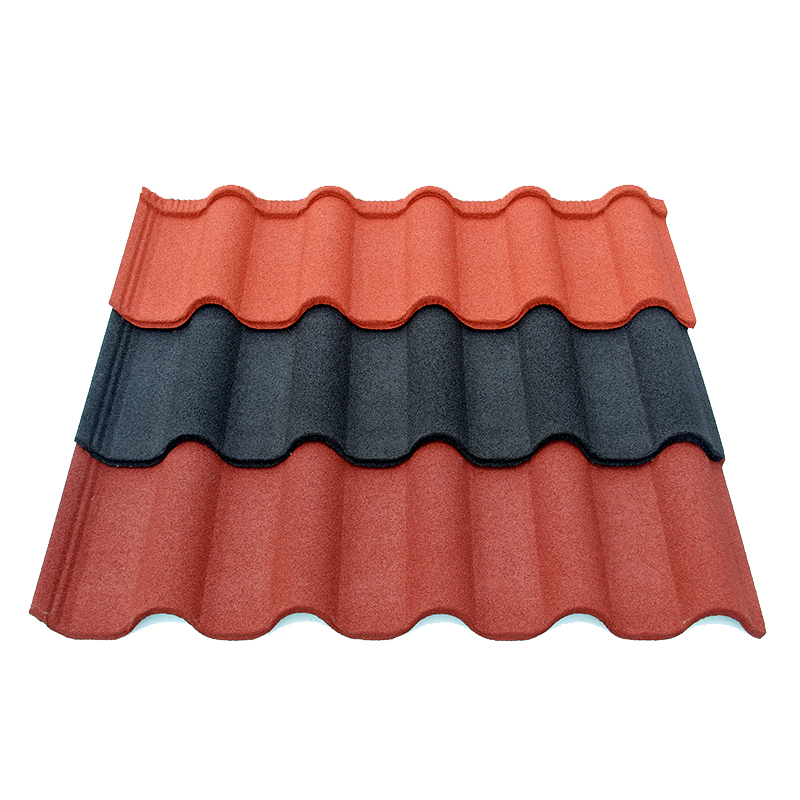
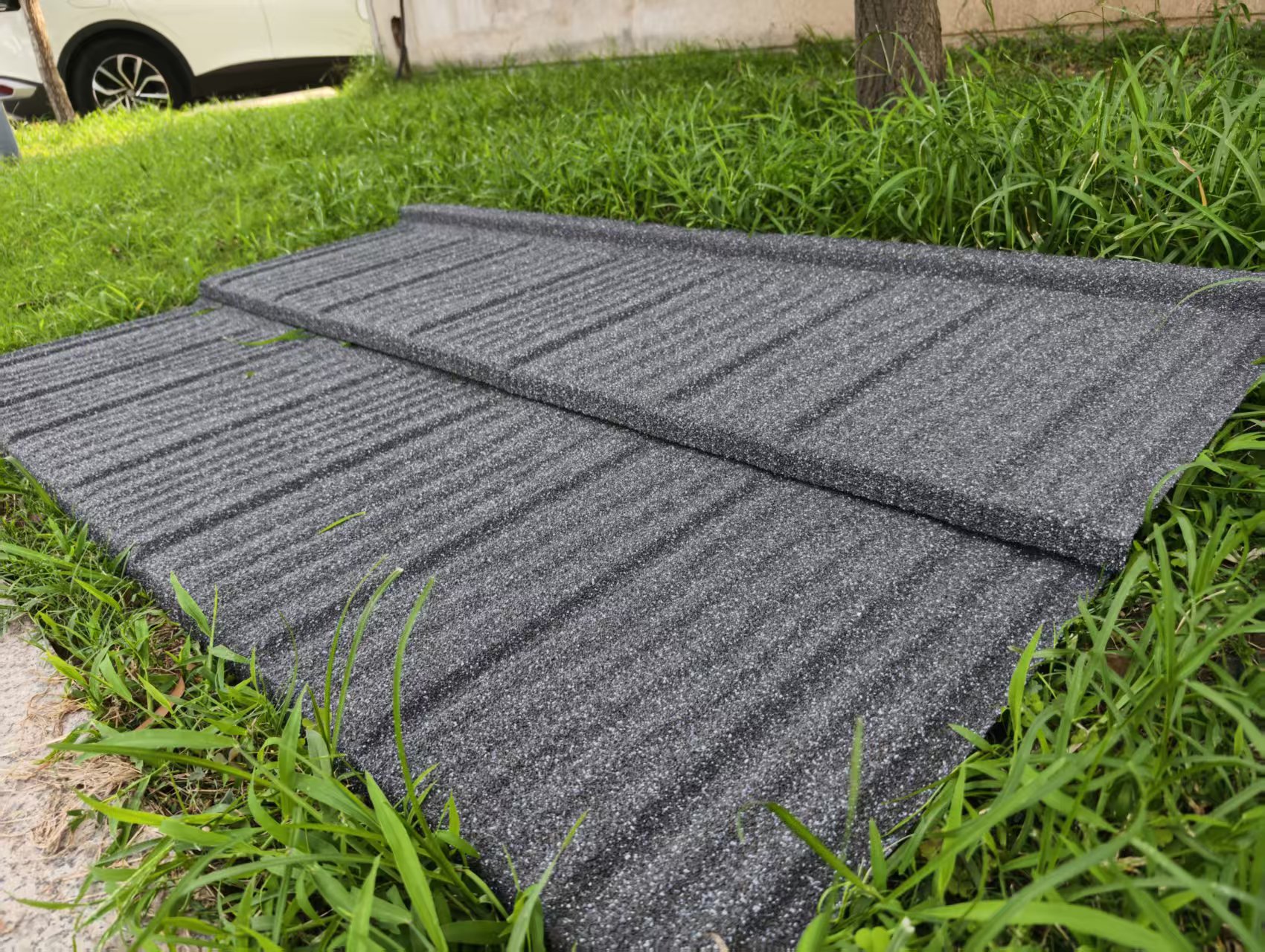
In profiles such as Bond Tile, maintaining uniform granule coverage across flat and contoured areas is essential for both performance and appearance.
Granule Adhesion Testing: Preventing Surface Failure
One of the most important tests in stone coated roofing is granule adhesion. This determines whether the stone layer will remain intact under real-world conditions.
Weak adhesion leads to granule loss, which exposes the underlying coating and accelerates wear.
This is a common issue in low-quality products.
Testing Methods
- Rub test to simulate surface wear
- Drop or impact test to assess bonding strength
- Visual inspection for loose granules
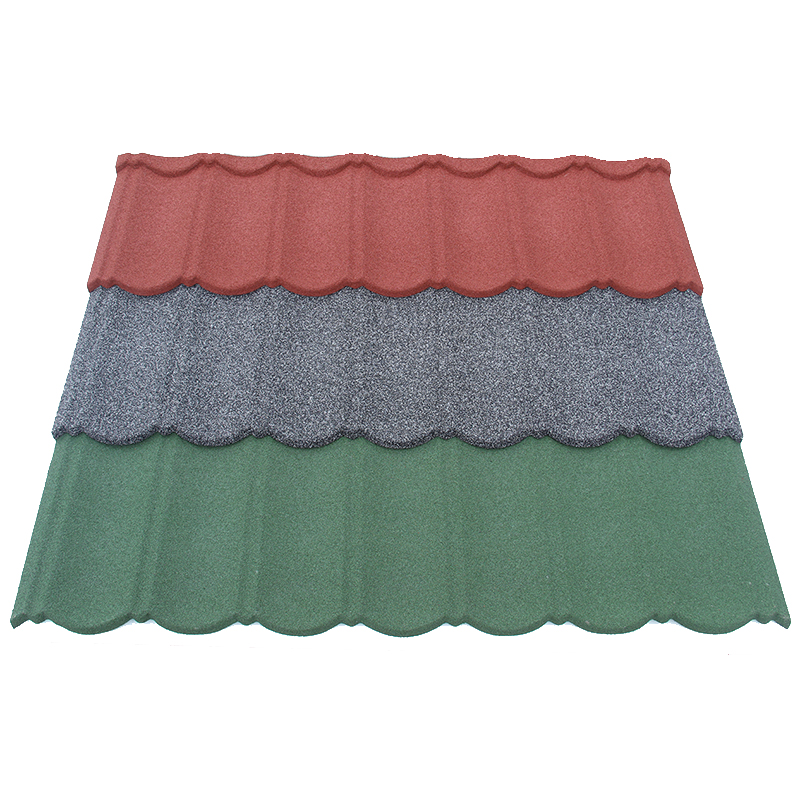
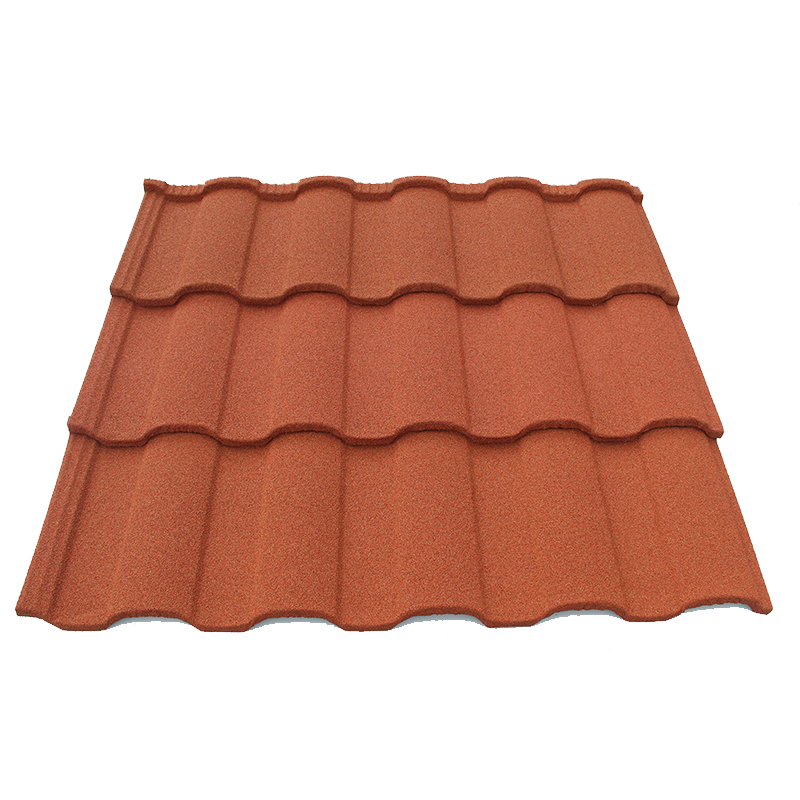
In curved designs like Roman Tile, adhesion must remain consistent across varying angles and stress points.
Coating Thickness and Corrosion Resistance Testing
Protective coatings play a critical role in preventing corrosion of the steel core. Each batch is tested to ensure coating thickness meets specified requirements.
Inadequate coating can significantly reduce the lifespan of the roofing system.
Testing methods are standardized to ensure repeatability.
Common Tests
- Coating thickness measurement
- Salt spray testing for corrosion resistance
- Surface uniformity inspection
Dimensional Accuracy and Interlocking Fit
Precision in dimensions is essential for proper installation. Even small deviations can affect how tiles interlock, leading to alignment issues or water ingress risks.
Each batch is checked against design tolerances to ensure compatibility.
This is particularly important for large-scale projects requiring multiple shipments.
Key Measurements
- Tile length and width
- Profile depth and shape
- Interlocking edge alignment
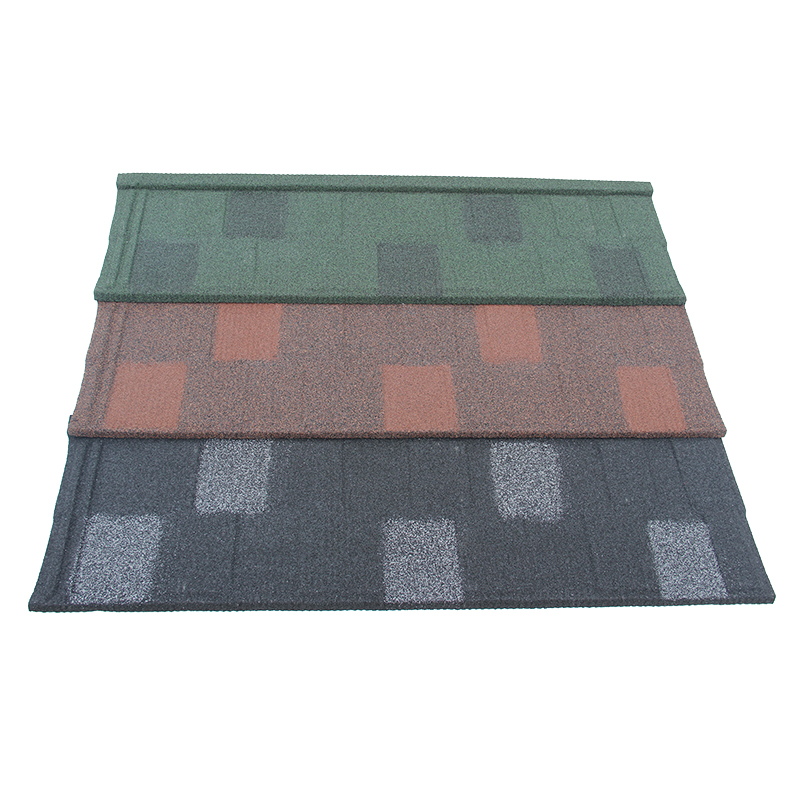
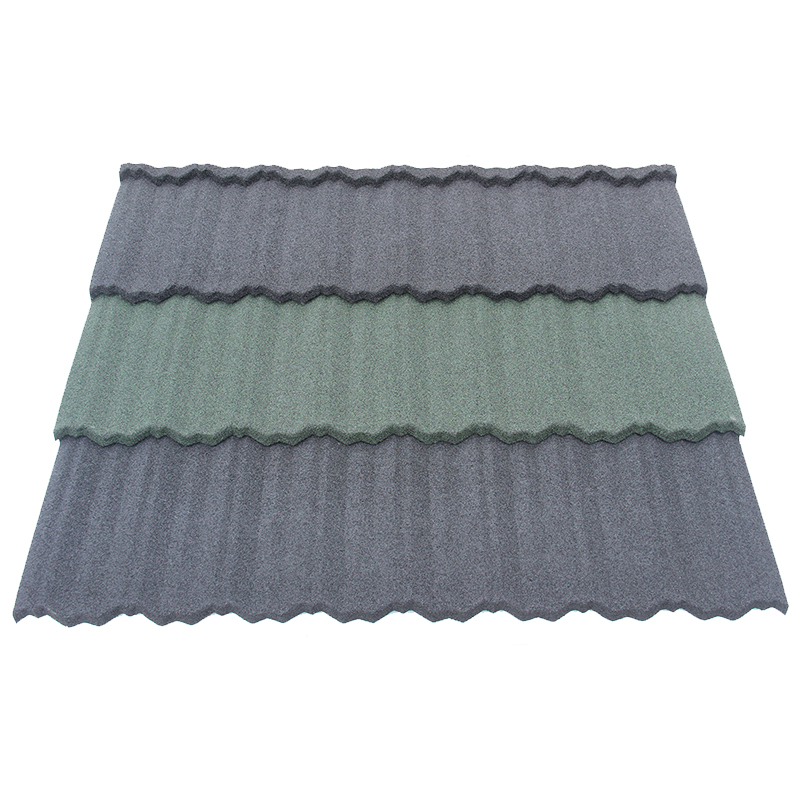
In flatter systems such as Shingle Tile, dimensional accuracy directly affects visual uniformity after installation.
Color Consistency Verification Across Batches
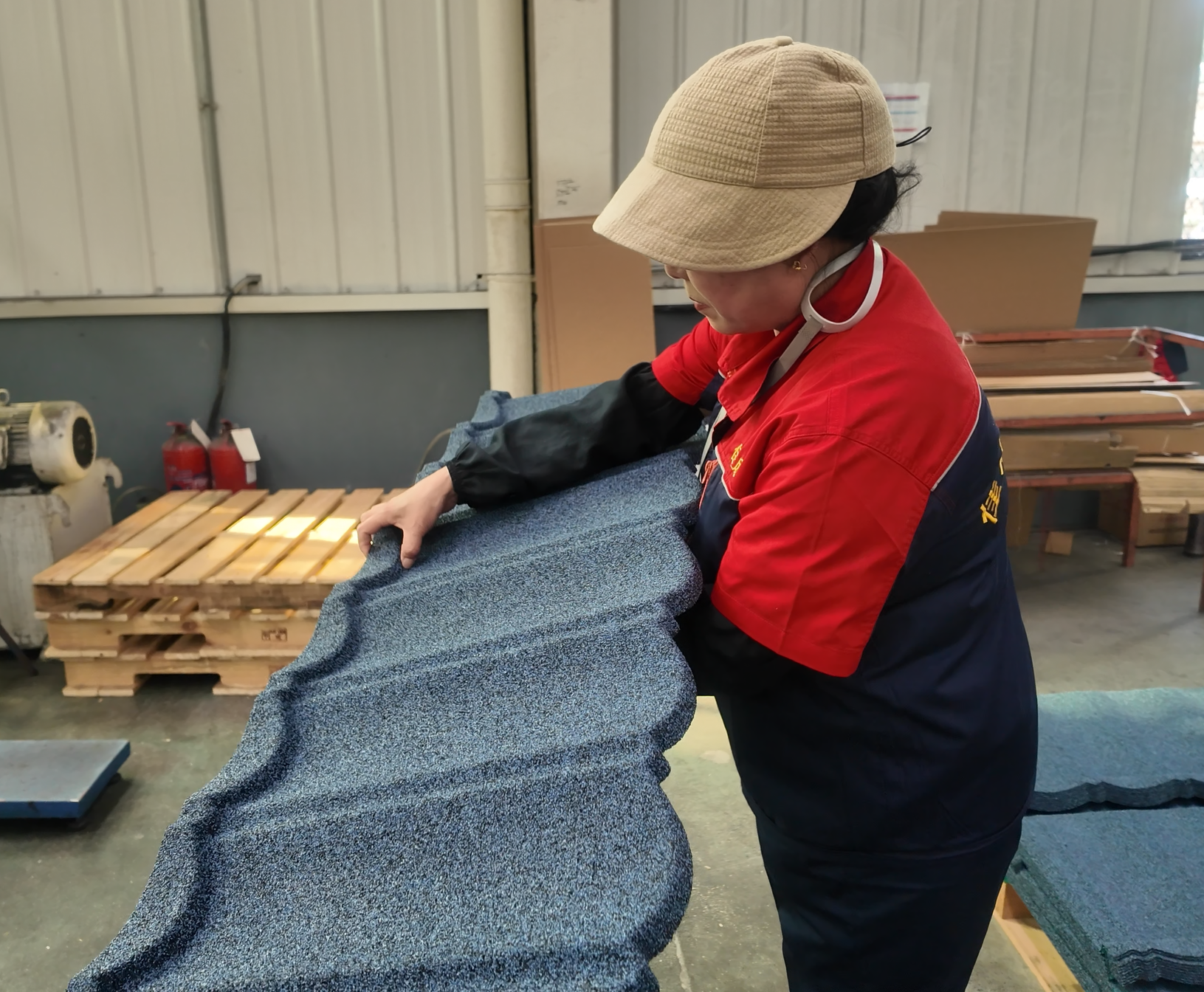
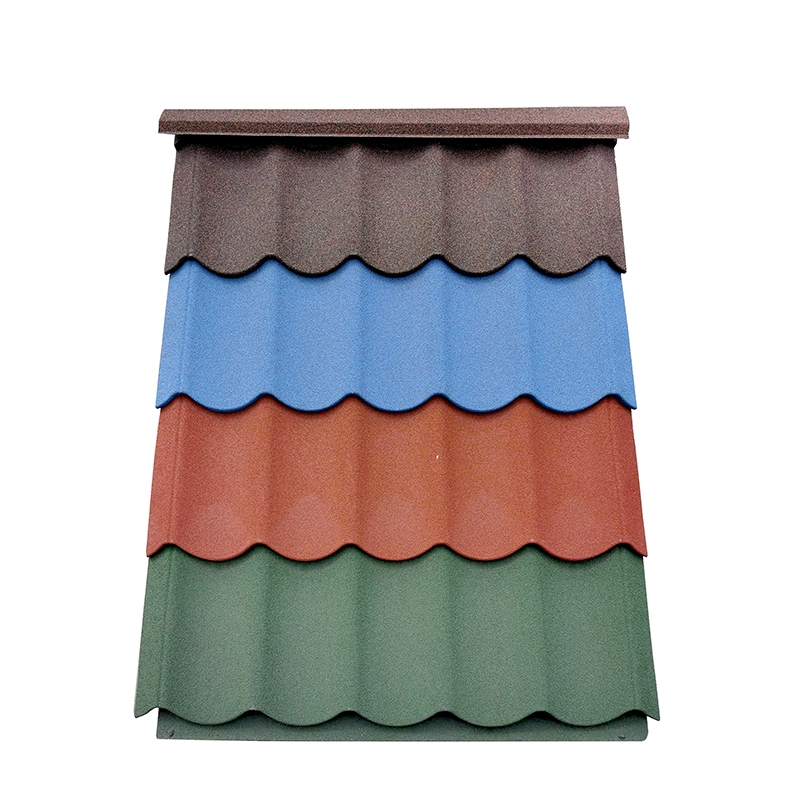
Color variation is one of the most visible quality issues in stone coated roofing. Even slight differences between batches can be noticeable after installation.
To prevent this, color consistency is checked using both visual inspection and standardized comparison methods.
Batch tracking ensures traceability if issues arise.
Control Methods
- Sample comparison under controlled lighting
- Batch-to-batch reference matching
- Documentation of color codes and production dates
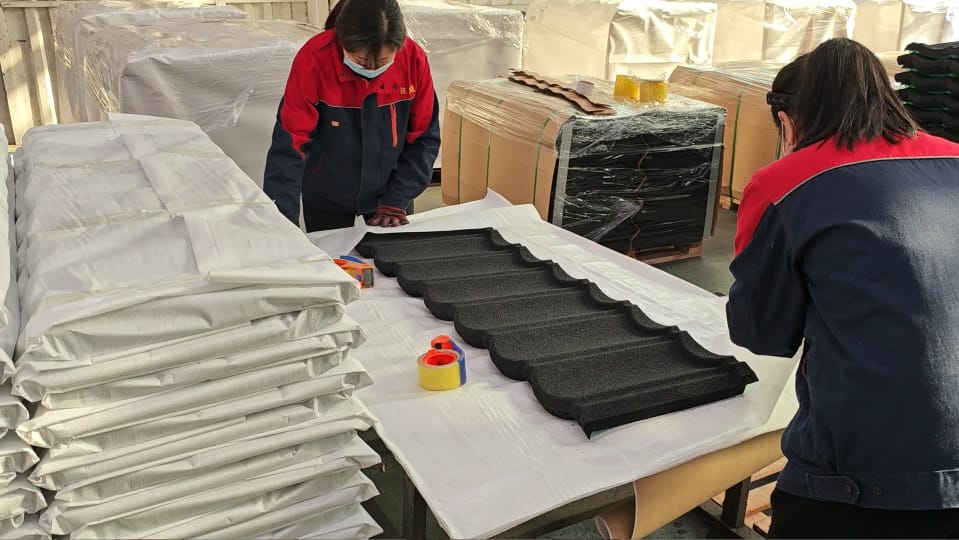
Packaging and Pre-Shipment Inspection
Before shipment, finished tiles undergo a final inspection to ensure they meet all quality standards and are properly packaged. This step protects the product during transportation.
Damage during shipping can compromise otherwise high-quality products.
Proper packaging is part of the quality control system.
Final Checks
- Surface condition and granule retention
- Stacking and packaging integrity
- Labeling and batch identification
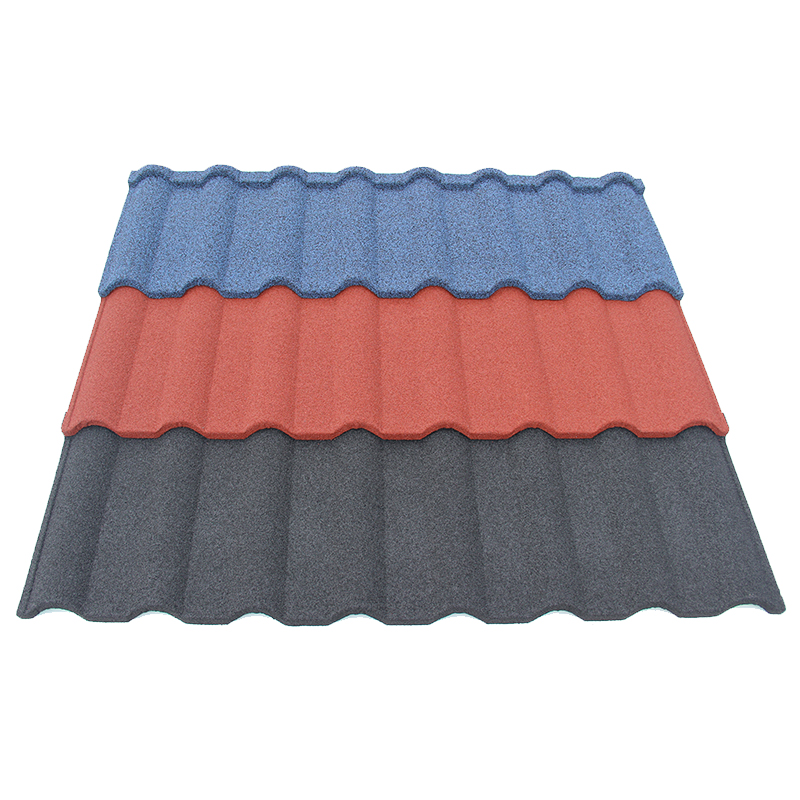
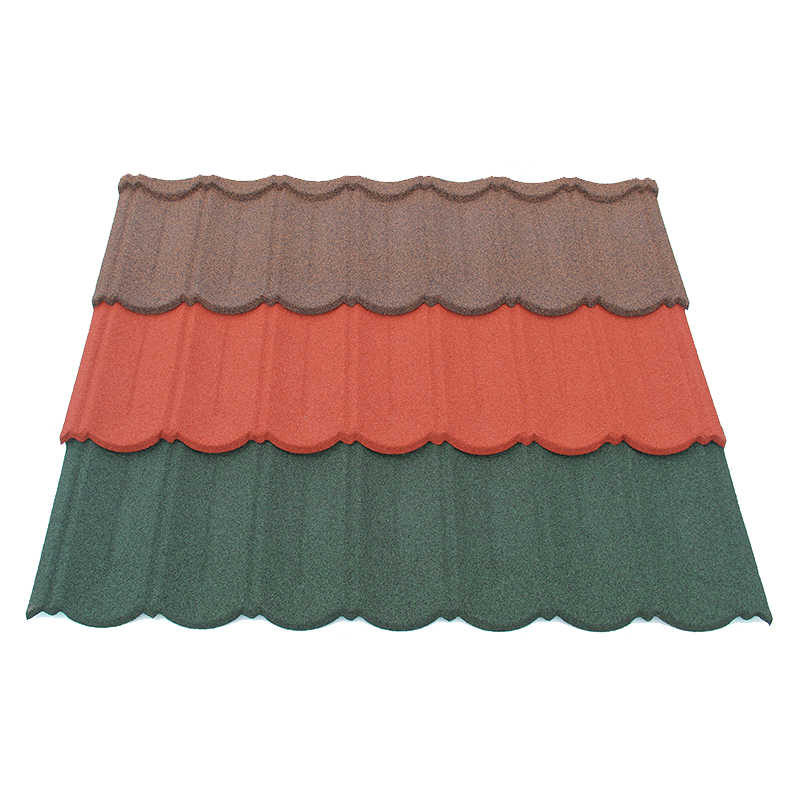
In premium profiles like Milano Tile, maintaining surface quality during transport is critical for final presentation.
Quality Control Summary Table
| Stage | Focus | Purpose |
|---|---|---|
| Incoming Inspection | Raw materials | Ensure baseline quality |
| In-Process Control | Production stages | Prevent defects during manufacturing |
| Adhesion Testing | Granule bonding | Ensure surface durability |
| Coating Testing | Corrosion protection | Verify long-term performance |
| Final Inspection | Finished product | Confirm shipment quality |
Common Quality Issues When Testing Is Inadequate
Understanding what can go wrong highlights why strict quality control is necessary.
Typical Problems
- Granule loss after installation
- Color mismatch between batches
- Corrosion due to weak coating
- Installation issues from dimensional errors
What Buyers Should Ask Suppliers
From a procurement perspective, verifying a supplier’s quality control system is just as important as reviewing product specifications.
Clear documentation and transparency are key indicators of reliability.
Not all factories apply the same level of control.
Recommended Questions
- What tests are performed on each batch?
- How is batch traceability managed?
- Can test reports be provided with shipments?
- What standards are followed for quality control?
Conclusion: Consistency Is the Real Measure of Quality
In stone coated roofing, quality is not defined by a single sample—it is defined by consistency across every batch delivered to the project. A structured testing system ensures that each tile meets the same standards for performance, appearance, and durability.
For buyers and contractors, understanding how batch testing works provides a practical framework for evaluating suppliers and reducing project risk. Ultimately, reliable quality control is what turns specifications into real-world performance.