
The Strategic Importance of Roof Color Selection
In the procurement and architectural specification of roofing materials, color selection extends far beyond mere aesthetics. For large-scale residential developments and commercial properties, the chosen roof color directly impacts the structure’s Solar Reflectance Index (SRI), overall thermal efficiency, and integration with the surrounding environment. Stone-coated steel roof tiles seamlessly blend the durability of metal roofing with the timeless beauty of traditional materials like clay or asphalt. Because these engineered systems are designed to withstand extreme conditions—including winds up to 120 mph—and last 2-3 times longer than conventional options, the color specified today must remain viable and visually stable for decades.
High-quality stone-coated tiles utilize high-temperature sintered basalt granules. This ceramic coating process ensures the color is baked into the stone, preventing the rapid UV degradation and chalking commonly seen in painted metal roofs. When builders and wholesale buyers source these materials, understanding market color trends is critical to maintaining high turnover rates and meeting local architectural board regulations.
Evaluation Criteria for Specifying Roof Colors
Architects and B2B buyers do not select colors randomly. The specification process typically relies on three core technical and commercial criteria:
- Solar Reflectance and Thermal Load: Lighter colors inherently reflect more sunlight, reducing heat absorption and lowering cooling costs. This is critical in tropical or desert climates where HVAC energy consumption dictates operational costs.
- Architectural Profile Matching: Certain colors naturally pair with specific tile shapes. For example, a Mediterranean aesthetic is best achieved with a terracotta color on a tile designed to replicate clay, while rustic wood shake appearances require varied brown and grey blends.
- HOA and Zoning Compliance: Residential developers must adhere to strict Homeowner Association (HOA) guidelines, which often mandate neutral, earth-tone palettes to maintain neighborhood uniformity.
The Top 7 Stone Coated Metal Roof Colors
Based on global export data and commercial project specifications, here are the top seven stone-coated metal roof colors dominating the market in 2026.
1. Charcoal Black (Midnight Black)
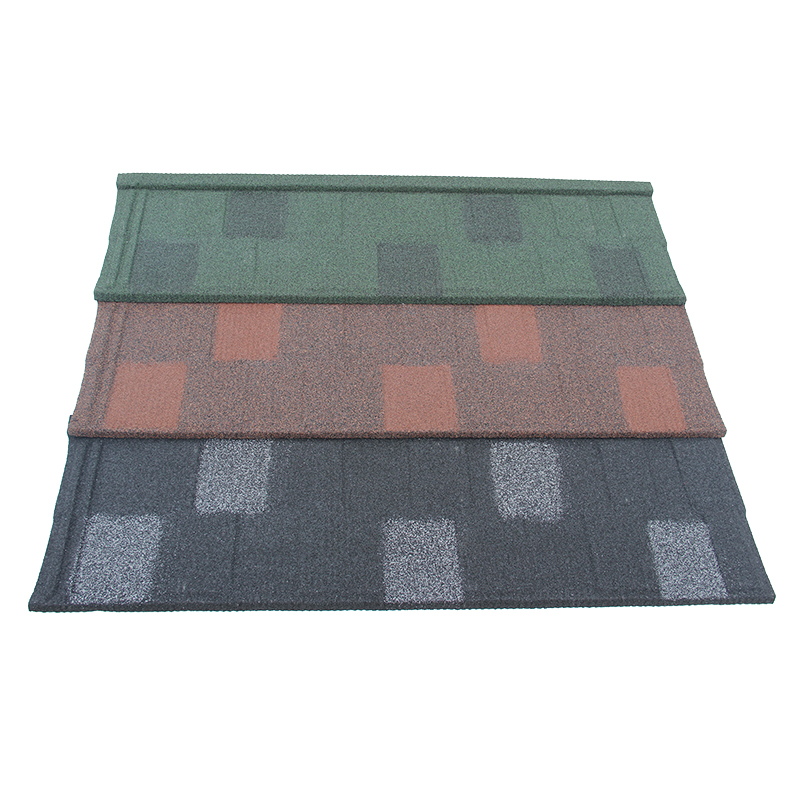
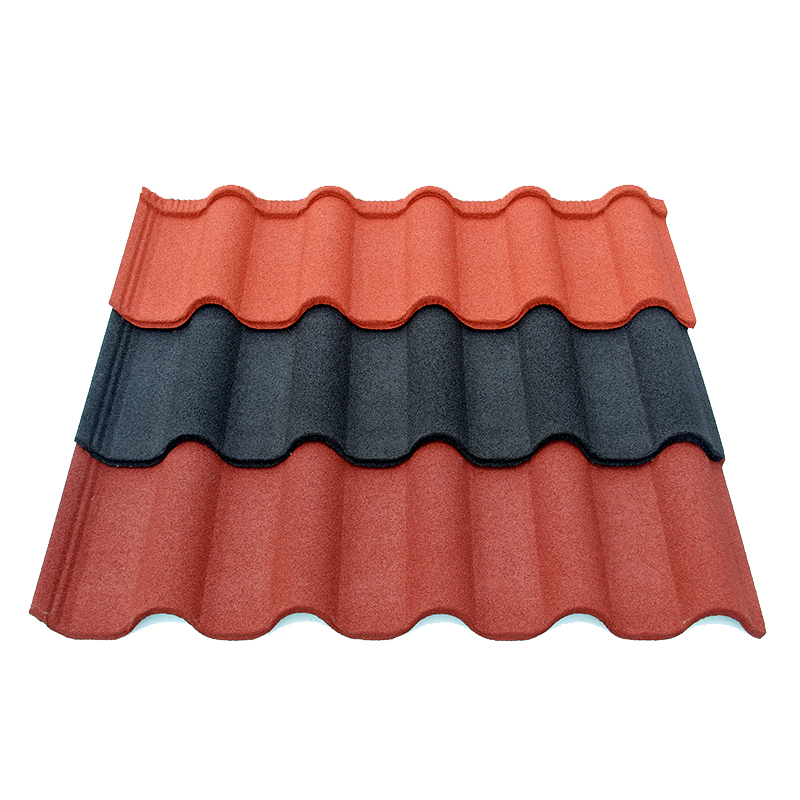
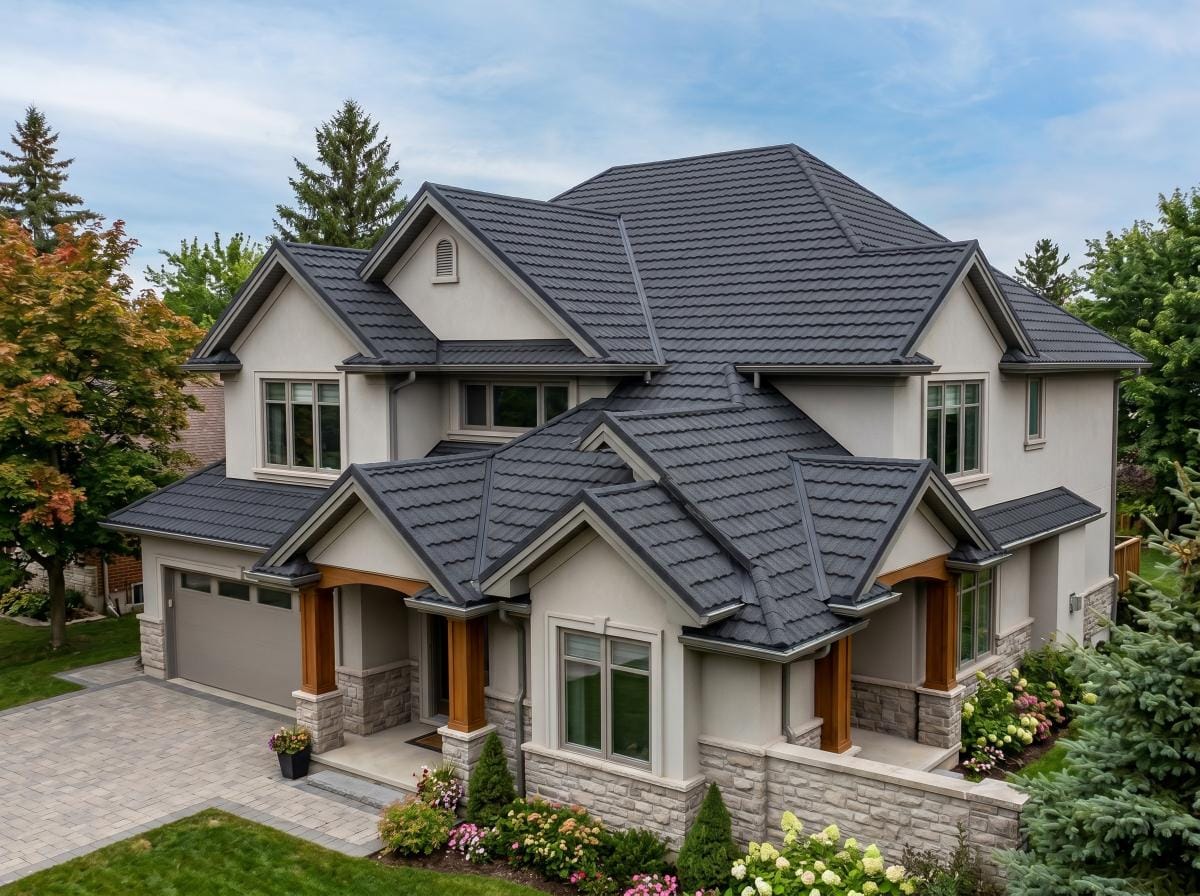
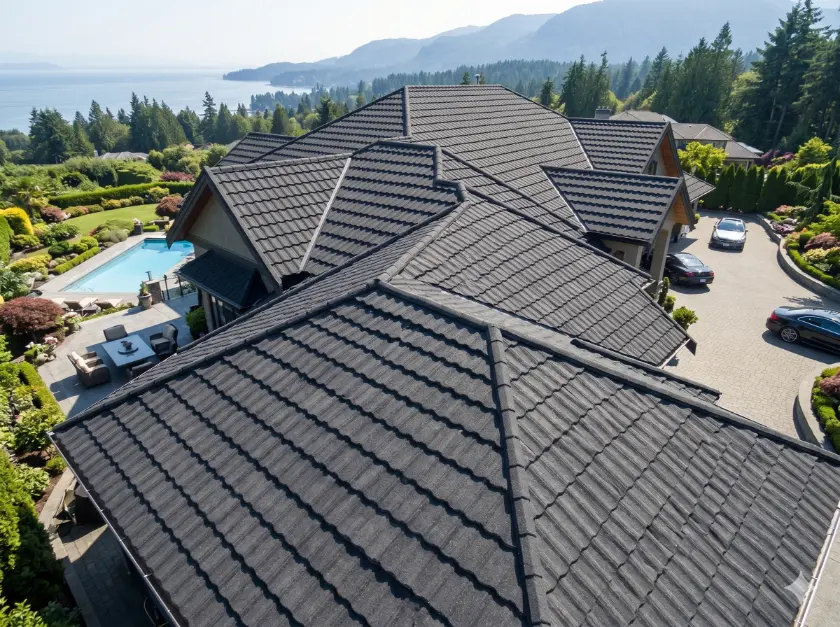
Charcoal Black remains the highest-volume color specified for both modern commercial builds and traditional residential homes. Its high-contrast finish provides a sharp, defined roofline that pairs flawlessly with white, light grey, or brick exteriors. While black absorbs more heat, premium manufacturers mitigate this by utilizing highly reflective aluzinc steel cores beneath the stone coating. This color is frequently applied to Shingle and Shake profiles to emulate the look of premium heavy architectural asphalt shingles without the associated weight or short lifespan.
2. Terracotta Red (Spanish Red)
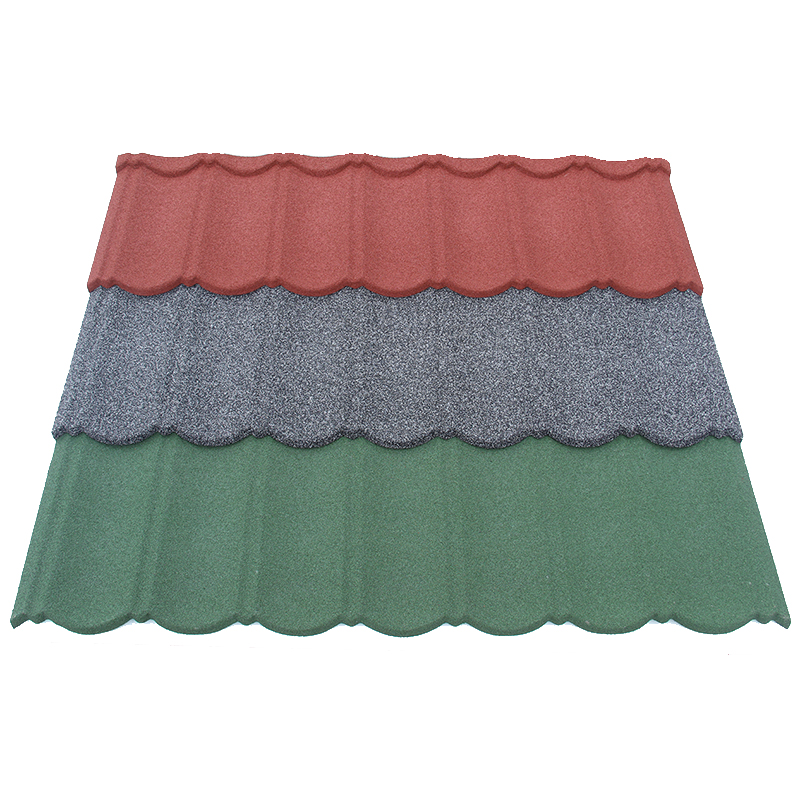
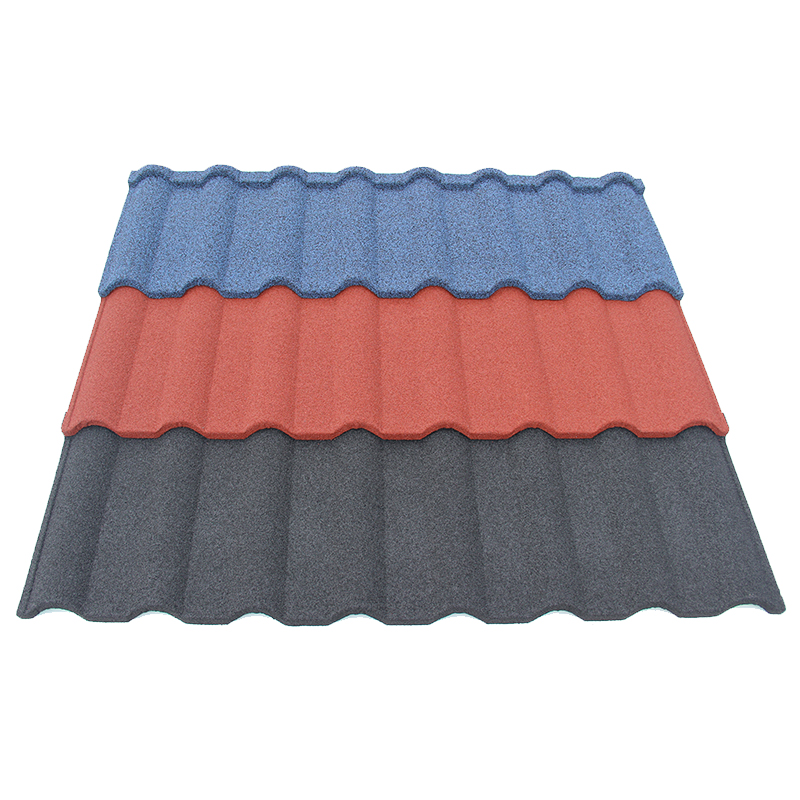
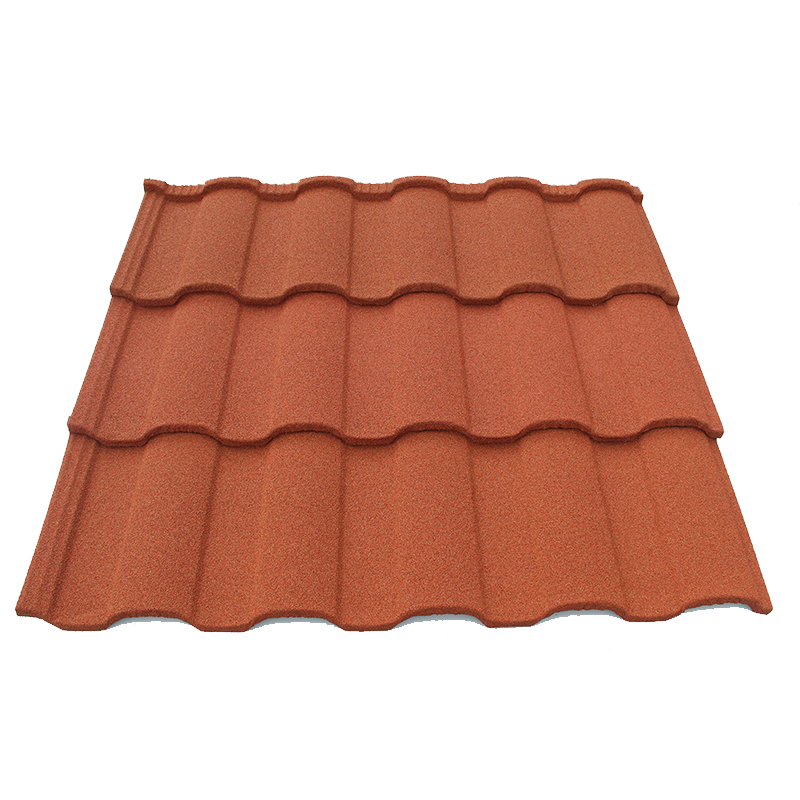
For regions heavily influenced by Spanish Colonial, Mediterranean, or coastal architecture, Terracotta Red is the standard. This color is predominantly utilized on Barrel Vault or Villa Tile profiles, perfectly replicating the timeless elegance of traditional clay tiles. Unlike actual clay, which is heavy and prone to cracking under impact, terracotta stone-coated steel provides the exact visual weight while offering a Class 4 impact rating. It is highly sought after by developers in California, Florida, and the Middle East.
3. Slate Grey (Ash Grey)
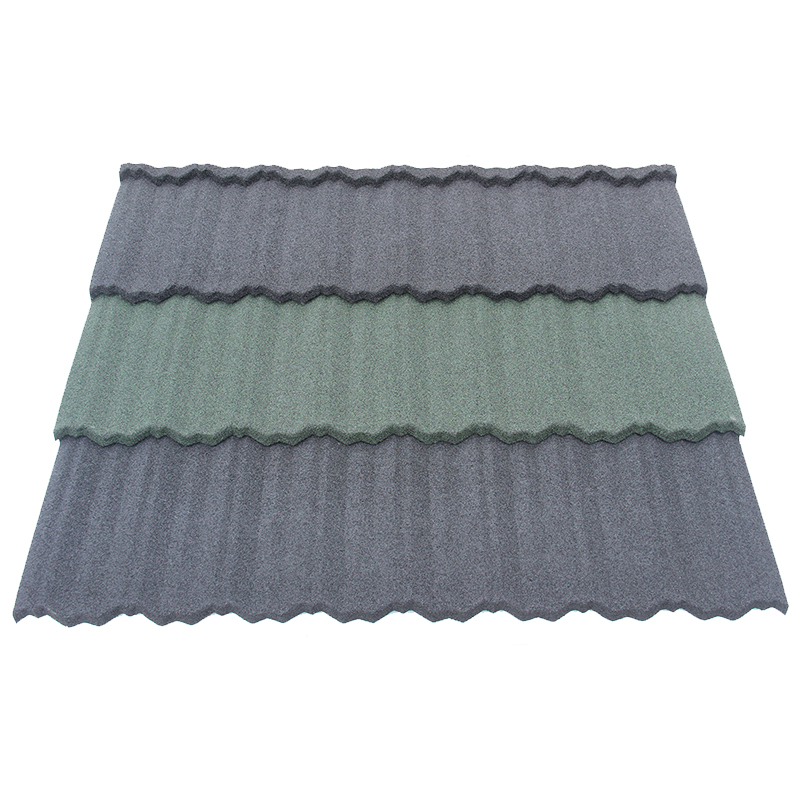
Slate Grey offers a sophisticated, neutral aesthetic that bridges the gap between traditional and contemporary design. It is highly specified in commercial projects, such as office parks and retail centers, due to its ability to hide airborne dust and dirt. Slate Grey is often manufactured with subtle, multi-toned granule blends to mimic the natural striations found in quarried slate stone. This color ensures long-term architectural relevance and compliance with virtually all municipal zoning codes.
4. Mocha Brown (Teak / Bark)
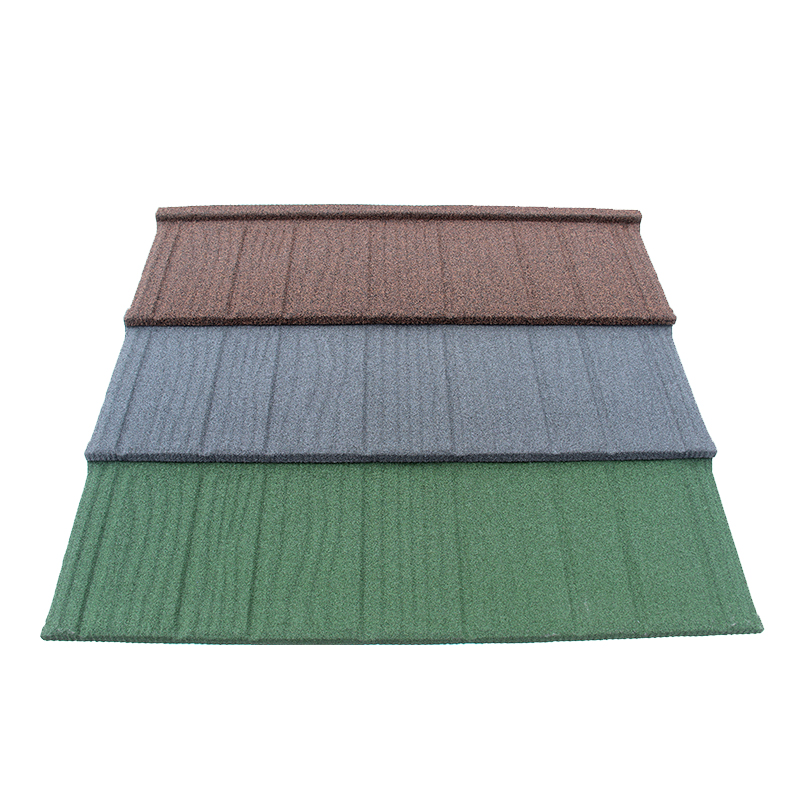
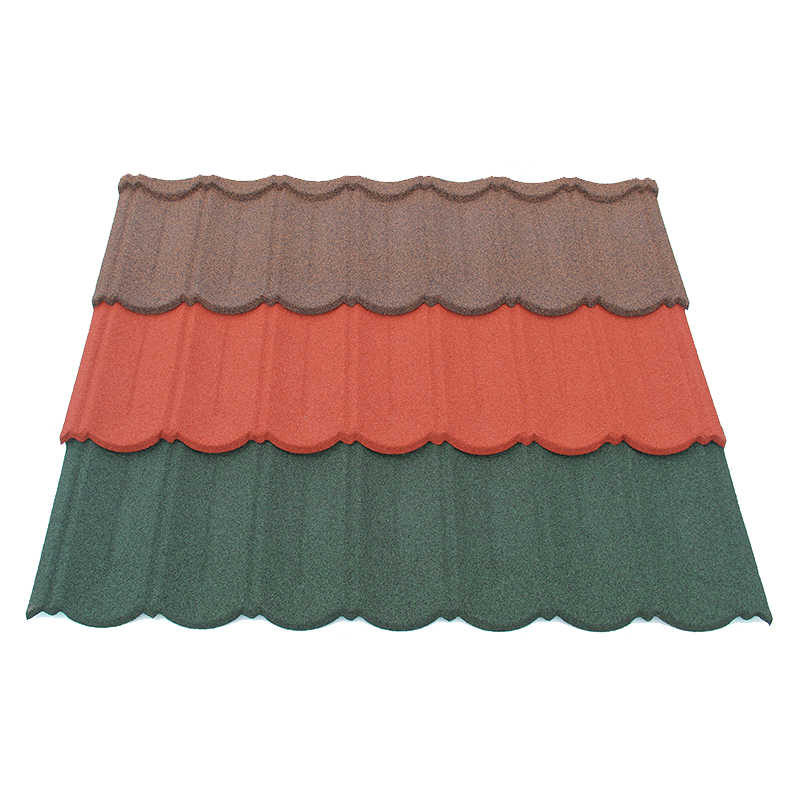
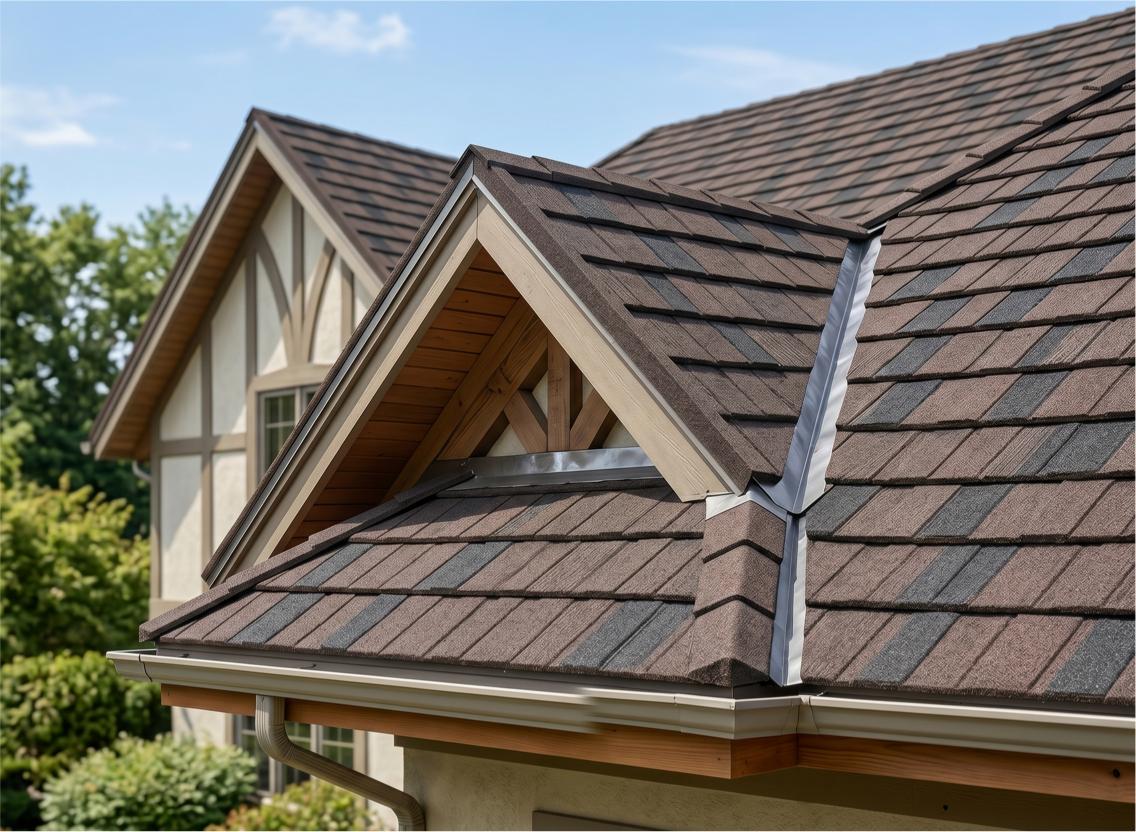
Mocha Brown, often blended with darker hues to create a textured appearance, is engineered specifically to replicate the rustic charm of traditional wood shakes. This color profile is extremely popular in heavily wooded regions, mountain resorts, and rural commercial properties. It allows developers to achieve a natural, timber-heavy aesthetic while maintaining a Class A fire rating, ensuring maximum protection in wildfire-prone areas where actual wood shakes are prohibited.
5. Forest Green
Forest Green is a specialized but highly consistent seller, primarily used in agricultural-commercial hybrid projects, park facilities, and homes situated in dense natural surroundings. The color integrates the structure into the environment rather than competing with it. Modern high-temperature sintering ensures that the green granules resist the fading and yellowing that plague cheaper, painted green metal roofing sheets under intense UV exposure.
6. Desert Sand (Beige Blend)
Desert Sand is the premier choice for projects prioritizing energy efficiency in extreme heat. By maximizing solar reflectance, this light, earthy tone significantly reduces the thermal transfer into the attic space. It is a staple in the Middle Eastern and African export markets. Desert Sand pairs exceptionally well with stucco exteriors and is frequently applied to Roman or Classic tile profiles.
7. Ocean Blue
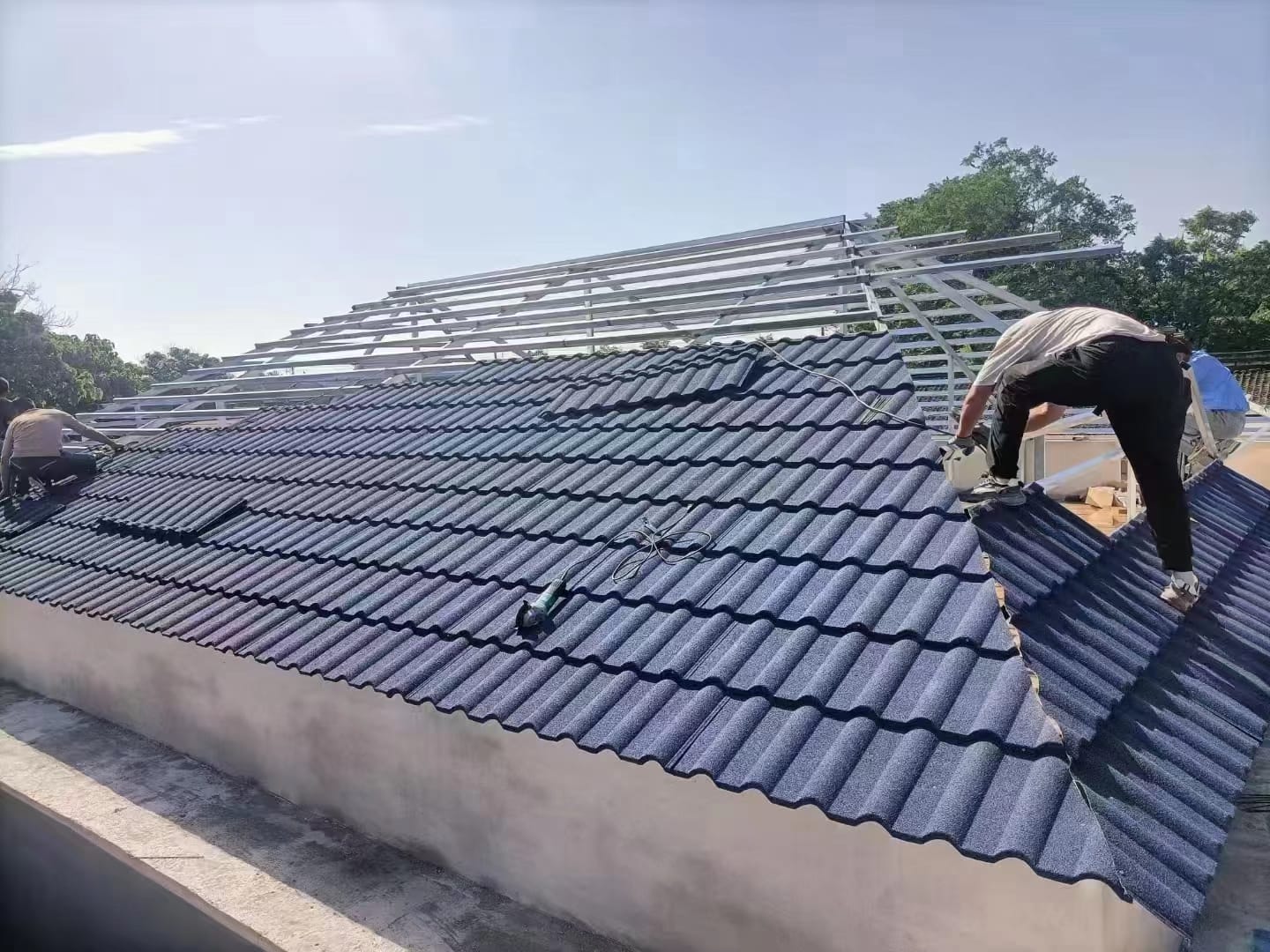
While serving a more niche market, Ocean Blue is a staple for coastal resorts, island residential developments, and specific commercial branding applications. The blue granules provide a striking visual contrast against white sandy beaches and ocean backdrops. Due to the intense UV radiation in coastal areas, sourcing Ocean Blue from a manufacturer with strict quality control processes is vital to ensure the color remains vibrant over decades of exposure.
Application and Performance Comparison
To assist procurement managers in specifying the correct color for their project profiles, the following table outlines the ideal pairings and functional considerations:
| Color Palette | Ideal Tile Profile | Primary Architectural Style | Thermal Consideration (SRI) |
|---|---|---|---|
| Charcoal Black | Shingle / Shake | Modern, Traditional Farmhouse | Low Reflectance (Requires standard ventilation) |
| Terracotta Red | Villa / Barrel Vault | Mediterranean, Spanish Colonial | Moderate Reflectance |
| Slate Grey | Classic / Shingle | Commercial, Contemporary | Moderate Reflectance |
| Mocha Brown | Wood Shake | Rustic, Mountain, Craftsman | Moderate Reflectance |
| Desert Sand | Roman / Classic | Desert Contemporary, Tropical | High Reflectance (Maximum Energy Savings) |
How to Source Reliable Colors from Top Manufacturers
The longevity of a roof’s color relies entirely on the factory’s production standards. When sourcing from international suppliers, buyers must verify the origin and processing of the stone granules.
As a leading manufacturer in the global supply chain, JCROOF utilizes advanced, high-temperature sintered basalt granules imported directly from premium quarries. Unlike factories that use low-cost, cold-dyed sand—which fades within three years—JCROOF guarantees color retention that matches the 50-year structural lifespan of their aluzinc steel cores. By choosing a trusted manufacturer like JCROOF, large-scale buyers secure products that meet rigorous quality control processes, ensuring visual appeal and reliable performance for decades to come.
3 Practical Tips for B2B Buyers Sourcing Roof Tiles
- Request Physical Samples: Never approve a color based solely on a digital catalog or PDF. Monitor color samples under natural sunlight at your specific geographic location, as ambient light alters the appearance of the multi-toned granules.
- Verify the Sintering Process: Request technical documentation confirming the granules are ceramically coated and fired at extreme temperatures. This is the only method to guarantee UV fade resistance.
- Consolidate Batch Orders: Natural stone granules can have slight variance between massive production runs. For large commercial projects, ensure your factory has the capacity to fulfill the entire order from a single production batch to guarantee absolute color uniformity.
Frequently Asked Questions (FAQ)
Do stone-coated steel roof colors fade over time?
High-quality stone-coated steel roofs do not experience significant fading. Reputable manufacturers use basalt stone granules that are ceramically coated and baked at high temperatures, permanently locking in the color. They resist UV rays and corrosion, ensuring they maintain their appearance and functionality over time.
Are lighter roof colors better for energy efficiency?
Yes. Lighter colors, such as Desert Sand or light greys, have a higher Solar Reflectance Index (SRI). Their reflective surface reduces heat absorption, lowering cooling costs and improving overall building energy efficiency.
Can I customize a specific color for a large commercial project?
Yes, leading manufacturers like JCROOF offer custom color blending for commercial clients. If your project requires a specific corporate brand color or unique architectural match, the factory can adjust the granule ratio, provided the order meets the Minimum Order Quantity (MOQ) requirements.
Secure Your Supply Chain Today
Selecting the right color and profile is only the first step; securing a stable, high-capacity manufacturing partner is what guarantees project success. If you are a distributor, contractor, or commercial developer looking for factory-direct pricing and verified quality control, contact JCROOF today. Fill out our contact form to request a comprehensive product catalog and physical color samples tailored to your target market.